
Managing Field Sales in Distribution: Beats, Visits, Orders
Beat plans, outlet check-ins, in-store orders, credit limits and van sales: the five links that decide whether a field team produces revenue or just reports.
Managing field sales reps is the hardest problem in distribution. A company can have a good warehouse, clear price lists and strong distributors, yet if the field team does not follow its beats, misses outlets and fails to close orders in the store, everything downstream runs below capacity. This article walks through the five links that distribution management software must hold tight — beats, visits, in-store orders, credit limits and van sales — with a worked example and questions you can use to audit how you work today.
Why field sales management so often fails
Most small and mid-sized distributors manage their field teams with three tools: a chat group, a route spreadsheet and an end-of-day phone call. All three share one trait: they record what people say happened, not what actually happened.
- A rep reports "visited 30 outlets", but there is no timestamp, location or order attached.
- Orders sent by message are re-keyed into the sales system, sometimes with the wrong item code, the wrong price, or twice.
- Managers learn which outlets are overdue only when accounting reconciles at month-end — after two more deliveries have gone out.
The problem is not the people. It is that the process does not produce verifiable data at the moment the work happens.
Link 1: a beat is a plan, not a list
A beat is the set of outlets a rep visits on a fixed schedule, usually by weekday. A good beat answers three questions:
- Which outlets, on which day? Large outlets may be visited twice a week, small ones every other week.
- In what order? The sequence directly affects how many outlets fit into a day.
- Who owns it? Each outlet belongs to one beat, and each beat belongs to one person.
Two common mistakes: beats that are longer than the time actually available (reps quietly drop outlets and nobody knows), and beats that are not updated when new outlets open. A good practice is to let reps propose new outlets from the field and have a manager approve them before they enter a beat — the master data stays clean and new stores are not missed.
Link 2: every visit must leave a trace
A visit is worth something when it leaves three things behind: check-in and check-out time, location, and outcome (an order, or the reason there was none).
GPS check-in and an allowed radius
Check-in compares the rep's coordinates with the outlet's stored coordinates. The company sets an allowed radius; outside it, the system warns or blocks. Warning suits the early weeks, when outlet coordinates are still rough. Blocking suits the stage where data is clean and beat discipline is the priority.
"No order" reasons are valuable data
"Owner away", "still overstocked", "competitor promotion" — when reasons are picked from a standard list instead of typed freely, a month later you have a clear picture of why orders are lost, by territory and by product group.
Four beat metrics worth reviewing weekly
| Metric | Formula | What it tells you |
|---|---|---|
| On-schedule rate | Visits on the planned day / planned visits | Beat discipline |
| Coverage | Outlets with at least one visit / outlets on the beat | Whether outlets are being skipped |
| Strike rate | Visits with an order / total visits | Closing effectiveness |
| Lines per order | Total order lines / number of orders | Breadth of range being sold |
Link 3: an in-store order must be a real order
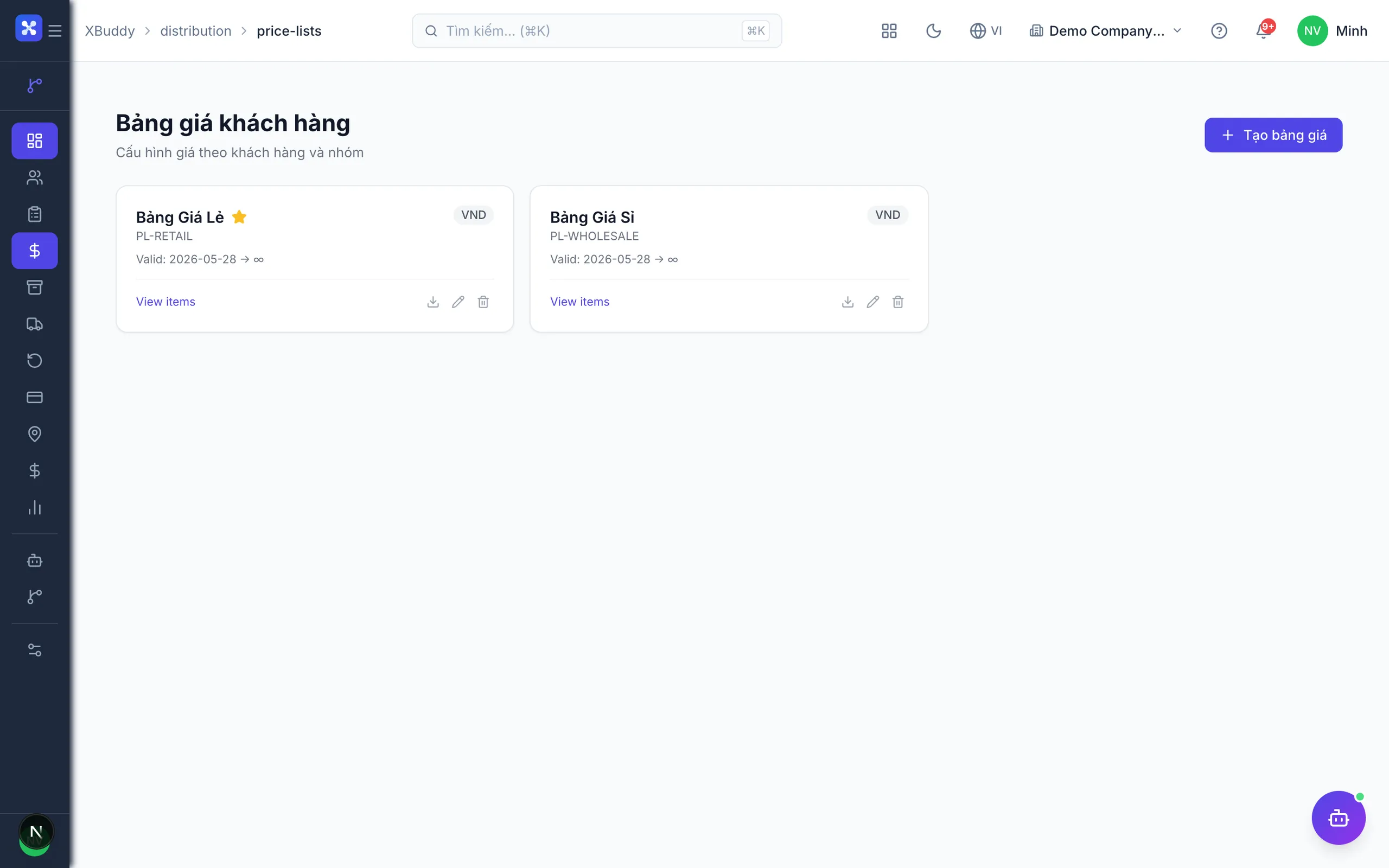
Orders written on paper or sent by message and re-keyed later are the biggest source of errors. An in-store order should become a formal sales order immediately, going through the same price list, promotions and approval process as an order entered at the office.
Three pieces of information help reps order the right quantity:
- The outlet's last order.
- The shelf stock counted during this visit.
- A suggested quantity — a simple, explainable rule is last order quantity minus the stock just counted.
Illustrative example
A beverage distributor has 4 reps, each covering 6 beats (Monday to Saturday) of 30 outlets. The figures below are assumptions used only to show how to read the metrics:
- Planned visits per week: 4 × 6 × 30 = 720 visits.
- Recorded check-ins: 612, of which 576 on the planned day ⇒ 80% on schedule.
- Visits with an order: 367 ⇒ strike rate of about 60%.
- Average order value VND 1,400,000 ⇒ weekly revenue of about VND 514 million.
Raising the strike rate from 60% to 65% with the same number of visits adds roughly 31 orders, or about VND 43 million a week. With the same headcount, better closing is usually cheaper than hiring — but you can only measure it when visits and orders are both recorded as real data.
Link 4: check the credit limit at the moment of ordering
Selling on credit is normal in distribution. The risk is that limits are checked only after goods have shipped. Principles worth applying:
- Outstanding balance is derived from open invoices, not from a number someone updates by hand.
- The limit is checked at the sales-order gate, using the same formula as the receivables report — so the rep and the accountant see the same figure.
- Reps see the outlet's balance and ageing as soon as they open the order screen, within the permissions they have.
When a rep knows in advance that an outlet is over its limit, the conversation shifts to collecting cash instead of promising another delivery.
Link 5: van sales must close the loop on stock and books
Van sales means the rep carries stock and delivers on the spot. It is the model most prone to discrepancies because goods, cash and documents move at the same time. A closed-loop process looks like this:
- Open a session: define the source warehouse and the van warehouse; load the van with a stock transfer.
- Each sale: create a sales order, issue stock from the van, raise an invoice, record cash or credit.
- Close the session: return leftover stock to the warehouse; reconcile cash, and require a reason for any variance.
One condition matters most: the session cannot be closed while any sale is still unposted. Without it, stock and books drift apart by month-end and nobody can trace which sale caused it.
How XBuddy supports field teams
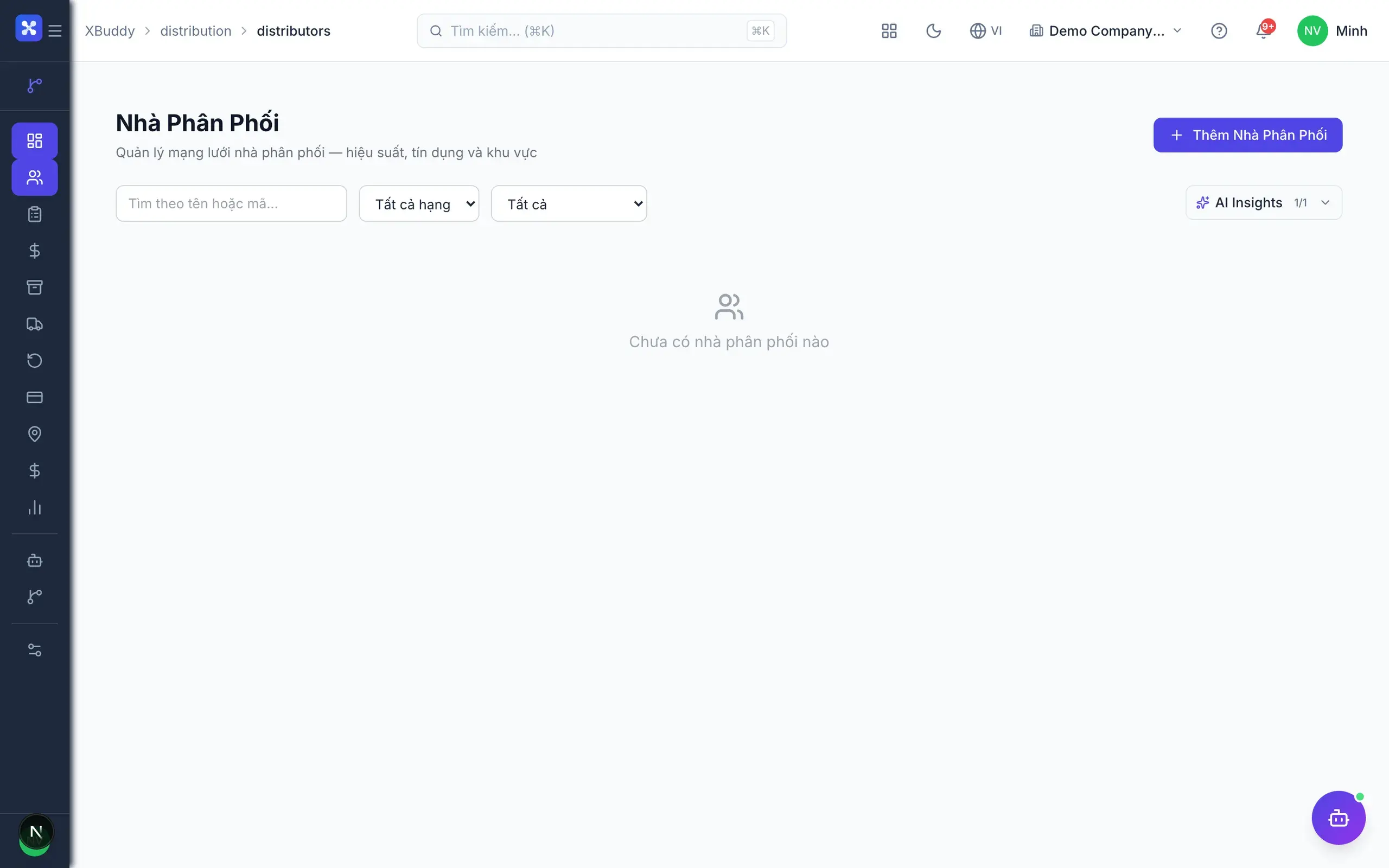
XBuddy's Distribution app is built on the same sales, inventory and receivables data:
- Beats by weekday or every other week, with drag-and-drop outlet order; reps propose new outlets and managers approve them.
- GPS check-in/check-out, with a radius and a warn-or-block policy set by the company; "no order" reasons come from an editable list.
- In-store ordering creates a real sales order in the Sales app, with a suggested quantity.
- Credit limits are checked at the sales-order gate, with the balance derived from open invoices.
- Van sales use stock transfers in the Inventory app; closing a session is blocked while any sale is unposted.
- A Today board shows managers beat progress and pending work; the Distribution Manager assistant helps reconcile van sales sessions.
See how these pieces fit into one process on the Distribution solution page.
Checklist before choosing a tool
- Does every beat have a daily schedule and a clear owner?
- Does every visit carry coordinates, time and an outcome?
- Do in-store orders go straight into the sales system, on the same price list as the office?
- Is the credit limit checked before the order is created, or after delivery?
- Can a van sales session close the loop on stock, invoices and cash?
Frequently asked questions
Should check-in be blocked when a rep is far from the outlet?
Start with warnings for a few weeks to clean up outlet coordinates. Once warnings drop and the remaining ones are mostly genuine exceptions, switch to blocking. Blocking from day one tends to stop reps from working because the stored coordinates are wrong.
What is a good strike rate?
There is no universal figure across product categories and channels. Measure your own team's current level for a few weeks, compare beats and reps, and investigate the ones below the norm. Standardised "no order" reasons are the main data source for that analysis.
Can a suggested order quantity replace a rep's experience?
No, and it should not. A suggestion based on last order minus counted stock is an explainable starting point; reps still adjust for season, promotions and store conditions. Its value is in reducing over-ordering and forgotten items.
How is van sales different from pre-sales?
Pre-sales separates taking the order from delivering it, which suits larger orders and wide ranges. Van sales combines both steps, which suits small outlets and fast-moving goods but requires tighter control of van stock and cash. Many companies run both for different channels.
What data should be prepared before rollout?
At minimum: an outlet list with addresses and coordinates, the list of reps and their territories, price lists by channel, and the current receivable balance of each customer. Missing coordinates can be filled in gradually as reps check in for the first time, using warnings rather than blocking.