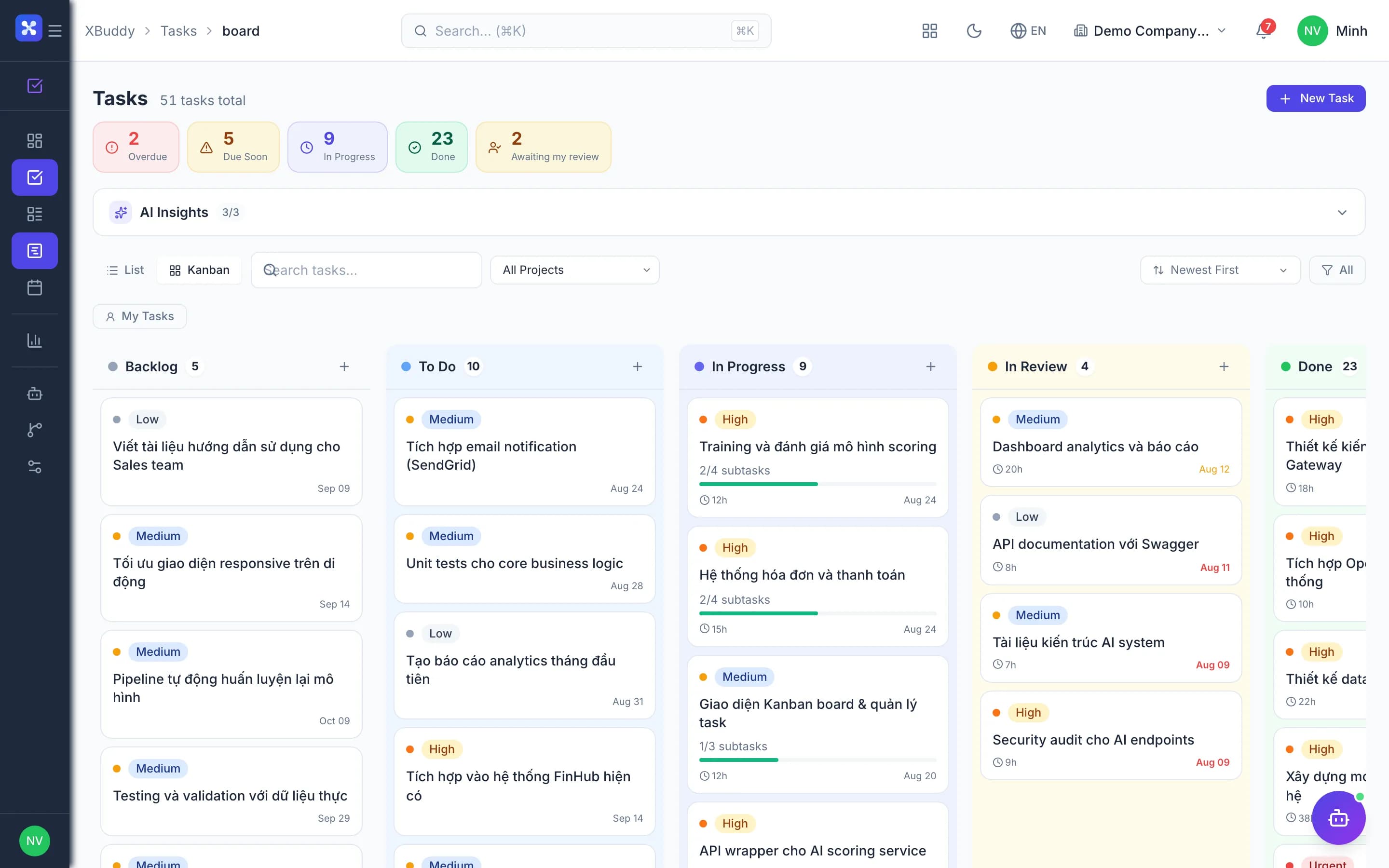

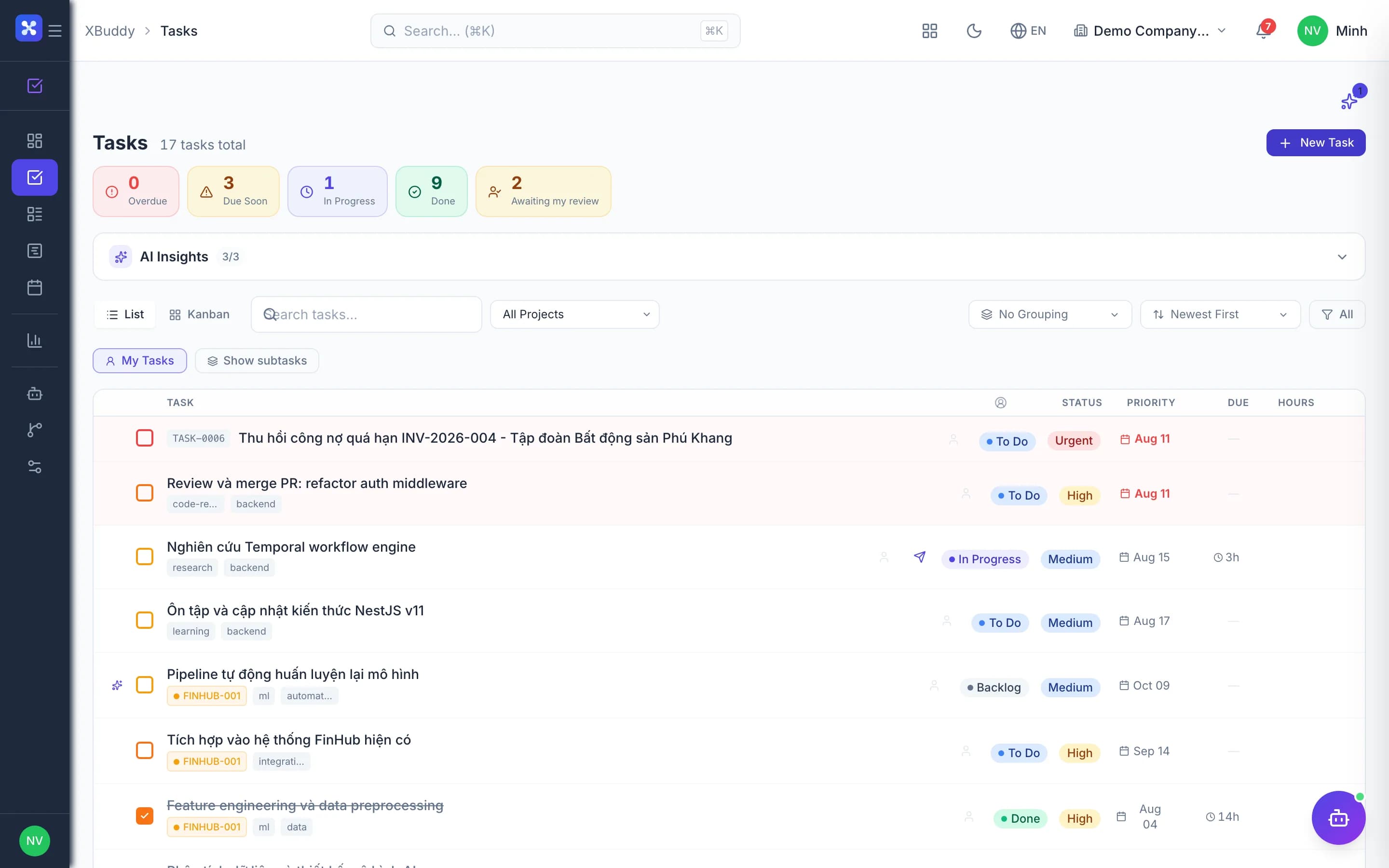
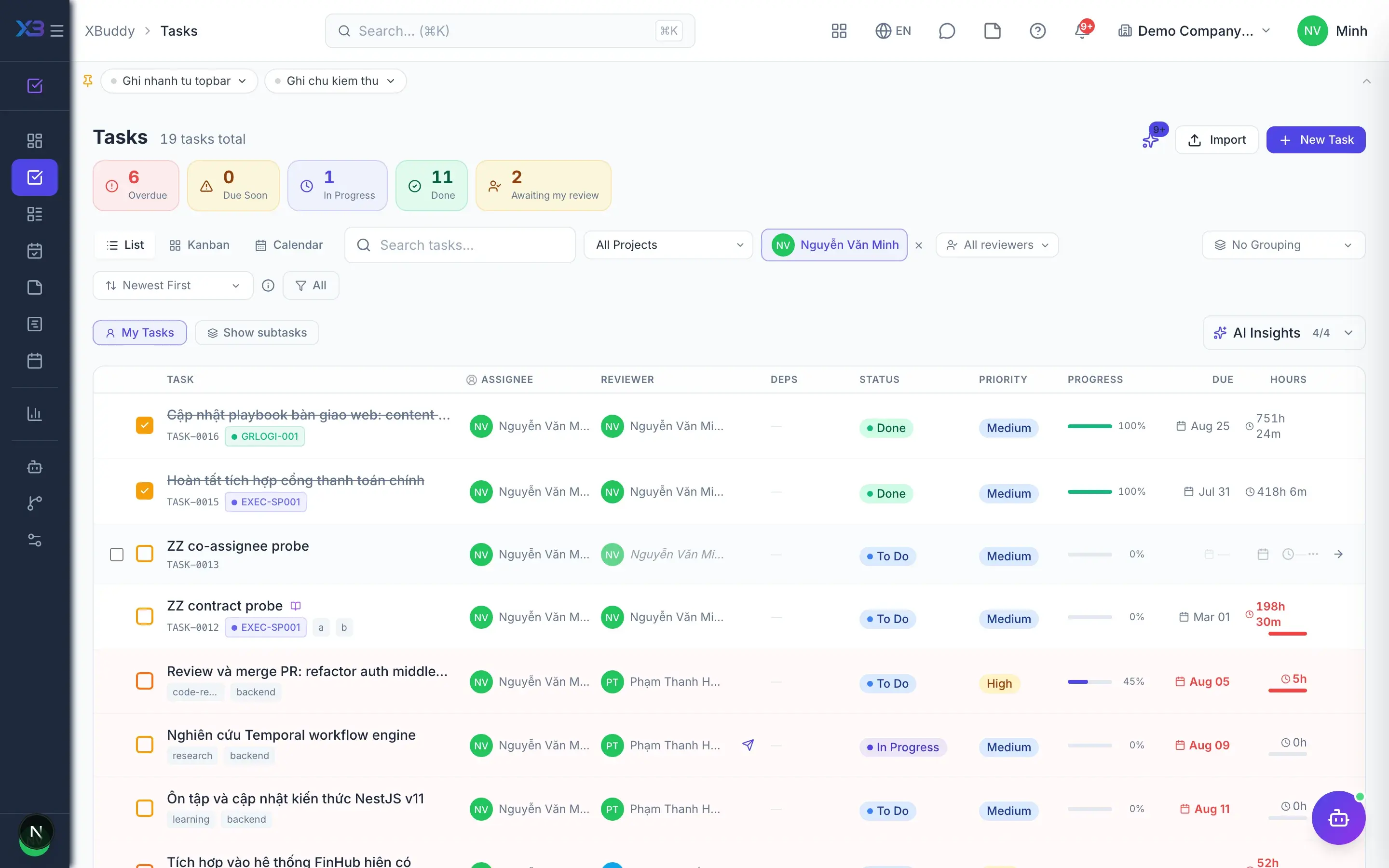
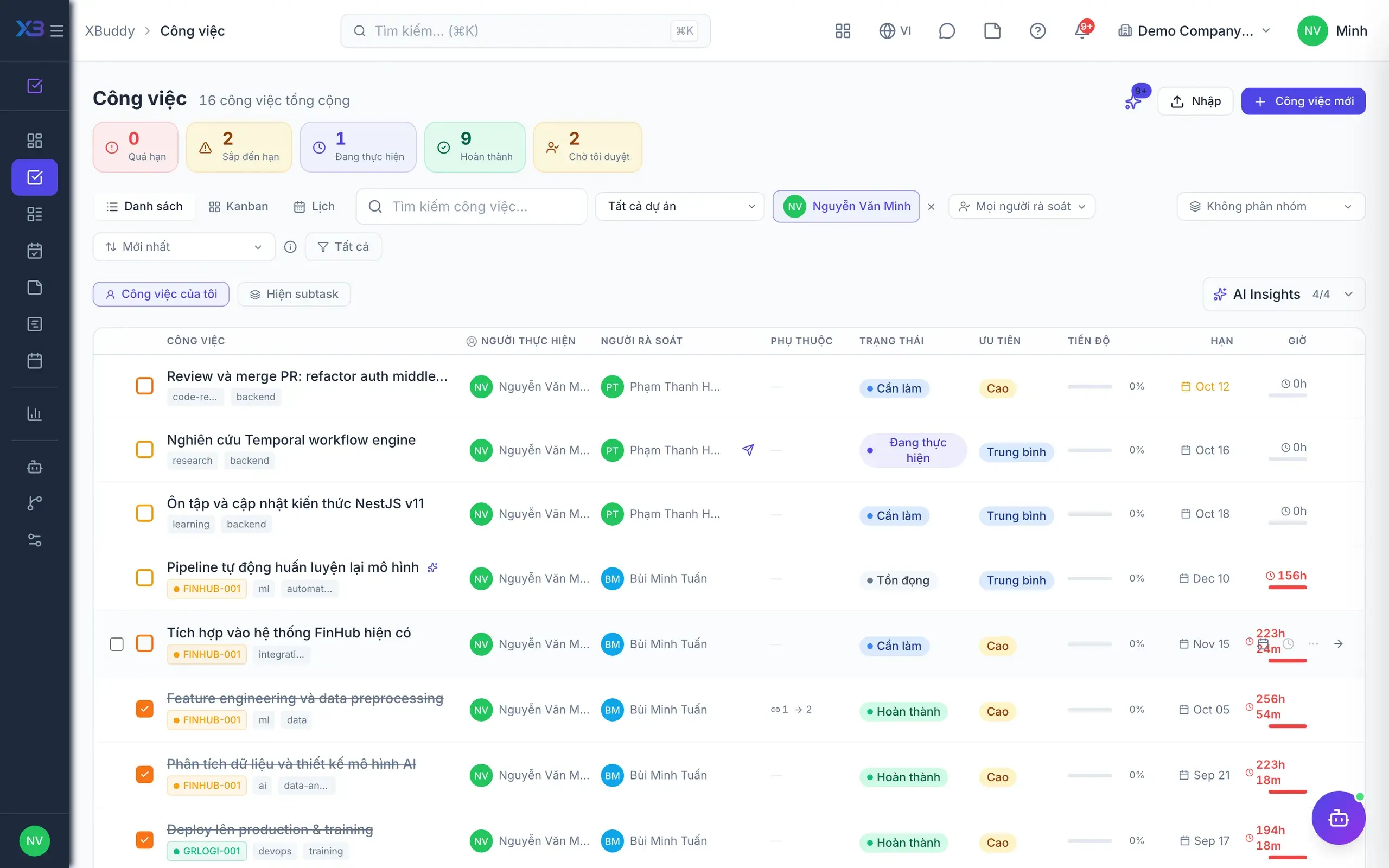

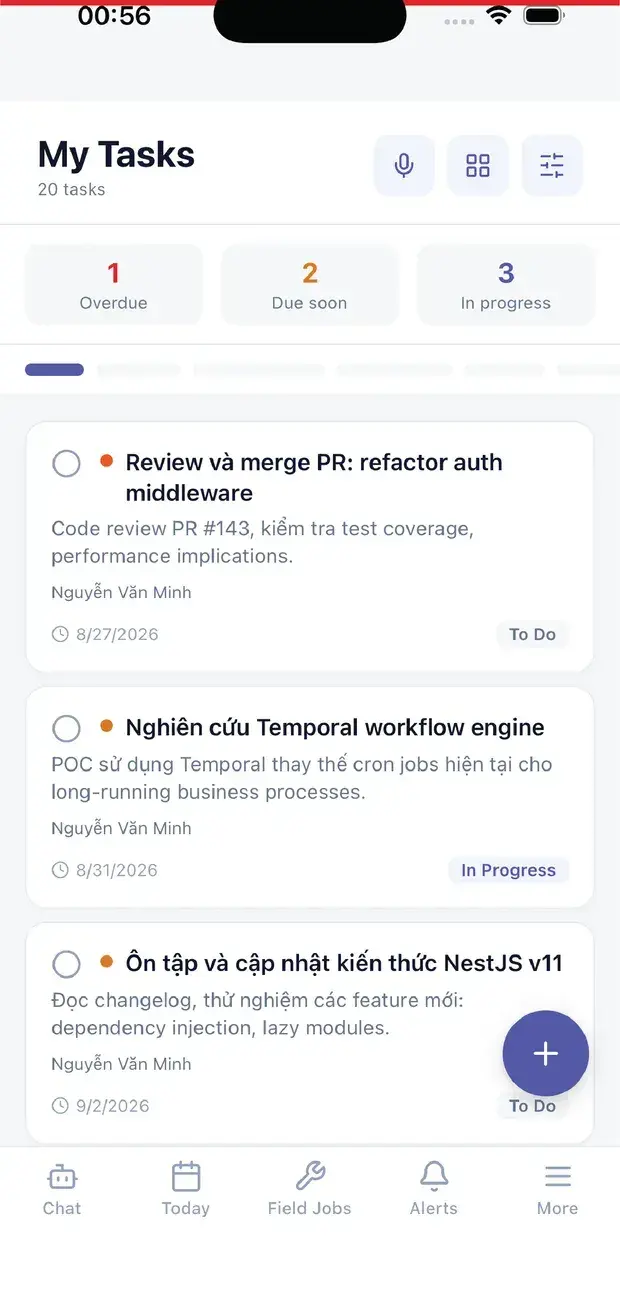
Multiple views
Kanban by status, list by deadline, weekly timeline and personal calendar — one dataset, each person picks their view.
Tasks on real records
Tasks attach to an invoice, contract, ticket, project or customer, so the assignee opens them with full context.
Subtasks and checklists
Break work into required steps, with progress computed from completed steps rather than guesswork.
Review and approval
Work moves to a review state where the reviewer sees the output and attachments and accepts, requests changes or returns it with a reason.
Quality rating
Reviewers rate quality and timeliness; scores accumulate per person and team and feed the performance review.
Recurring and generated tasks
Recurring schedules plus tasks generated by workflows, contract deadlines or an assistant — nothing depends on memory.
AI prioritisation
Suggests an order by deadline, linked value and how much it blocks others, with the reason each item comes first.
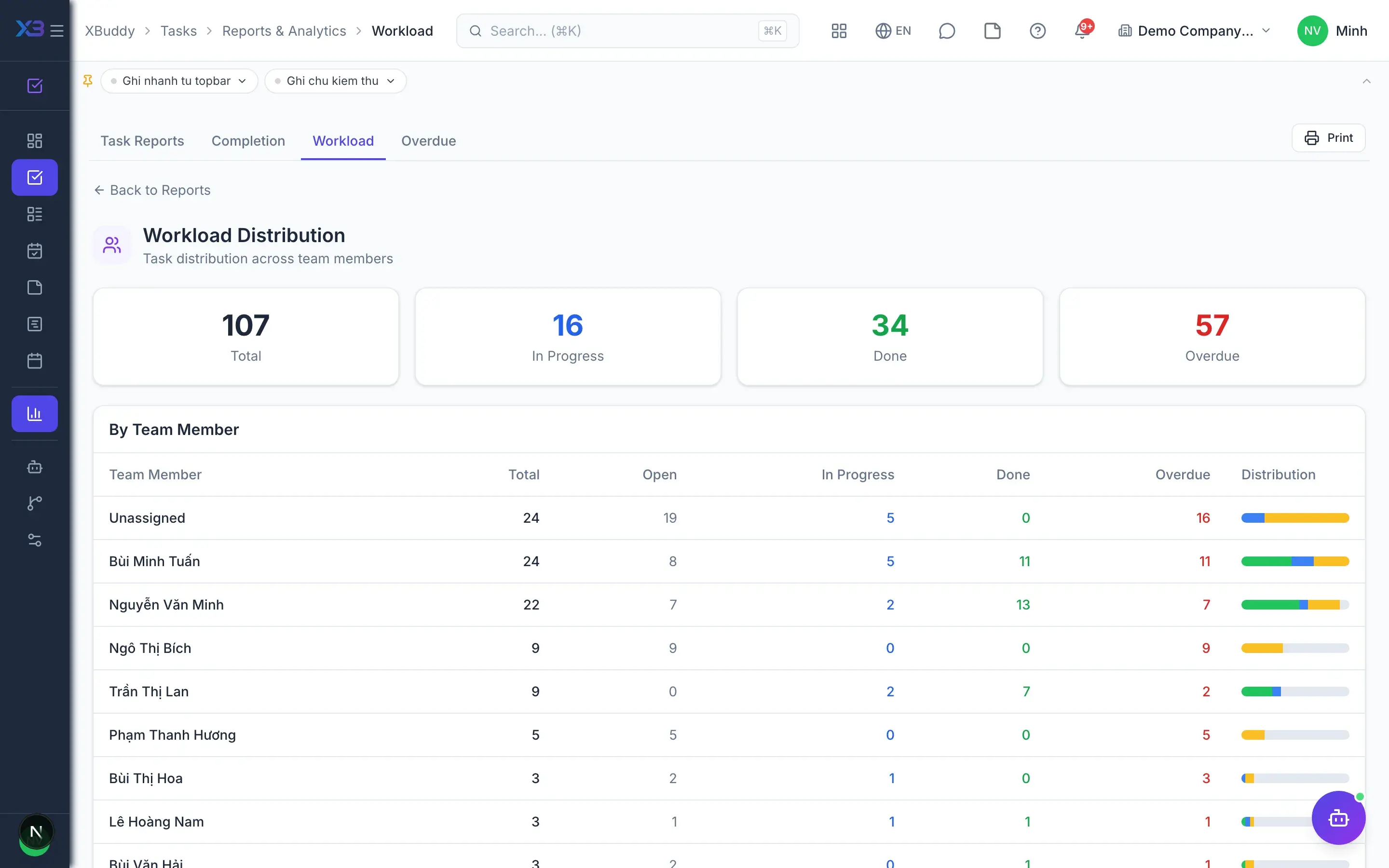
Team workload
See task count, estimated hours and overdue level per person, rebalancing before anyone is swamped.
Time tracking
Timer or manual entry per task, rolled up to project and timesheet and used for service billing.
Reminders and escalation
Pre-deadline reminders, overdue alerts and automatic escalation to the manager on neglected critical work.