The enterprise operating platform, supported by AISwitch to Tiếng ViệtSwitch to English

38 business apps · 35 AI assistants · one database

38 business apps35 AI assistants alongsideOne shared database

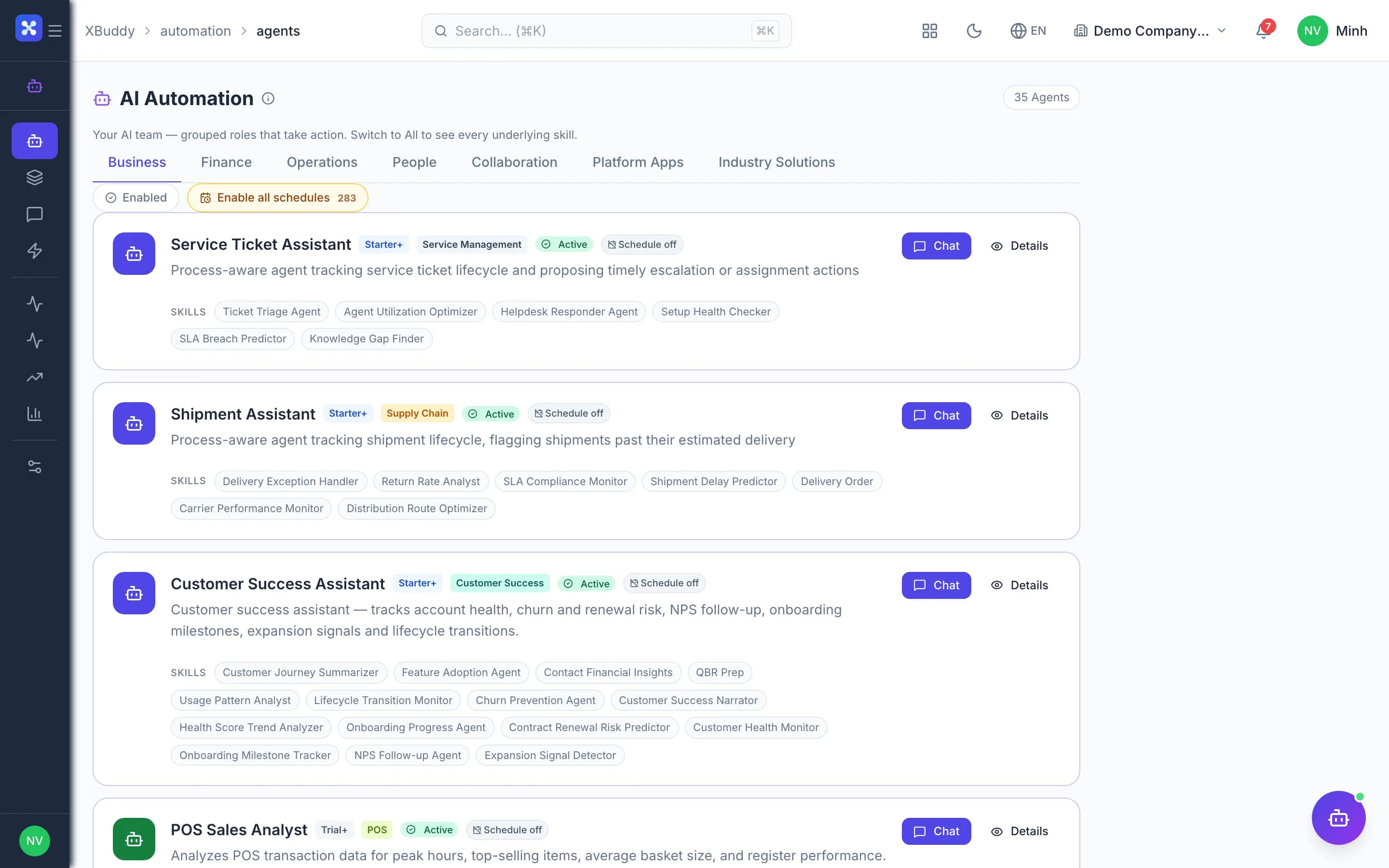
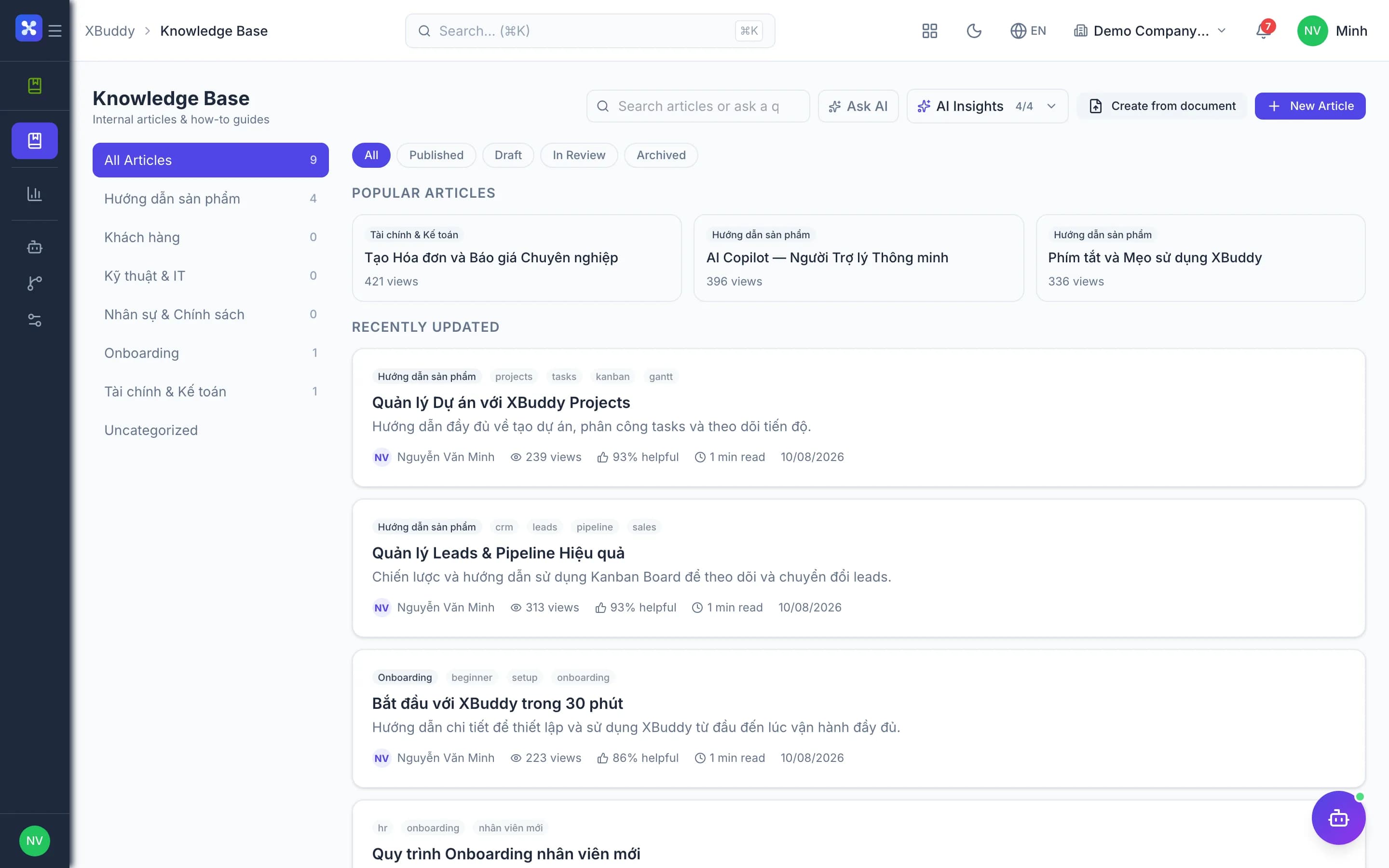
XBuddy unifies finance, sales, HR, inventory and 34 more business functions on one platform sharing a single database. On that same data, 35 AI assistants handle the repetitive work — chasing receivables, matching invoices, screening CVs — and every write action waits for your approval.

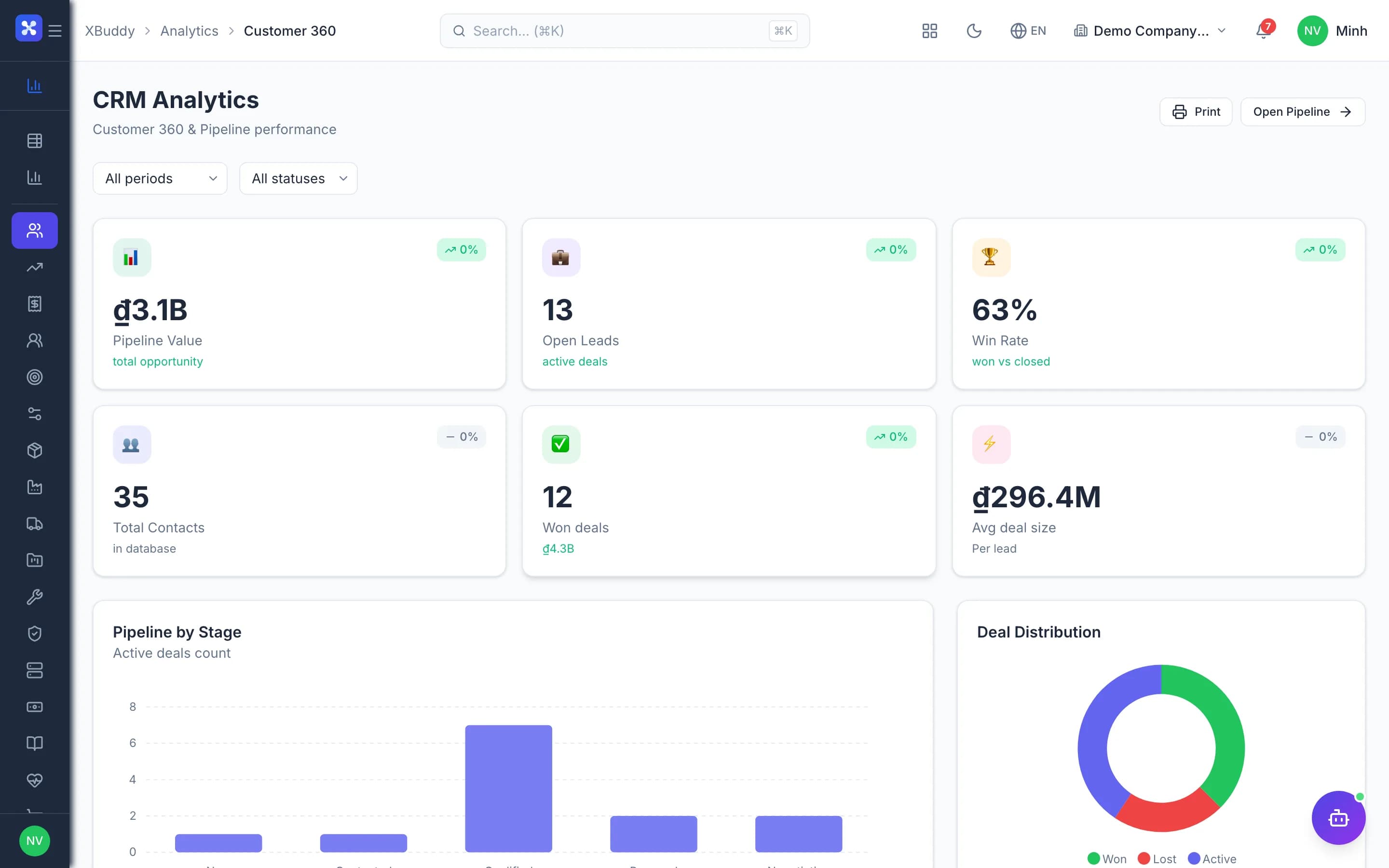
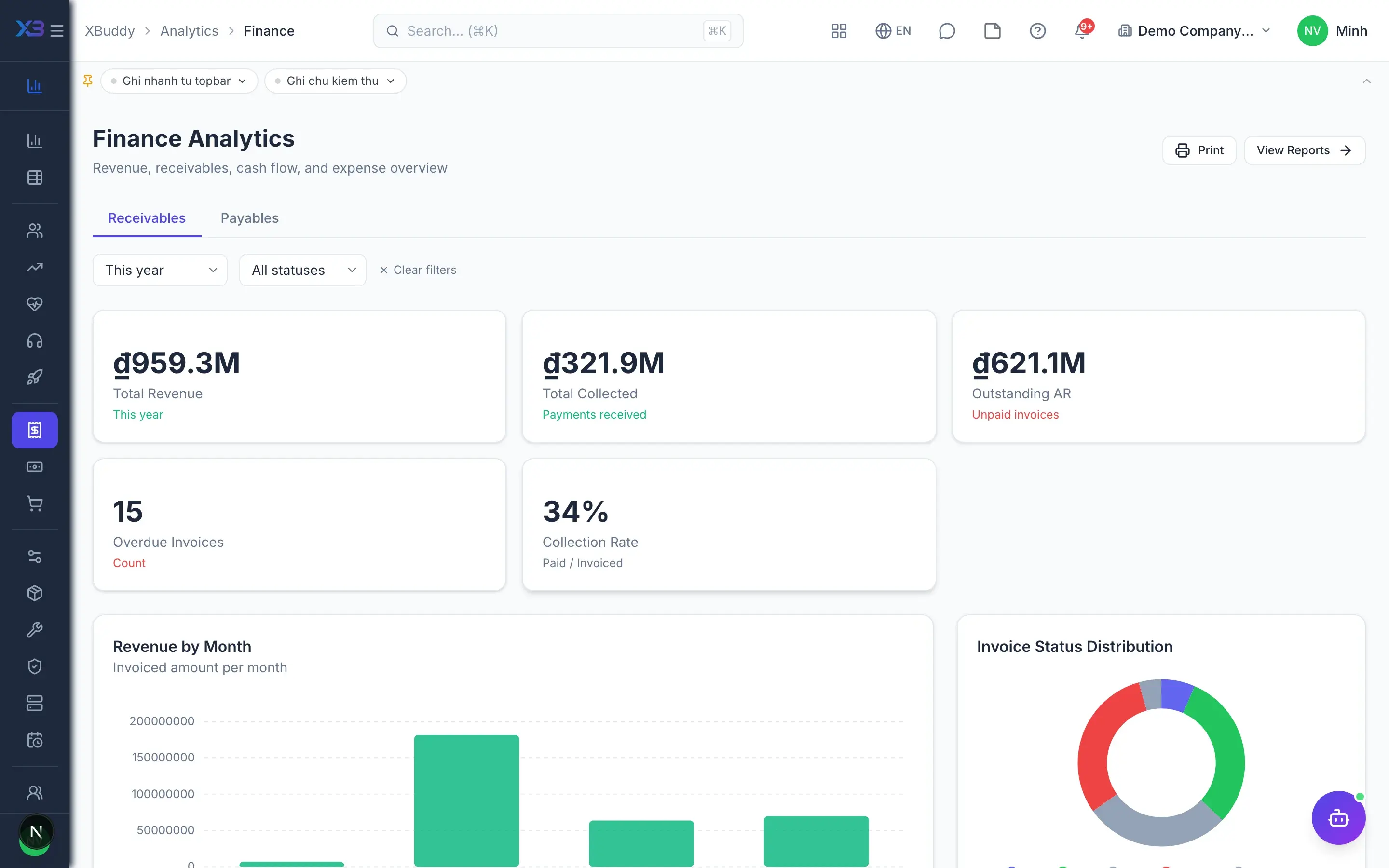
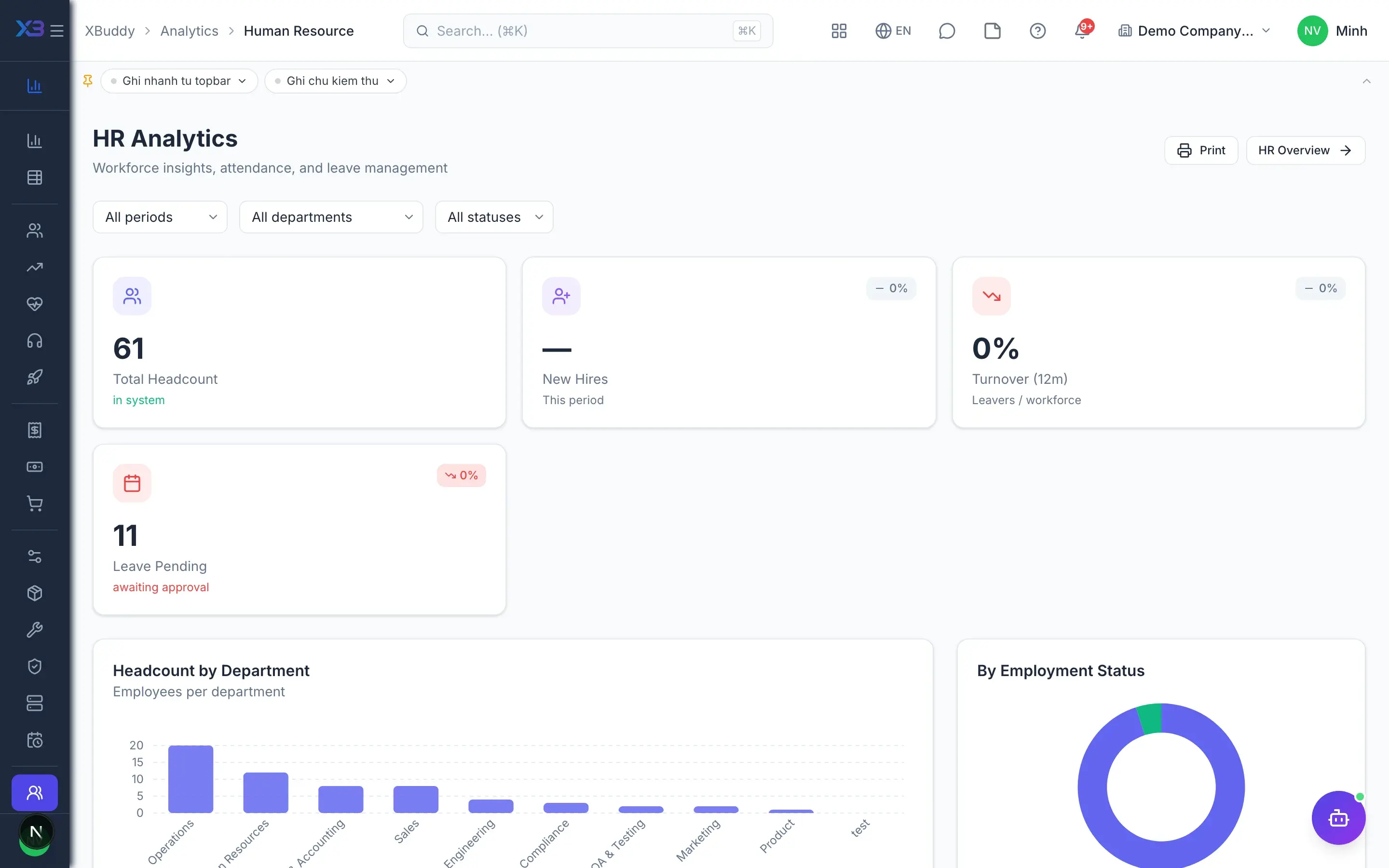
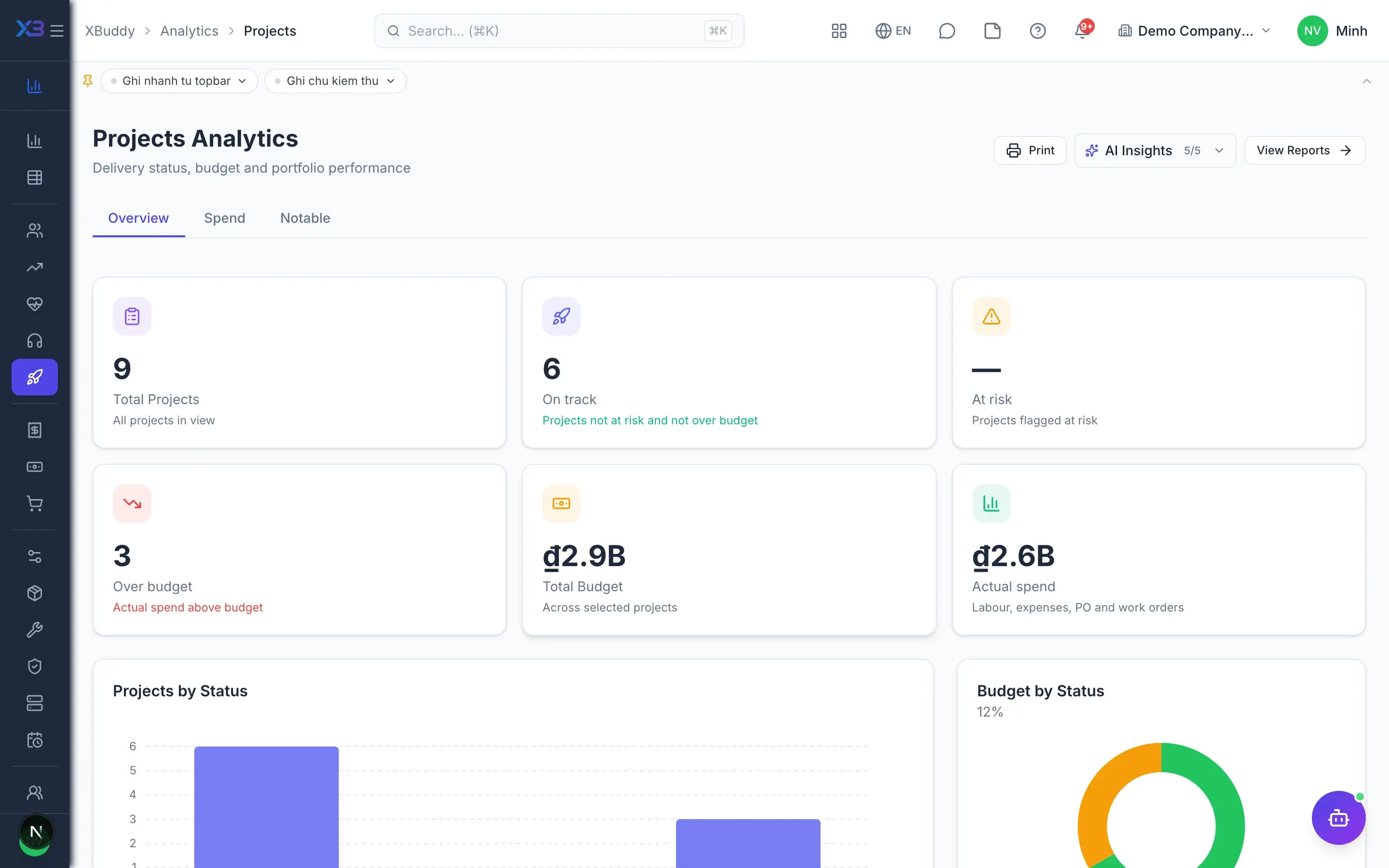
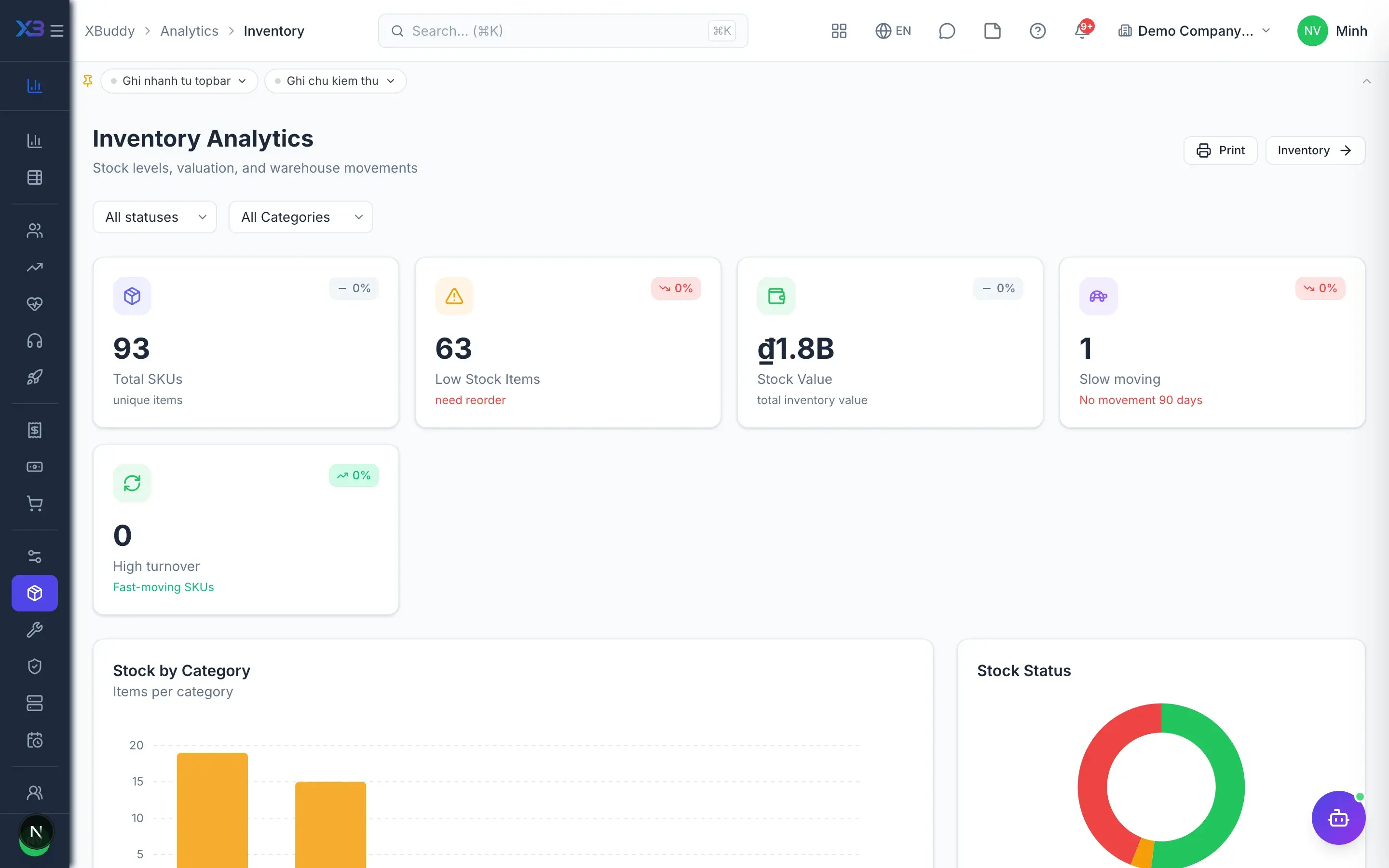
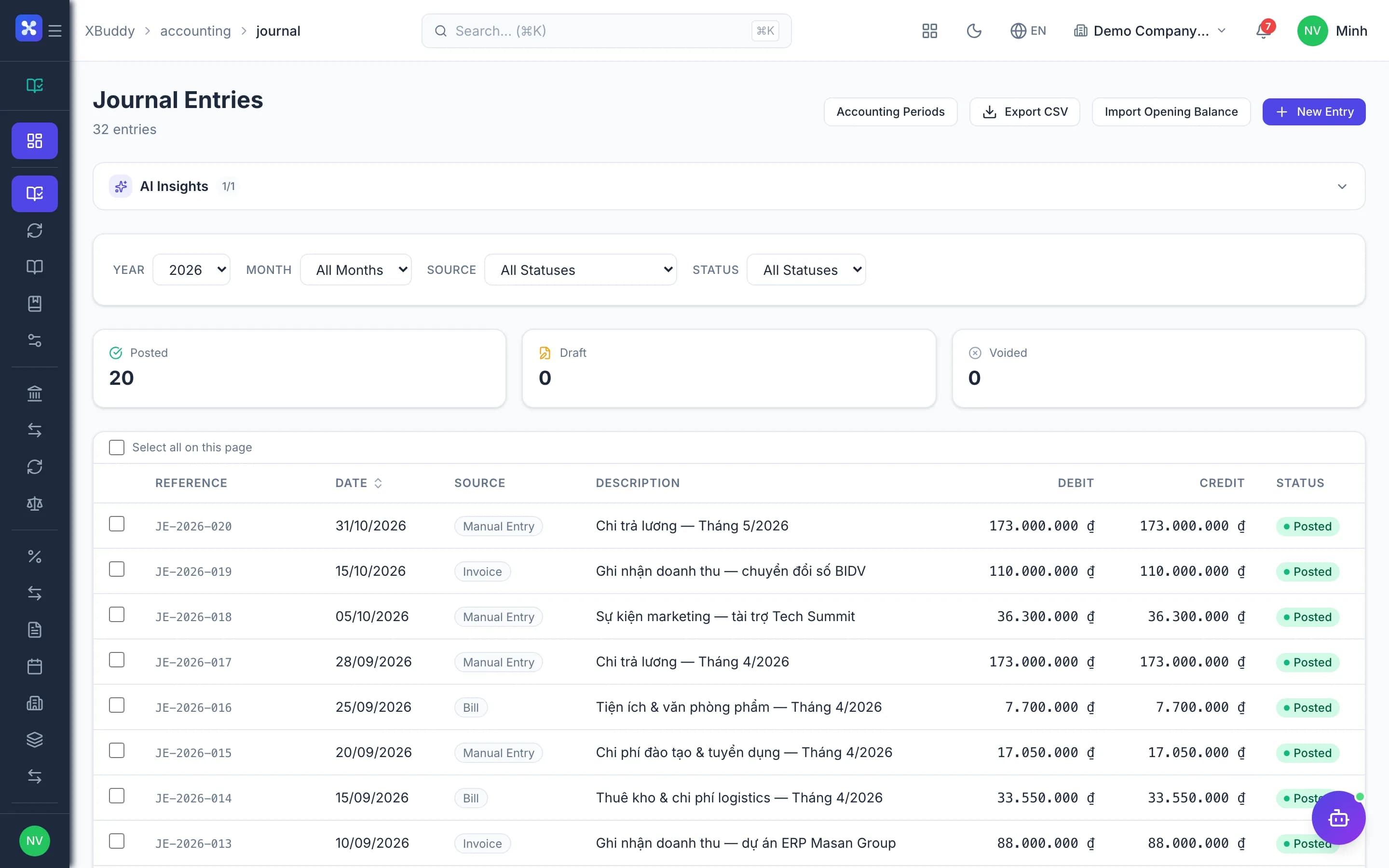
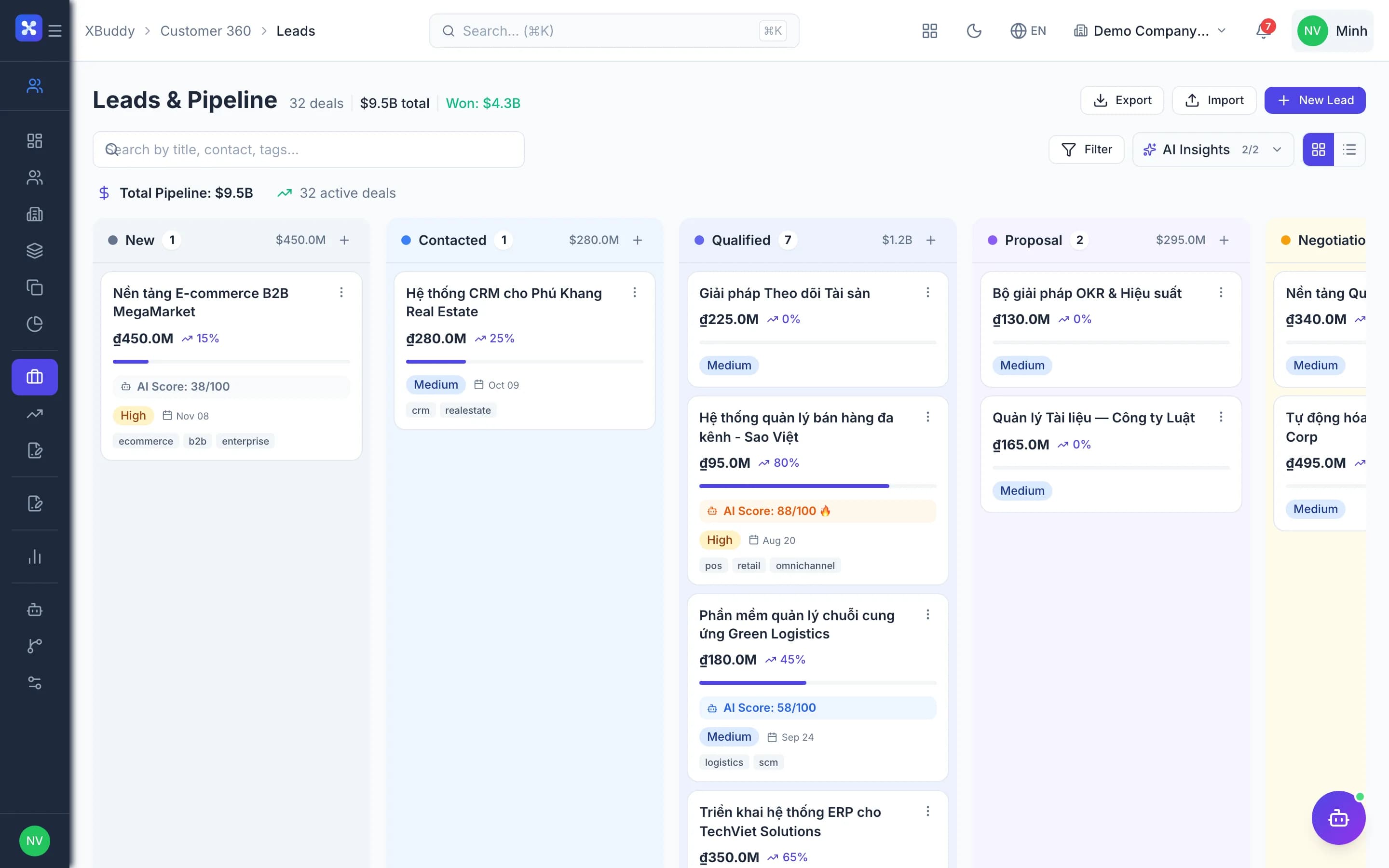
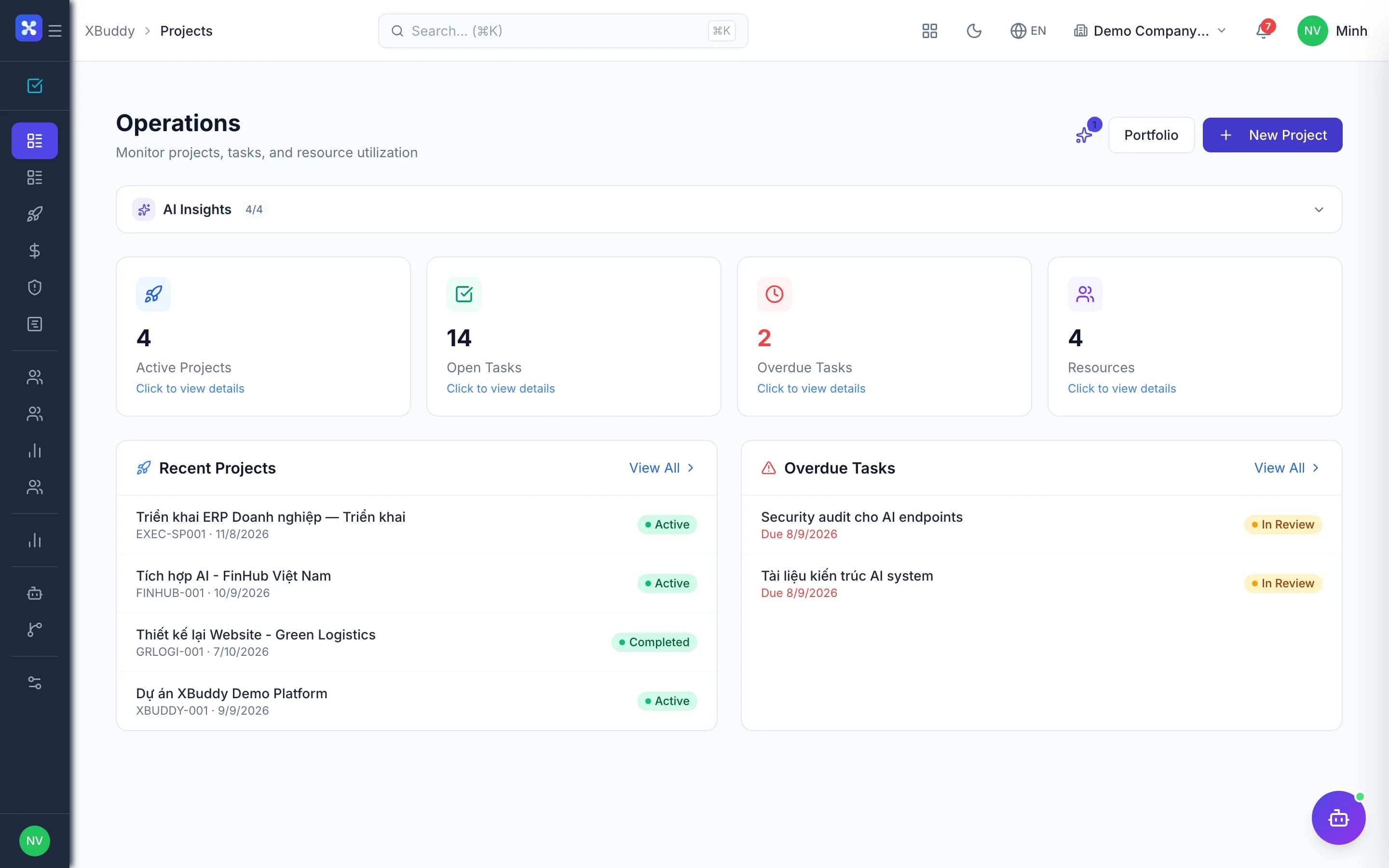
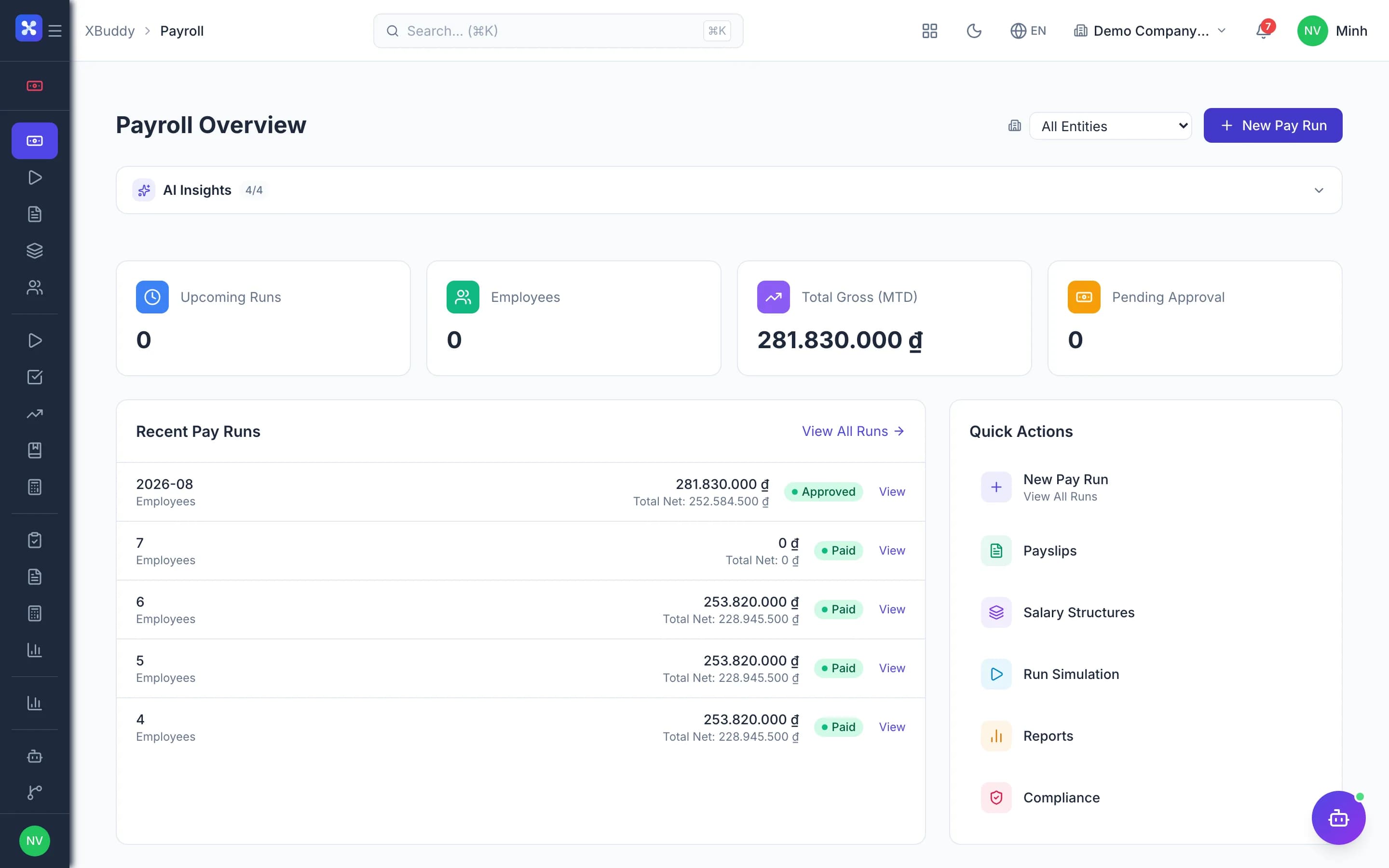
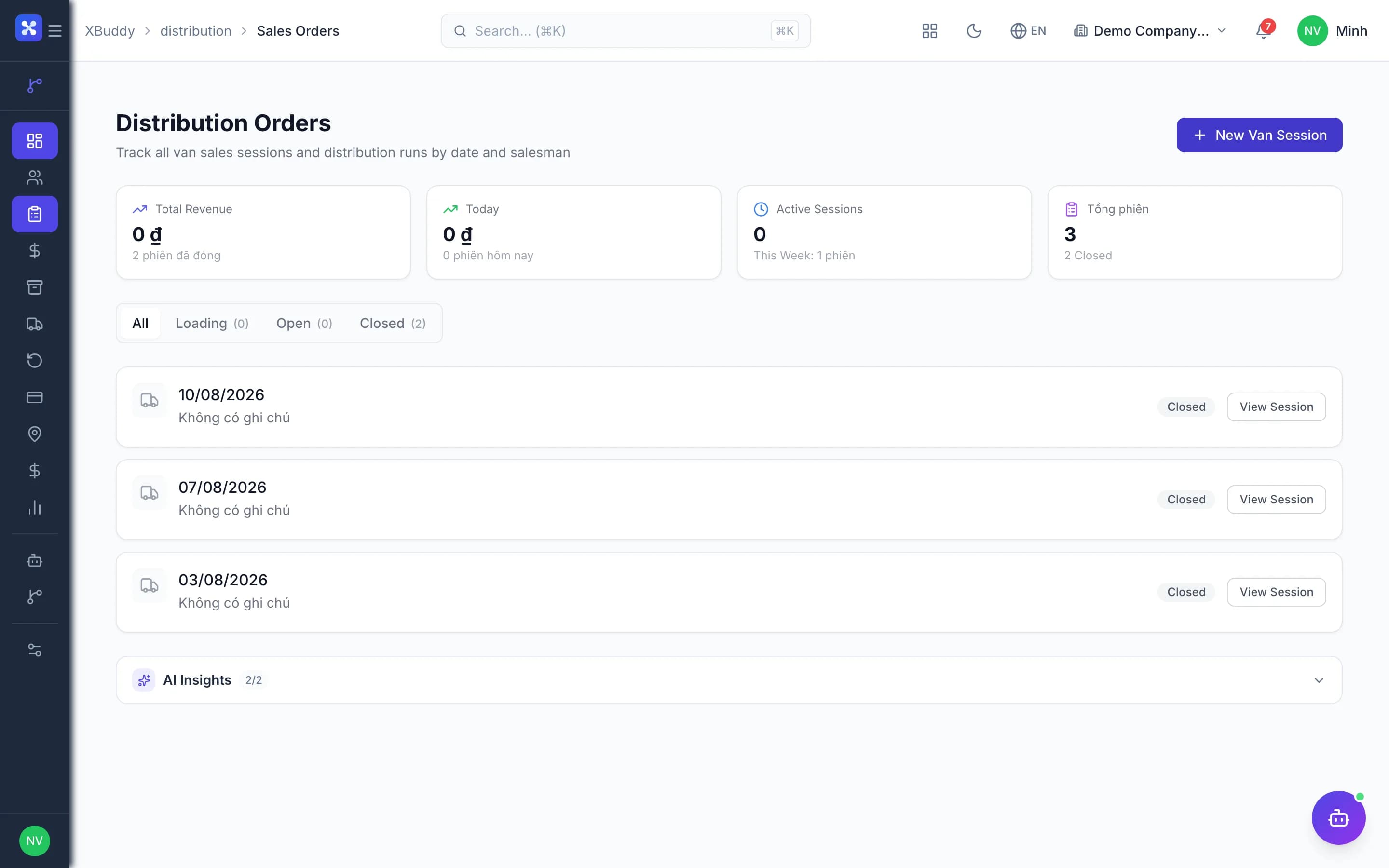
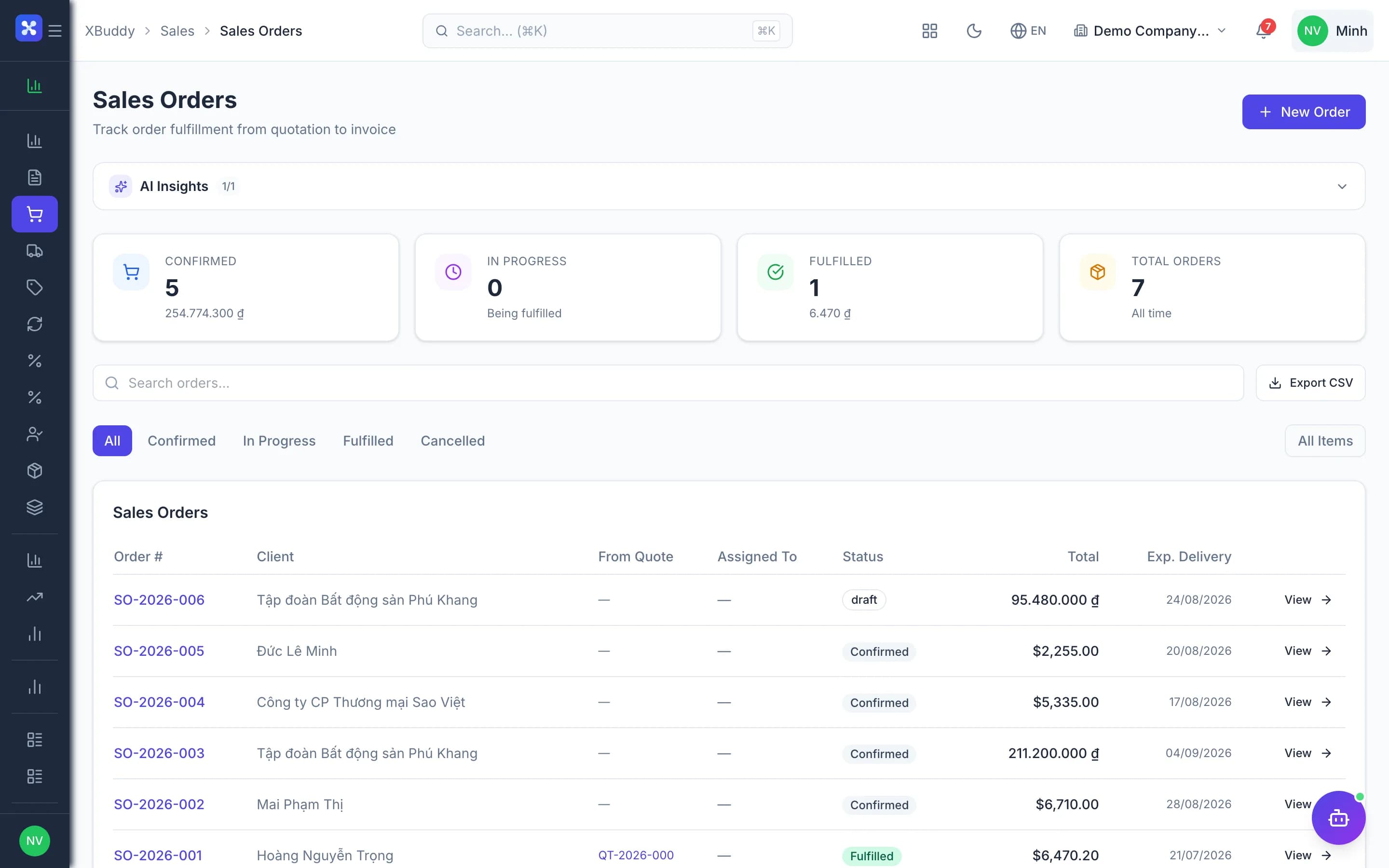
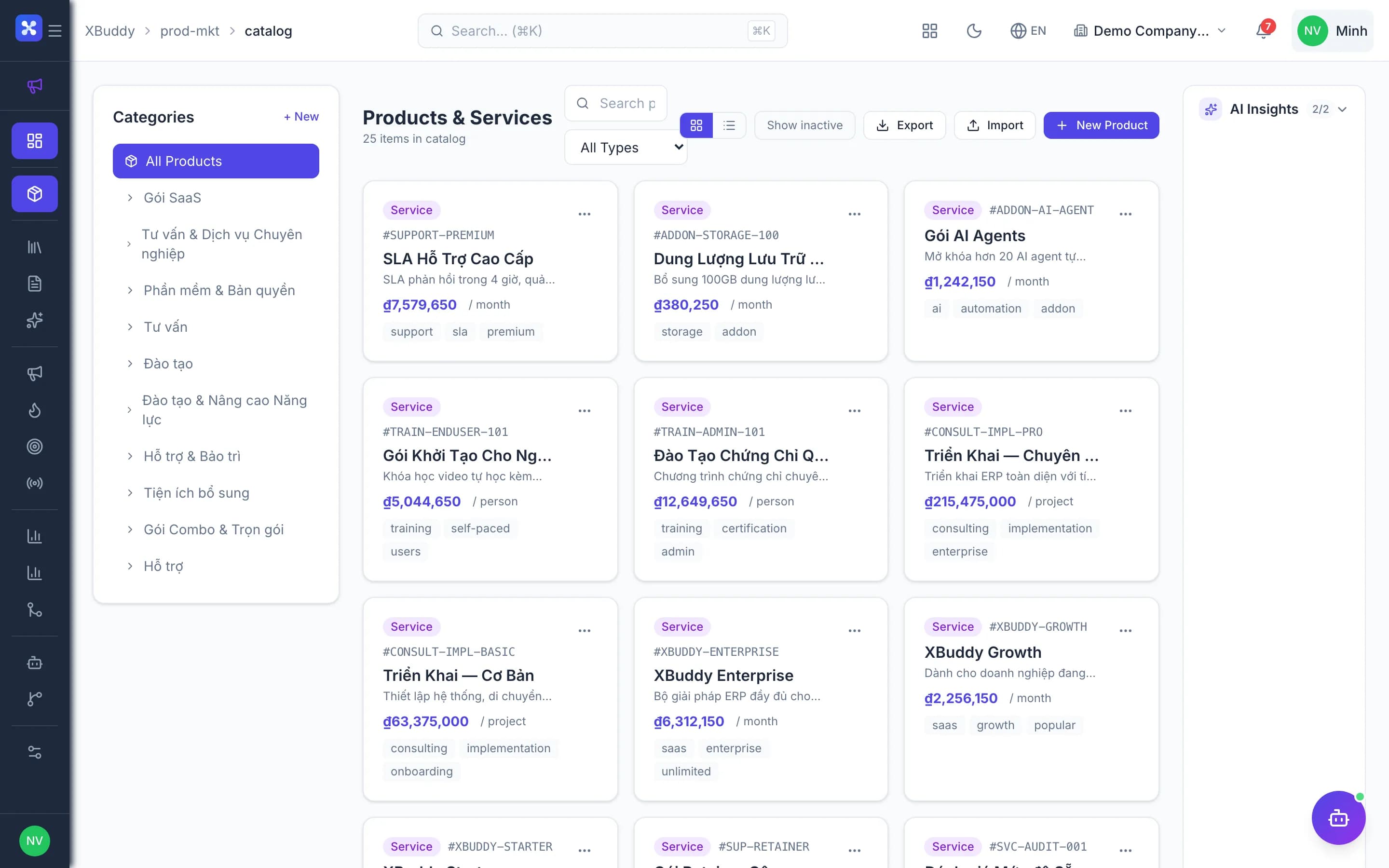
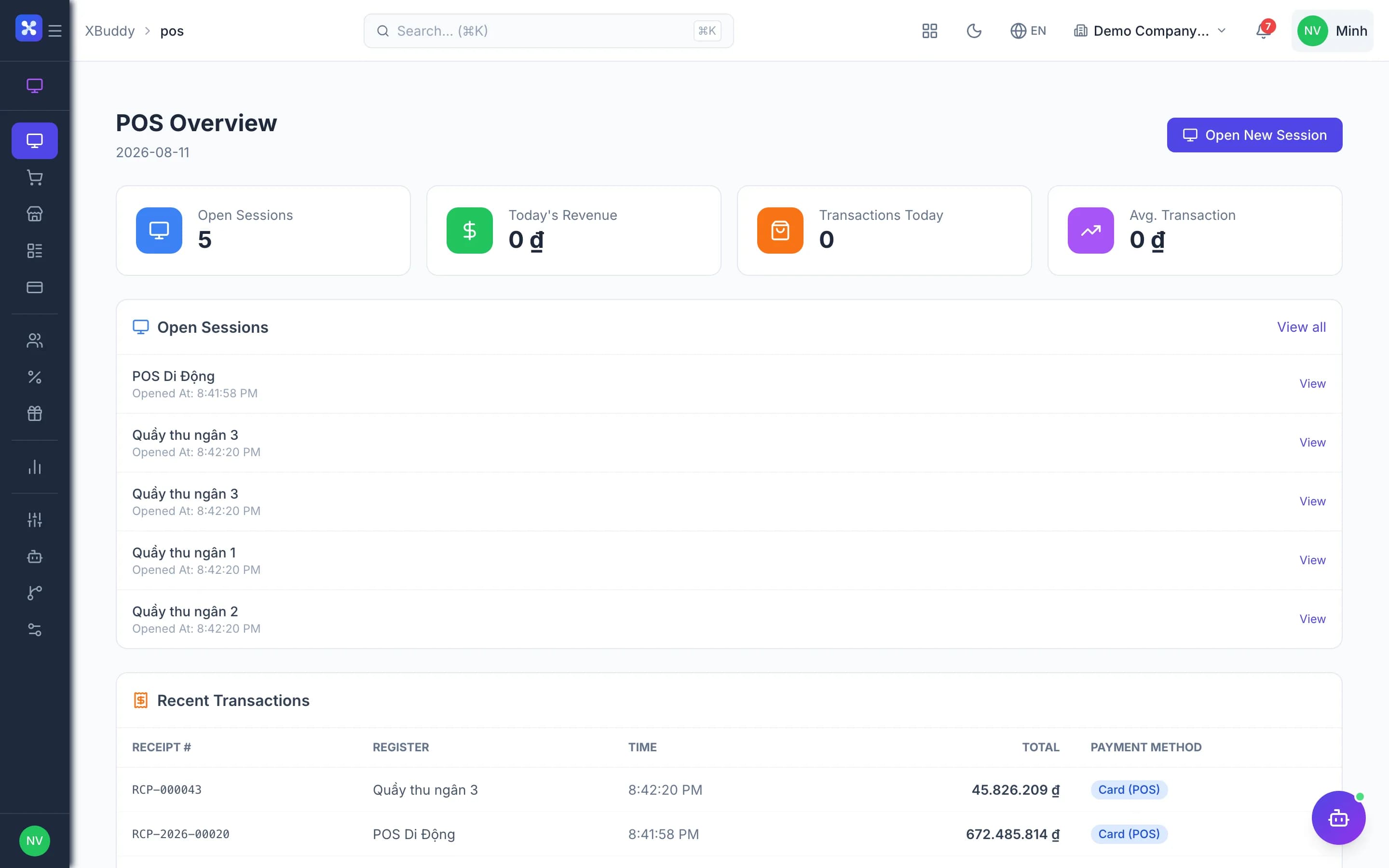
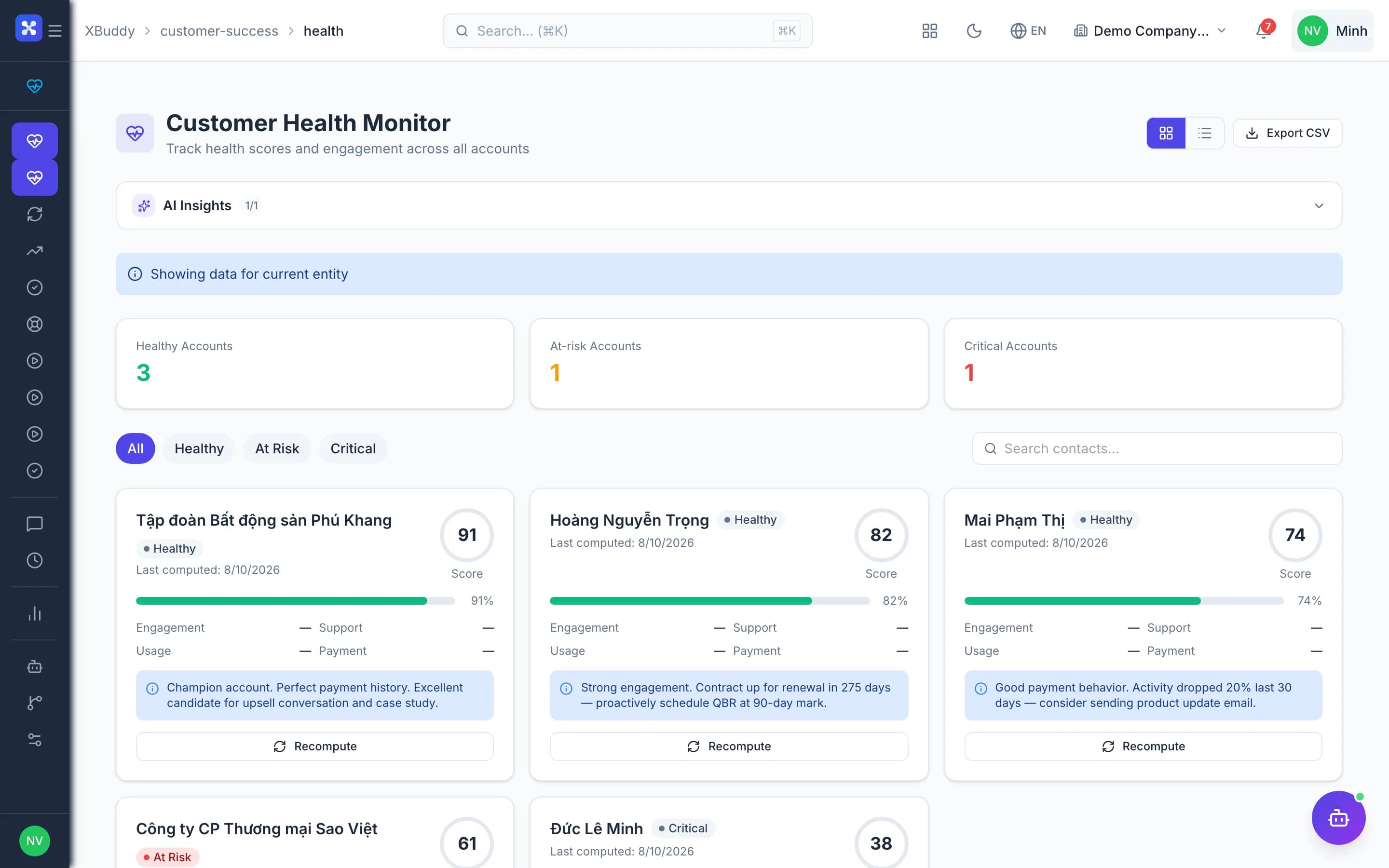
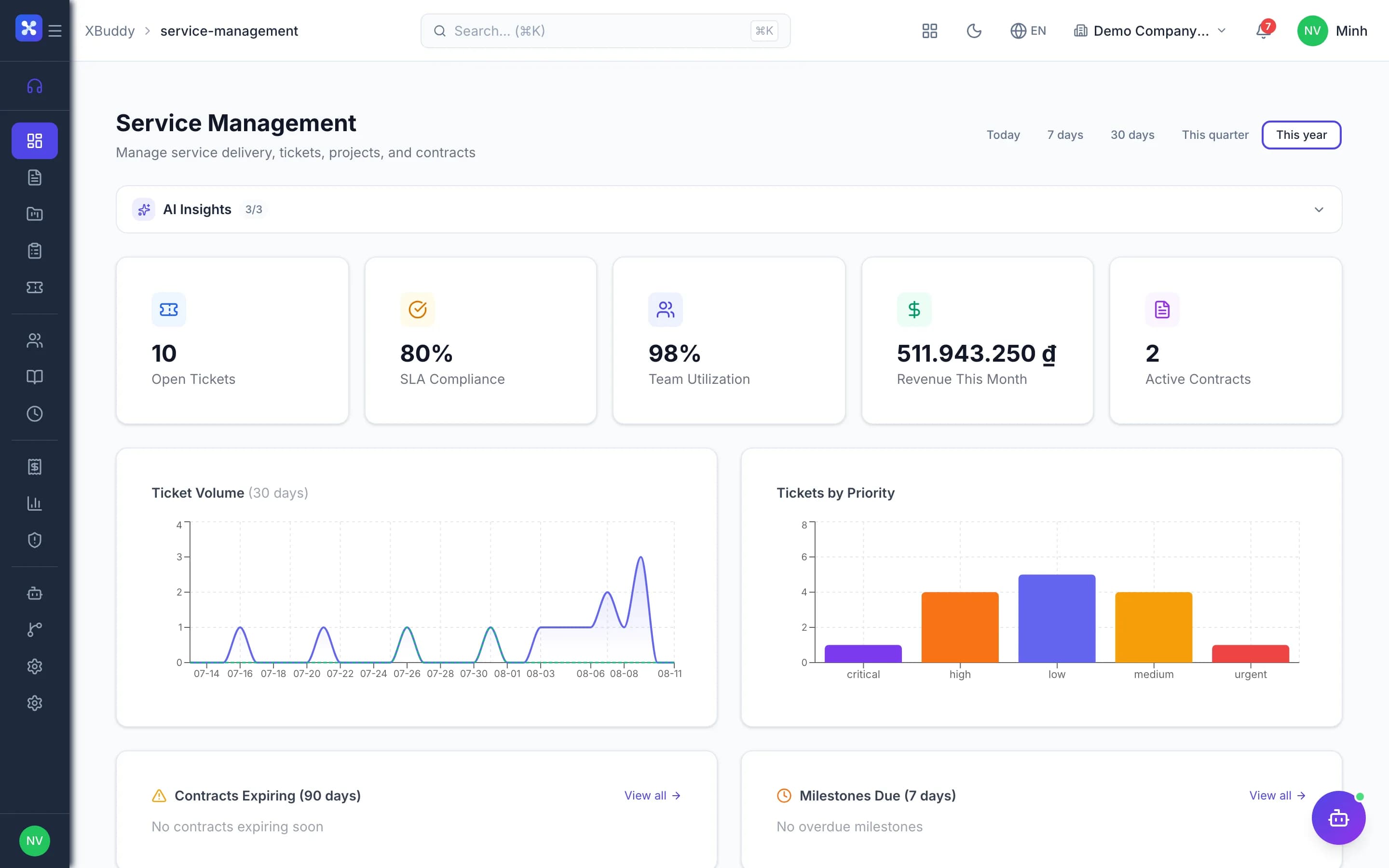
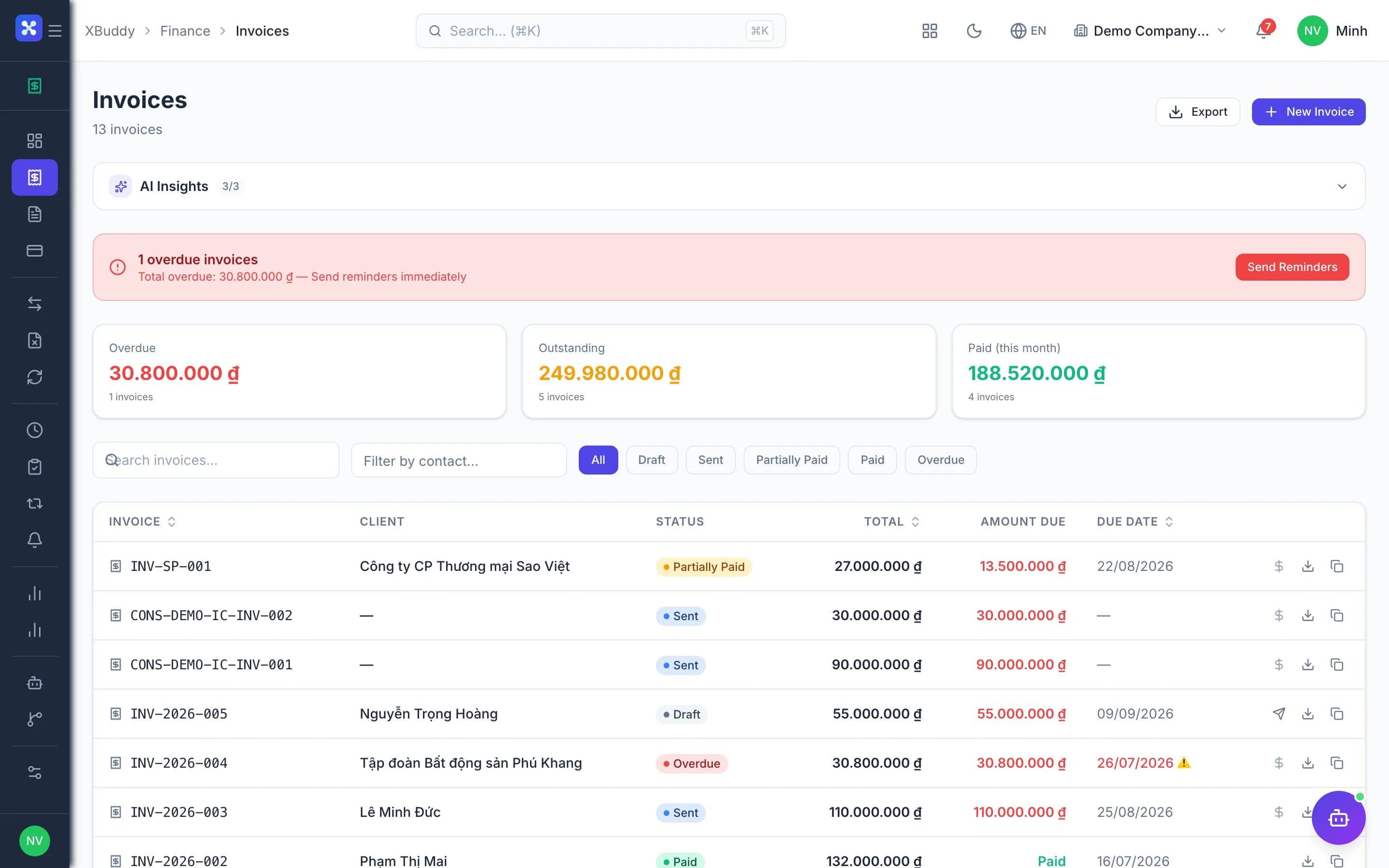
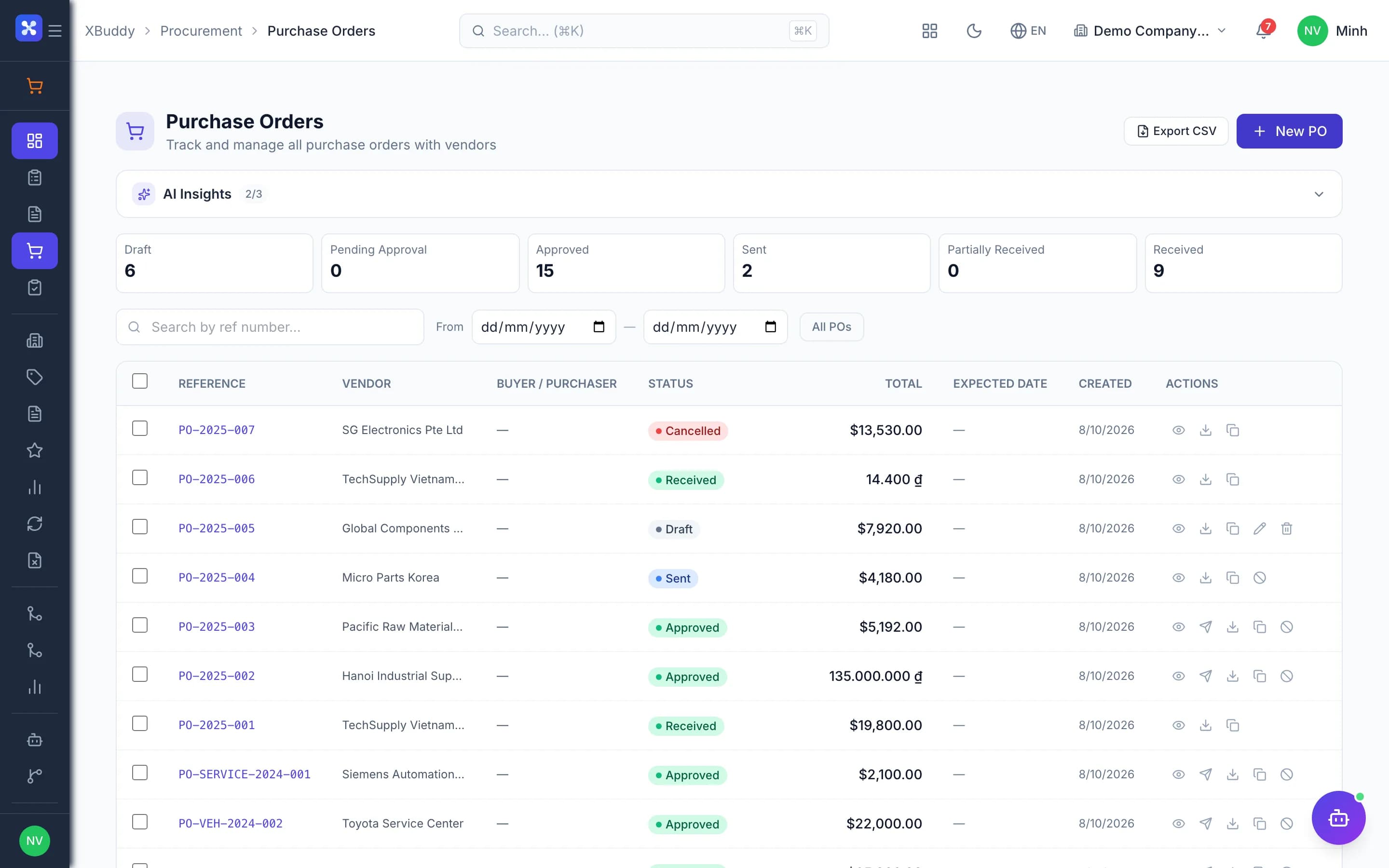
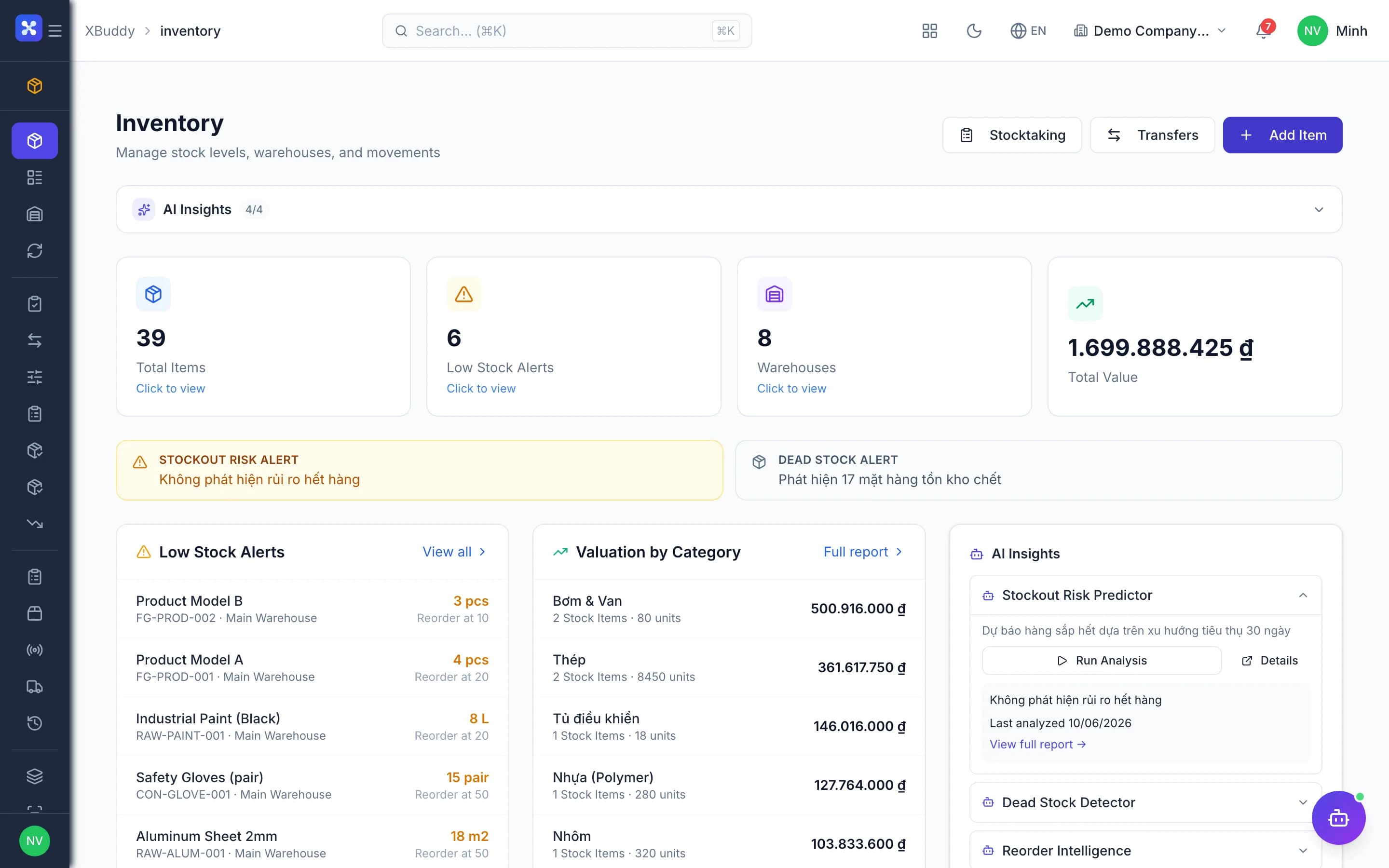
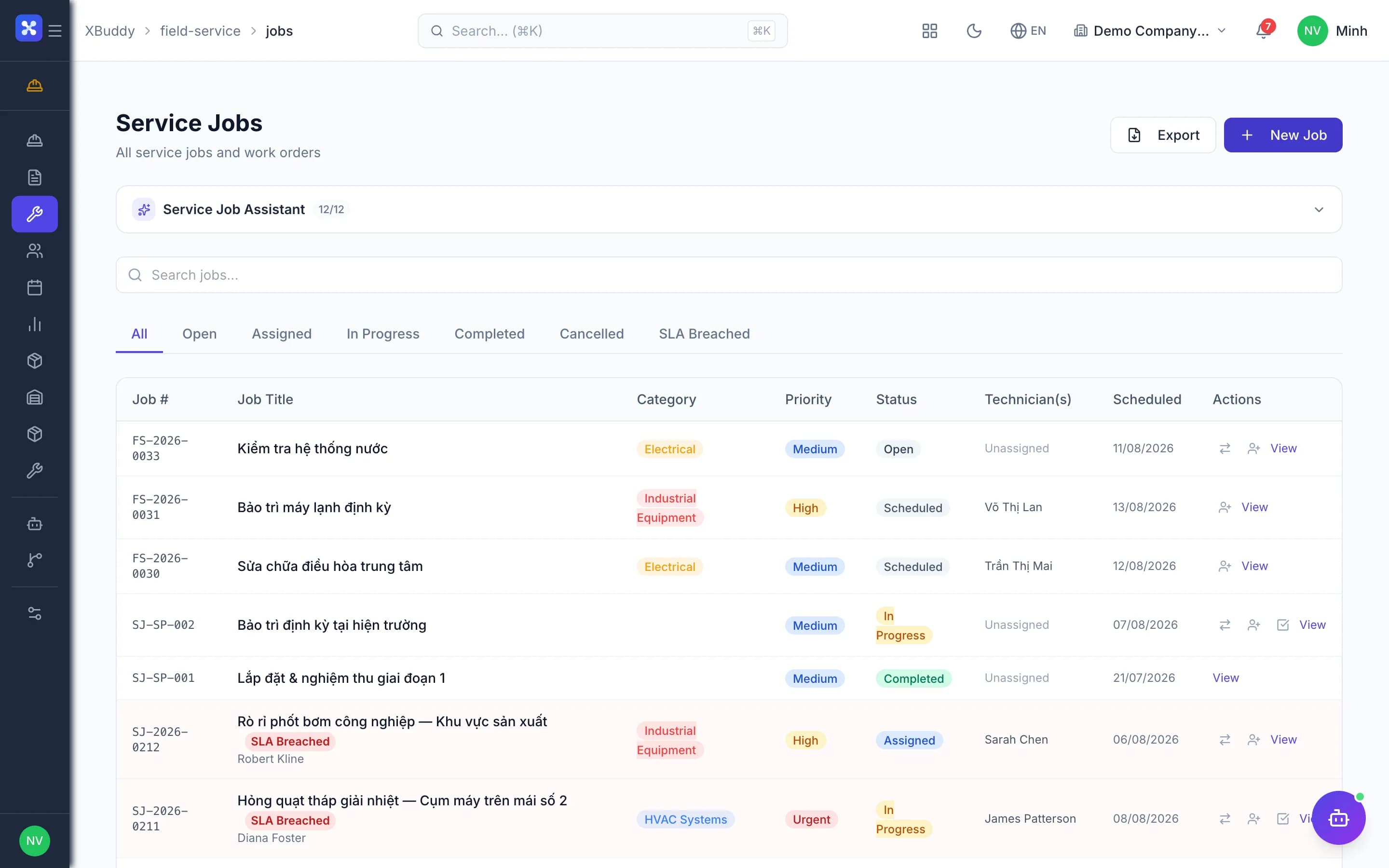
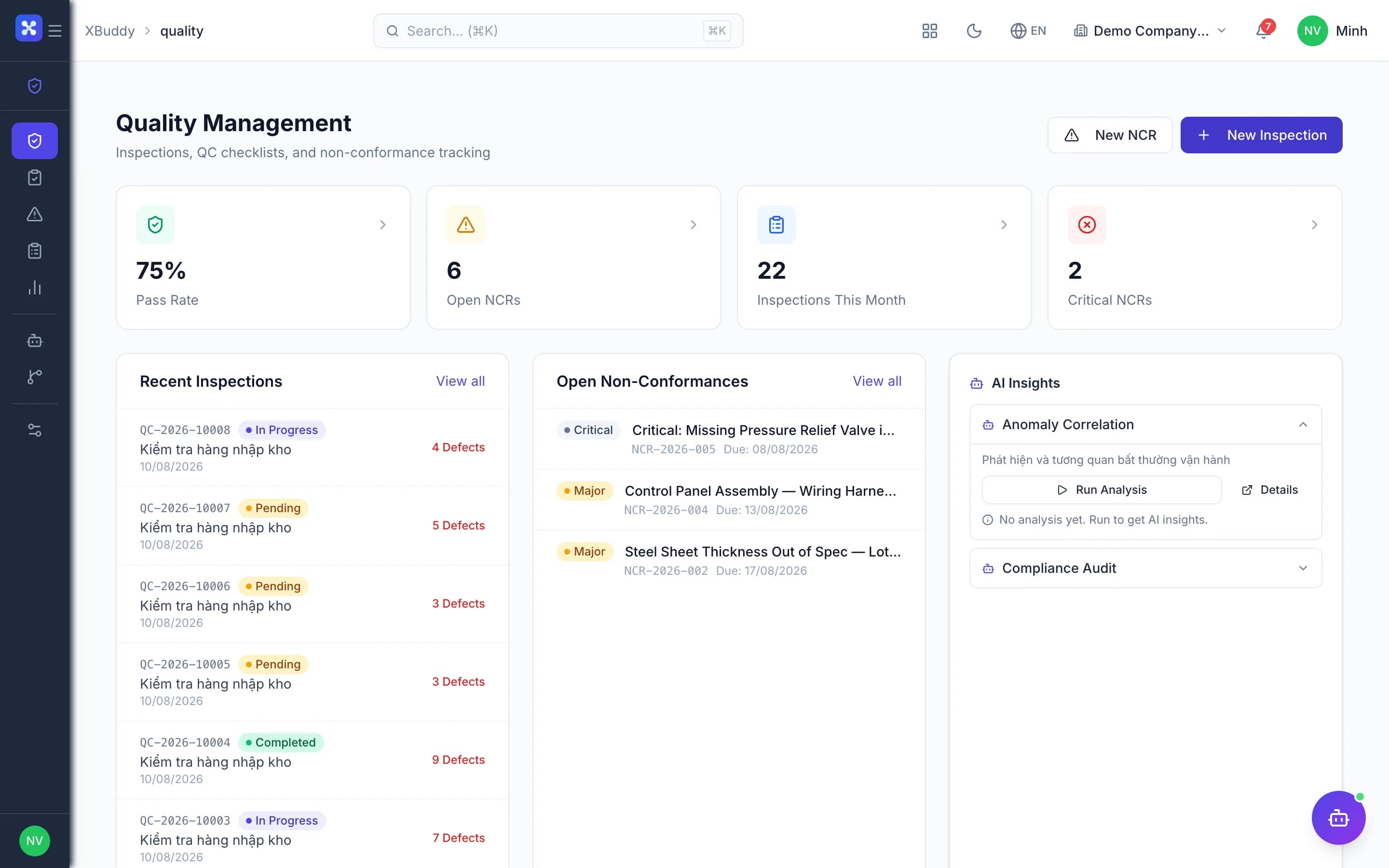
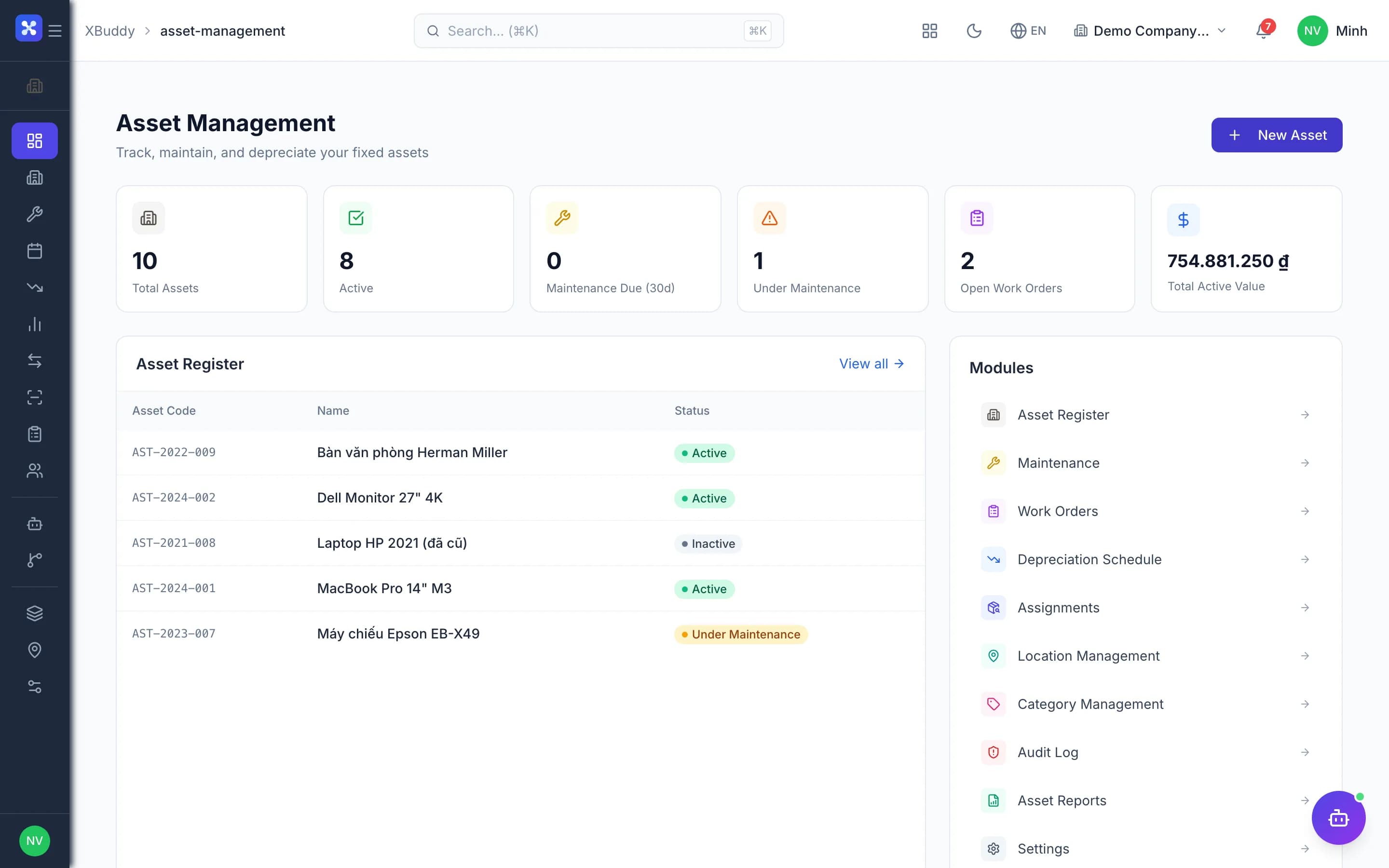
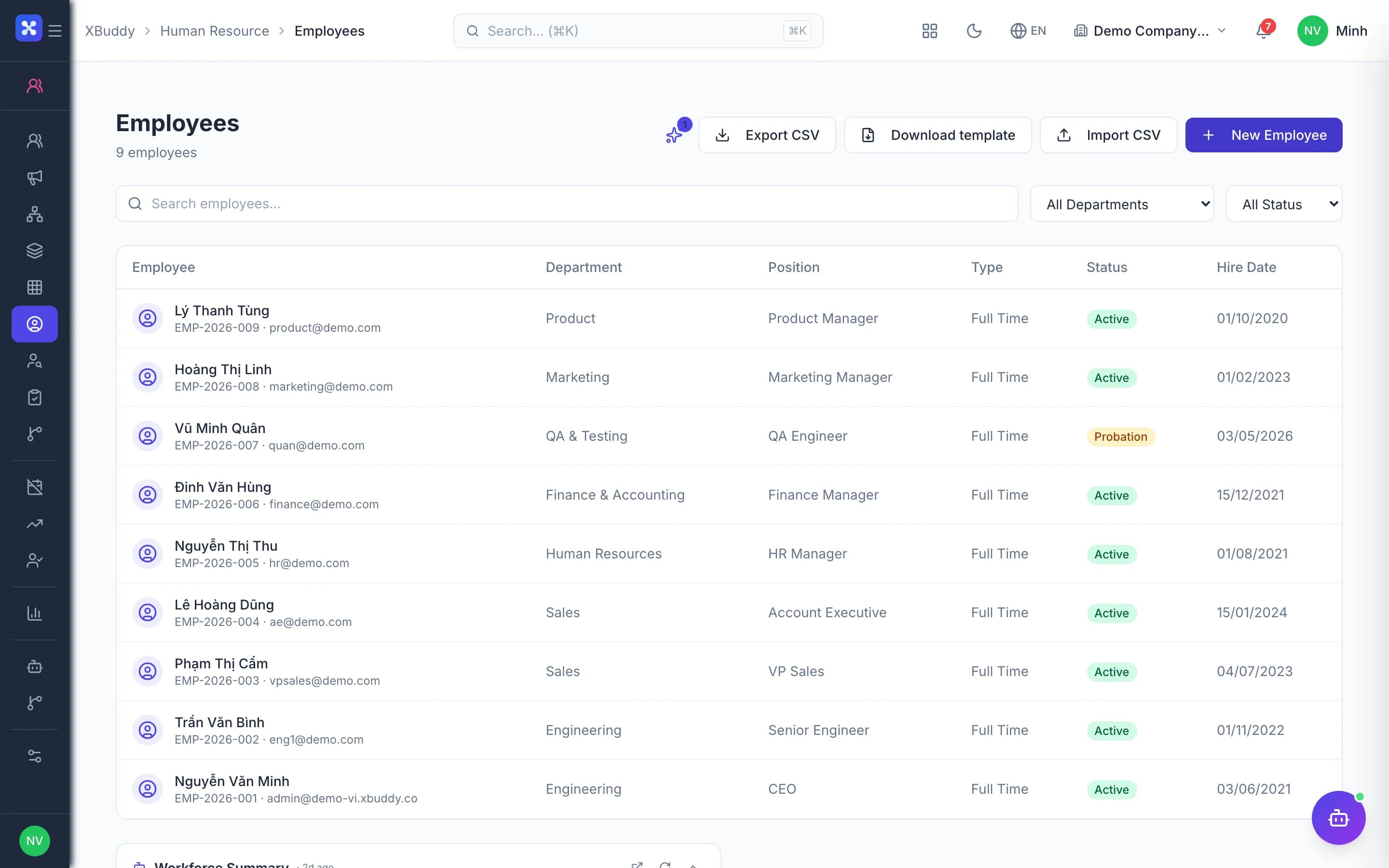
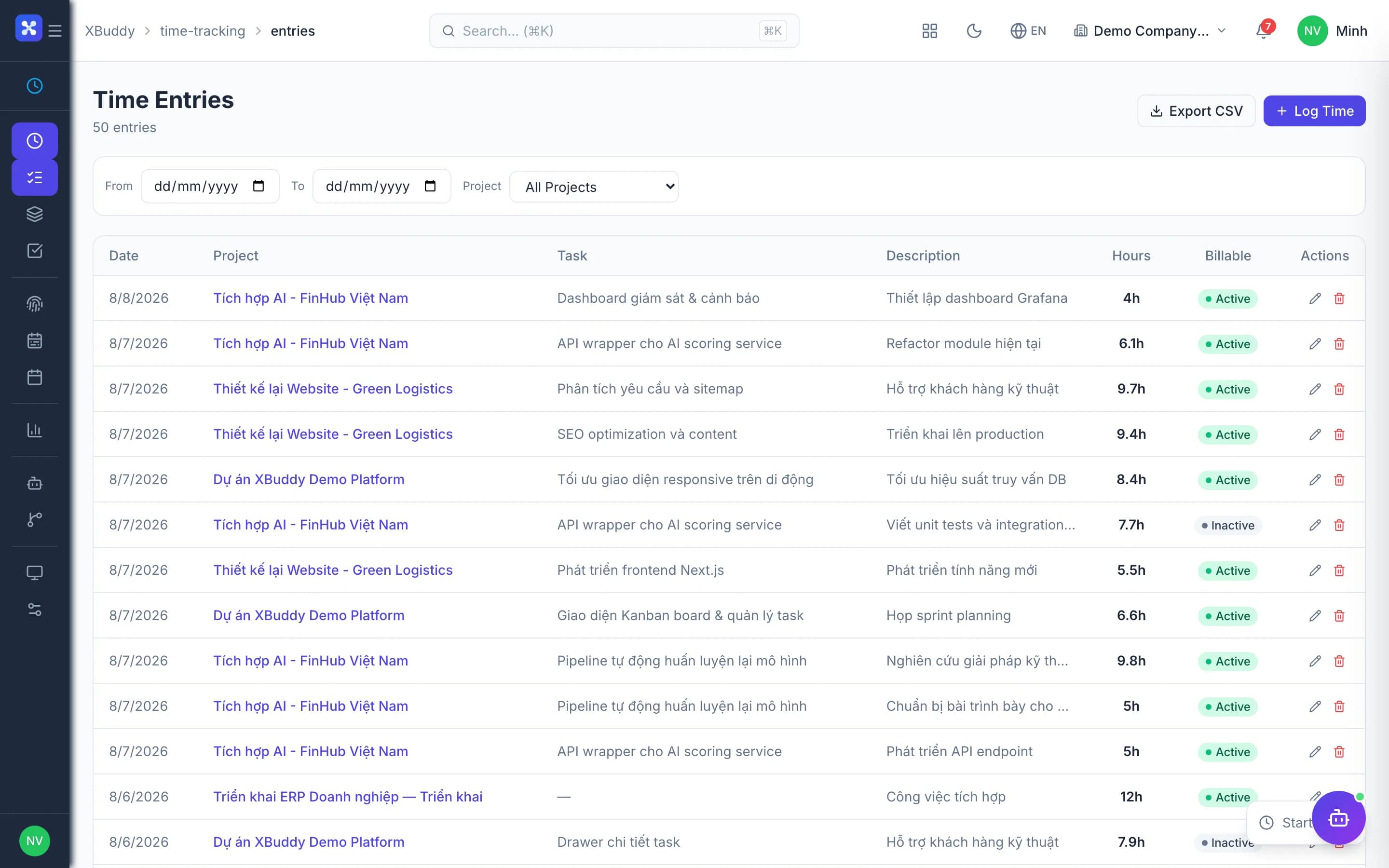
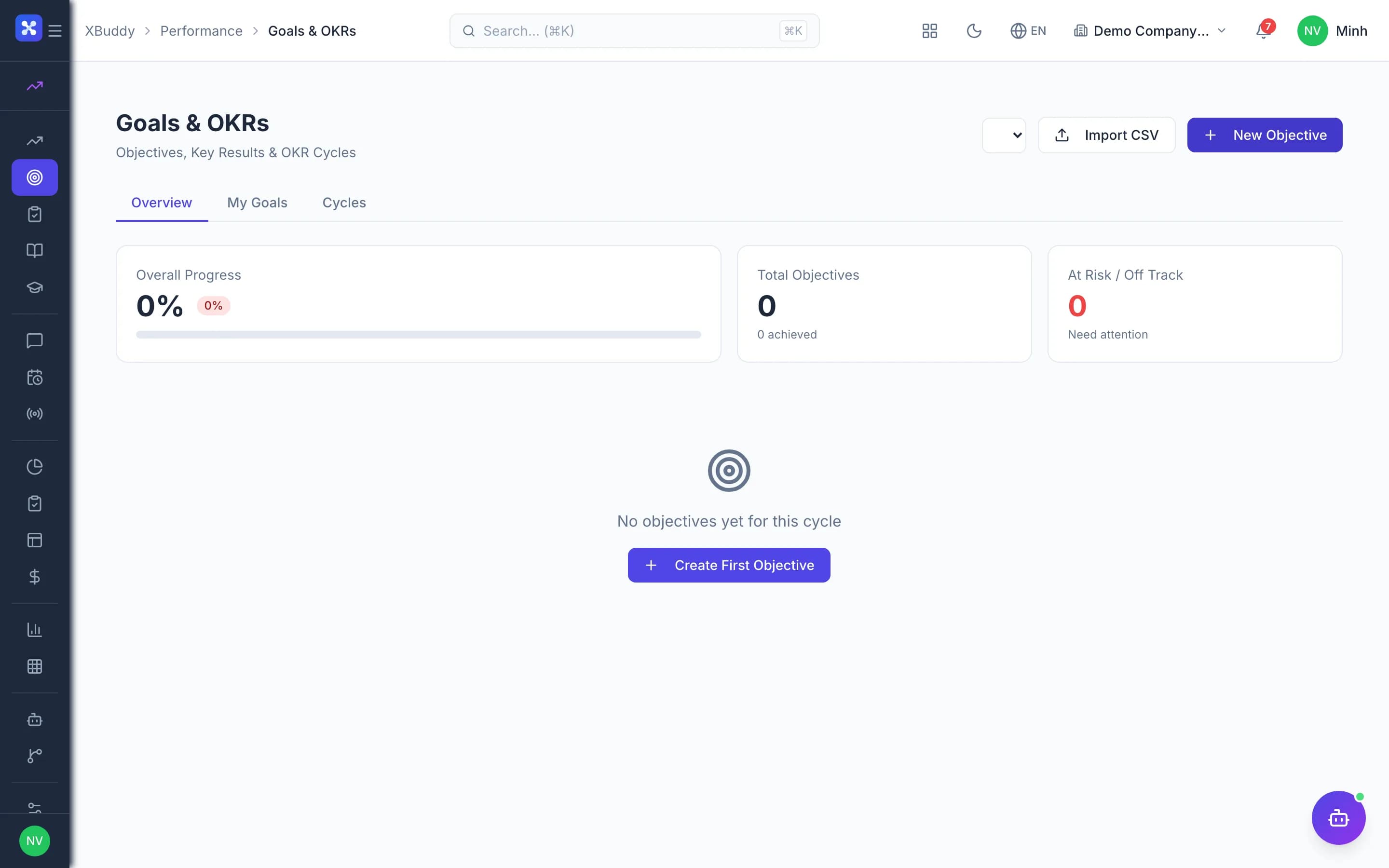
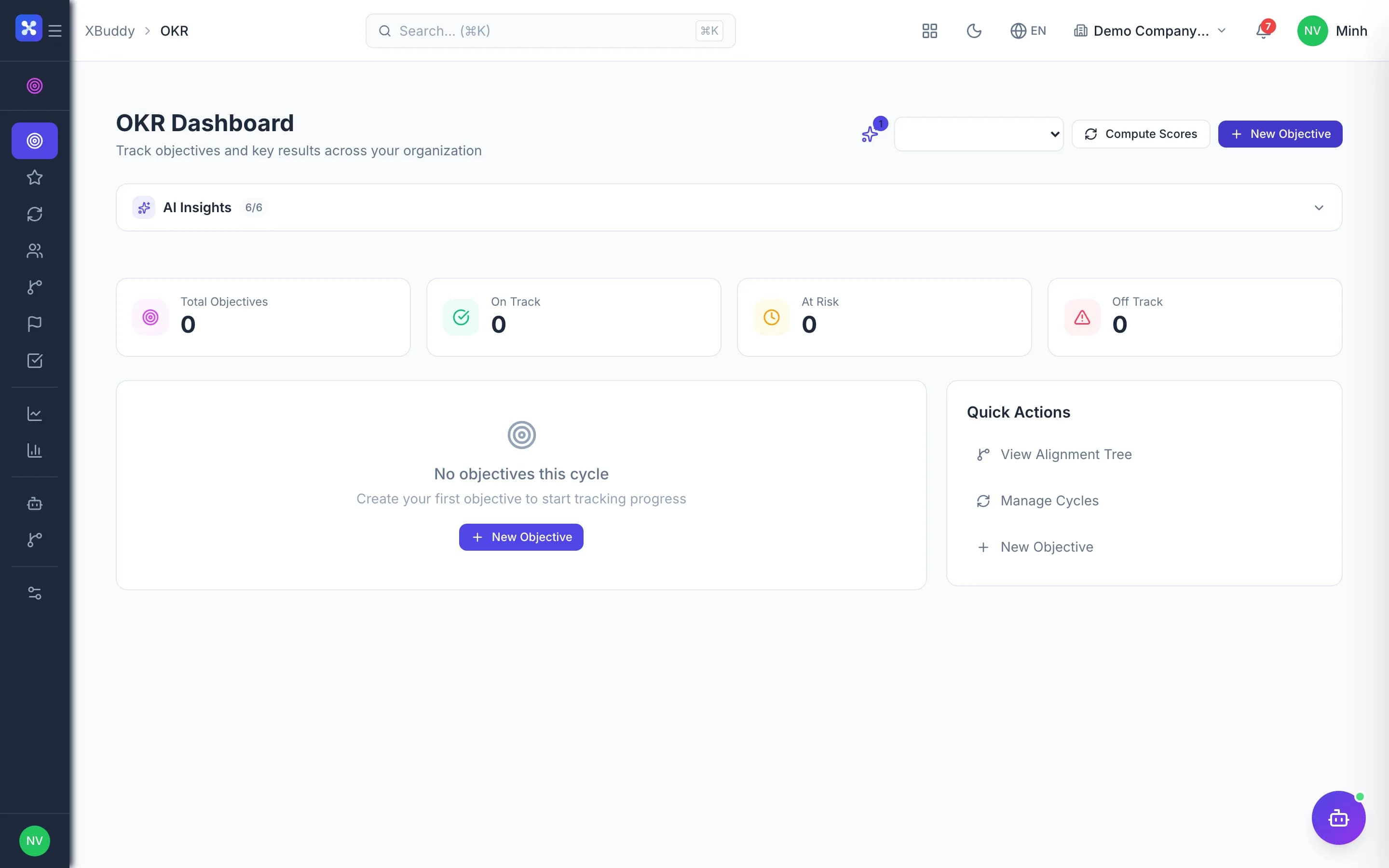
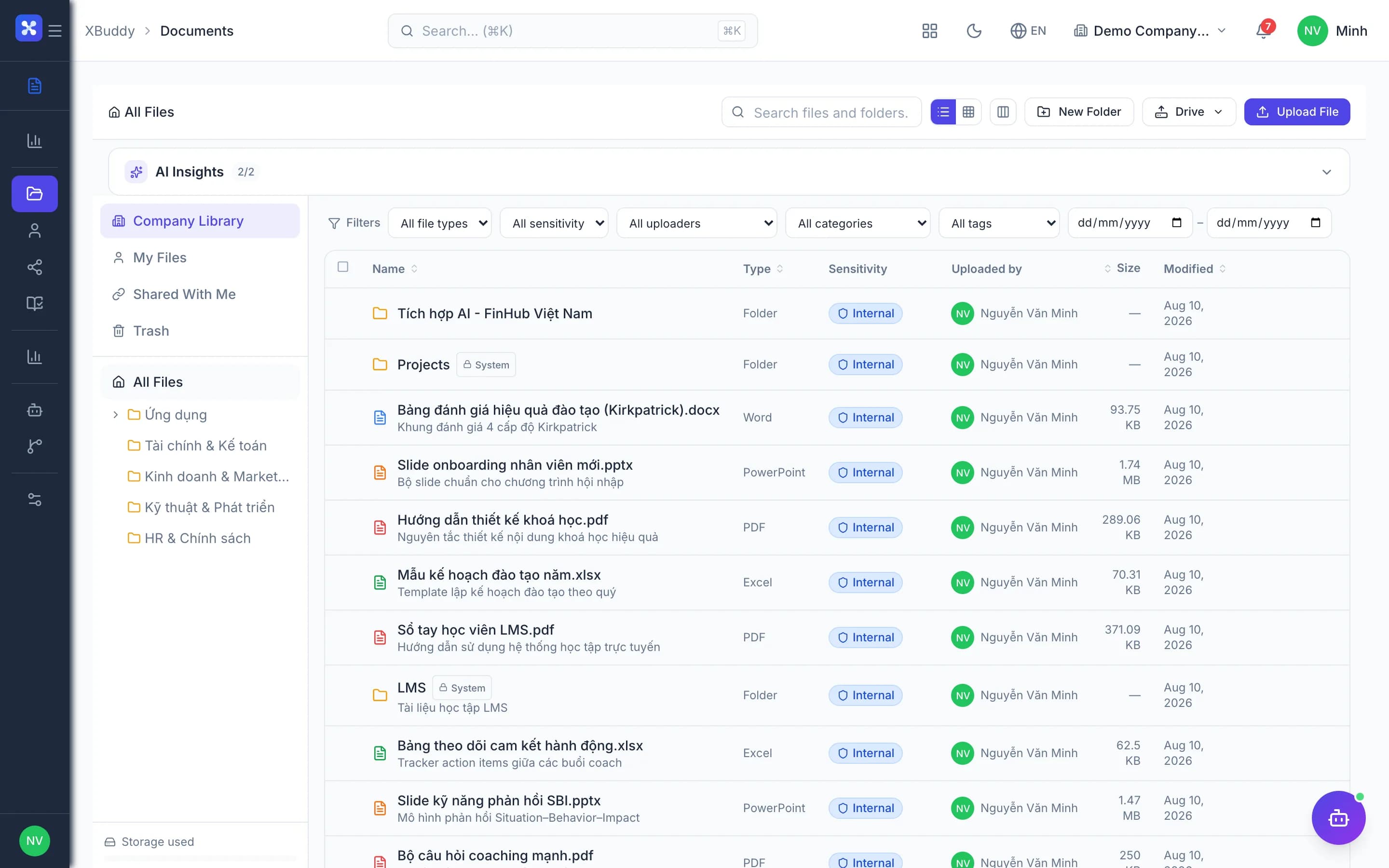
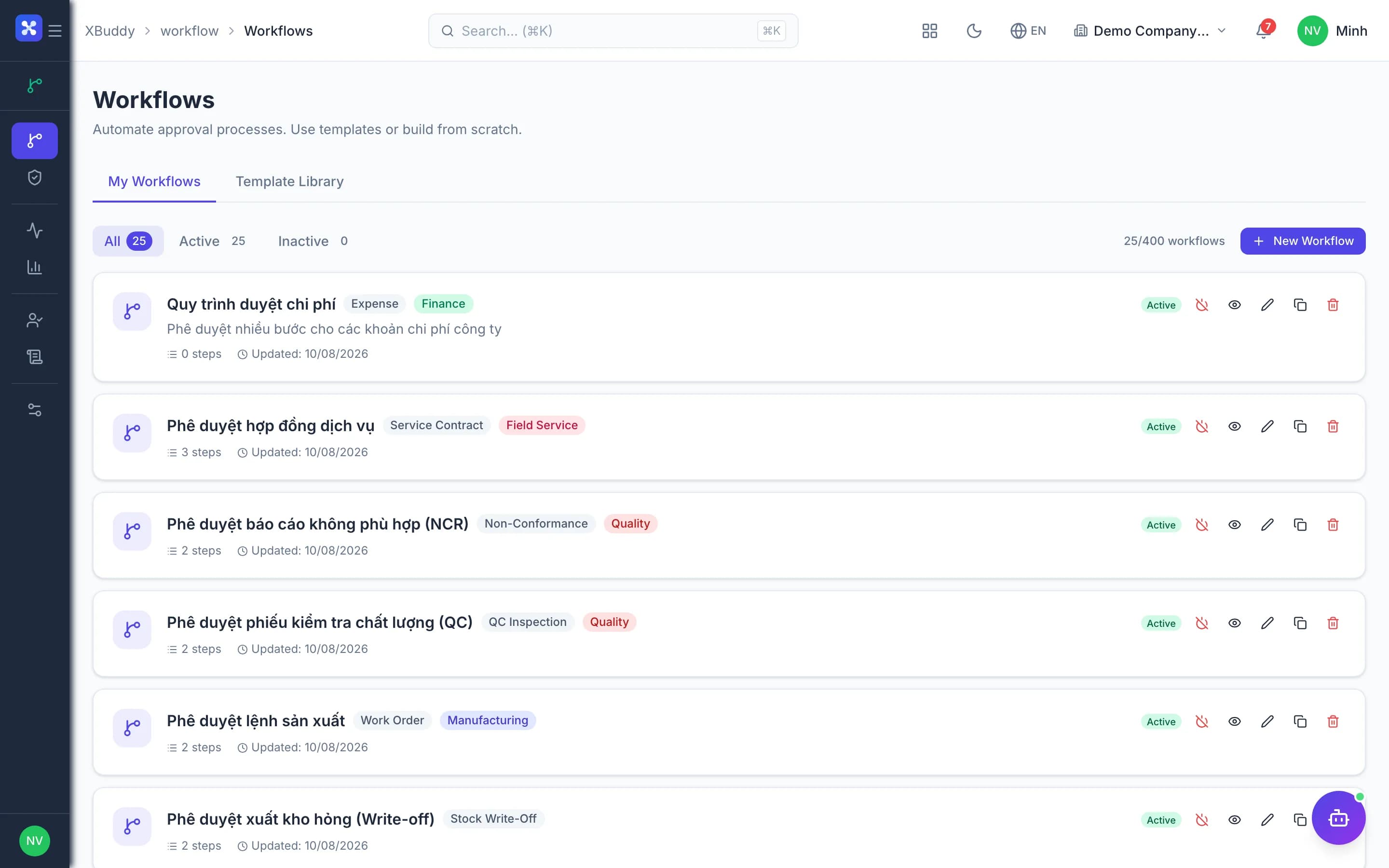
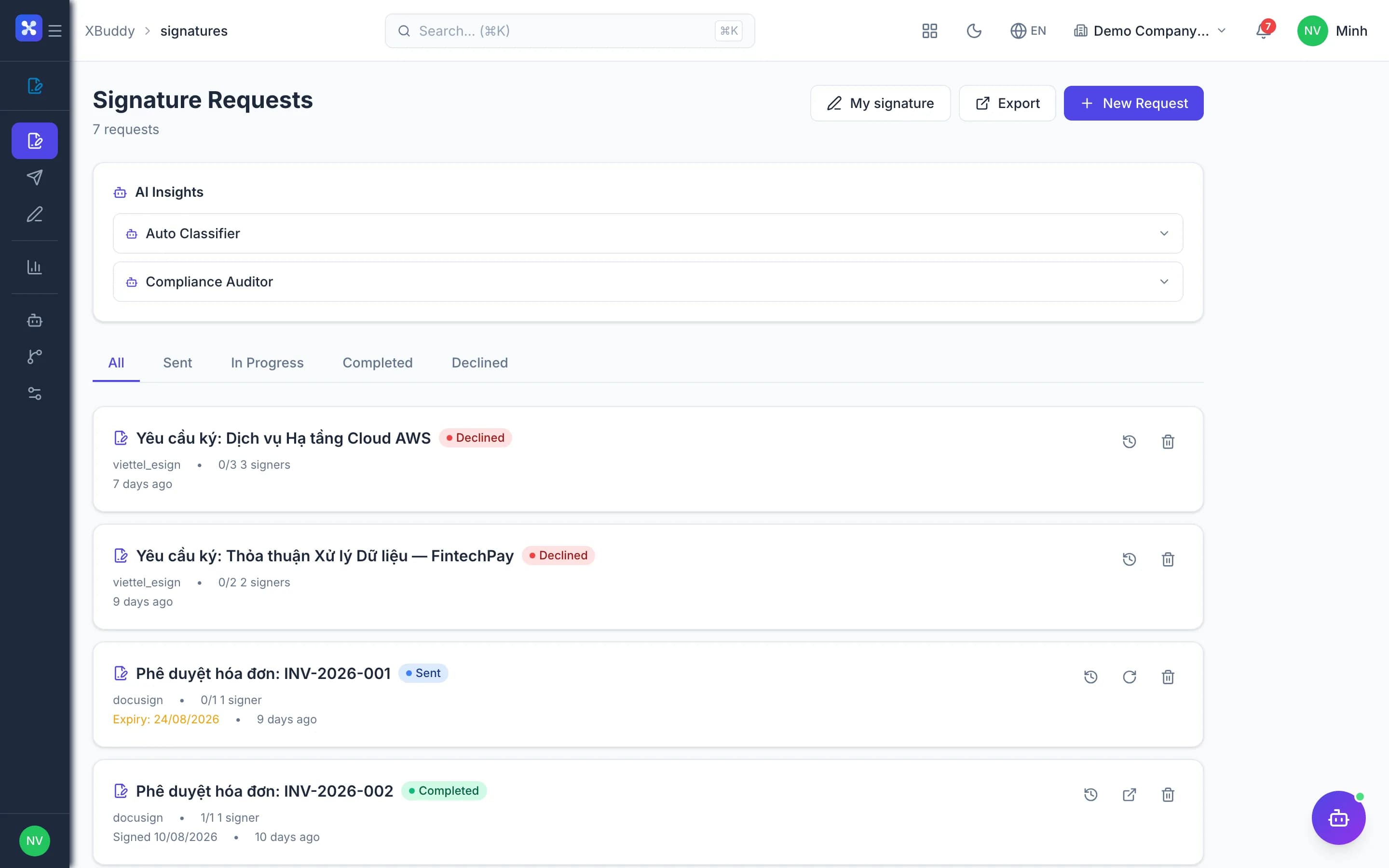
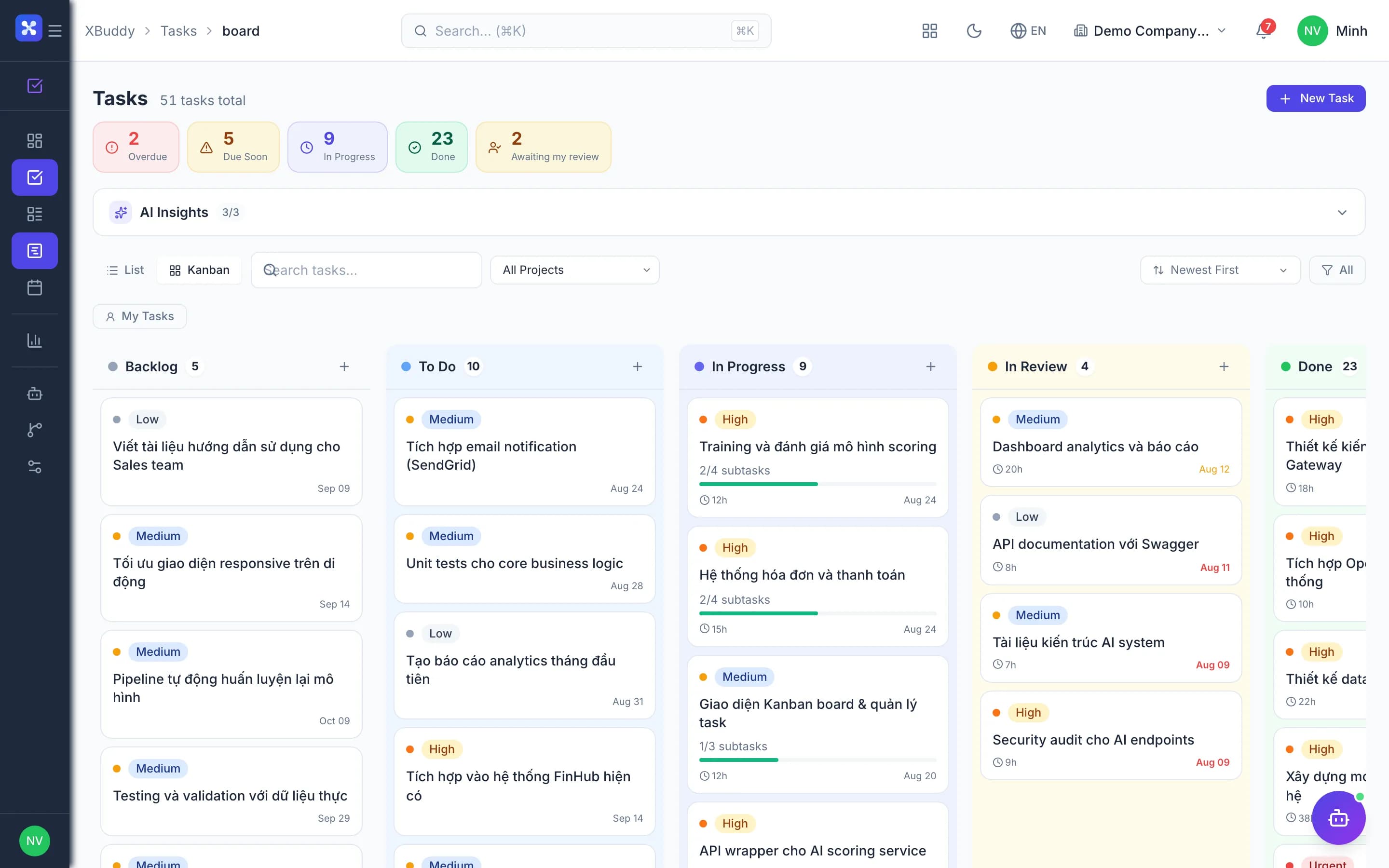
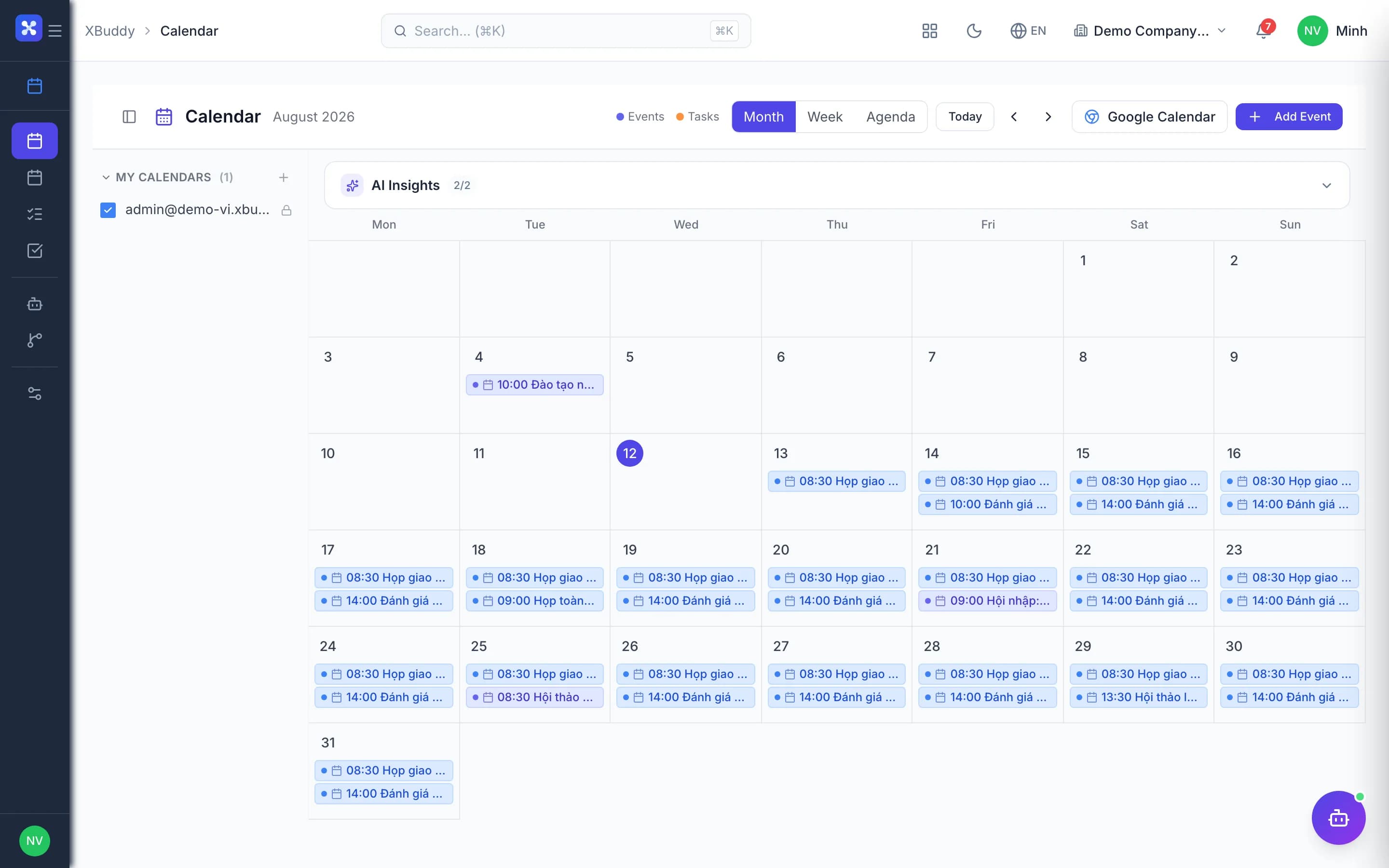
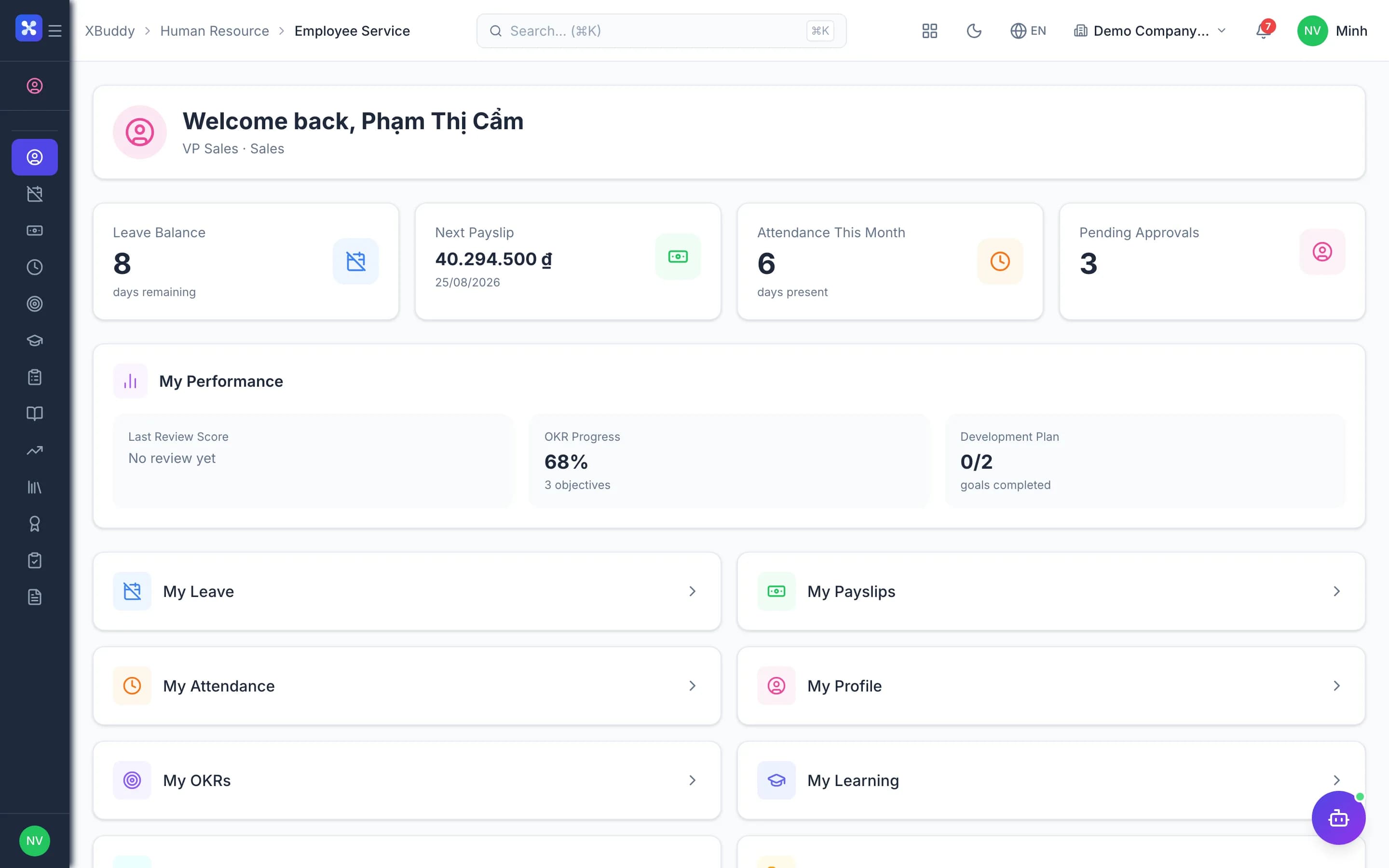
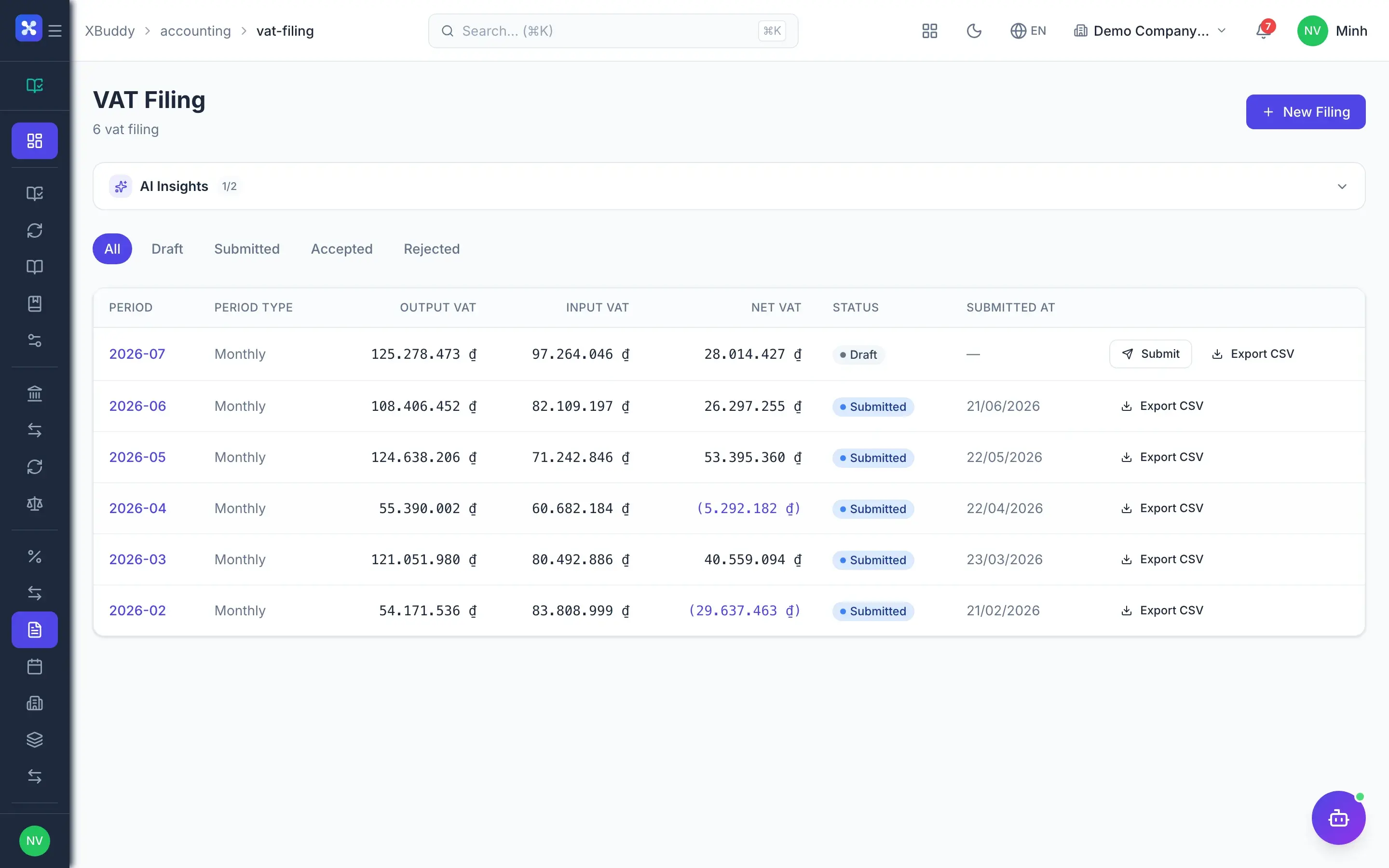
The XBuddy dashboard — real product screenshot

How it works

Request — execution — approval

Not a chatbot bolted onto software. Assistants read your actual operating data, propose concrete actions, and stop before any write to wait for the person with authority.

01

Ask in plain language

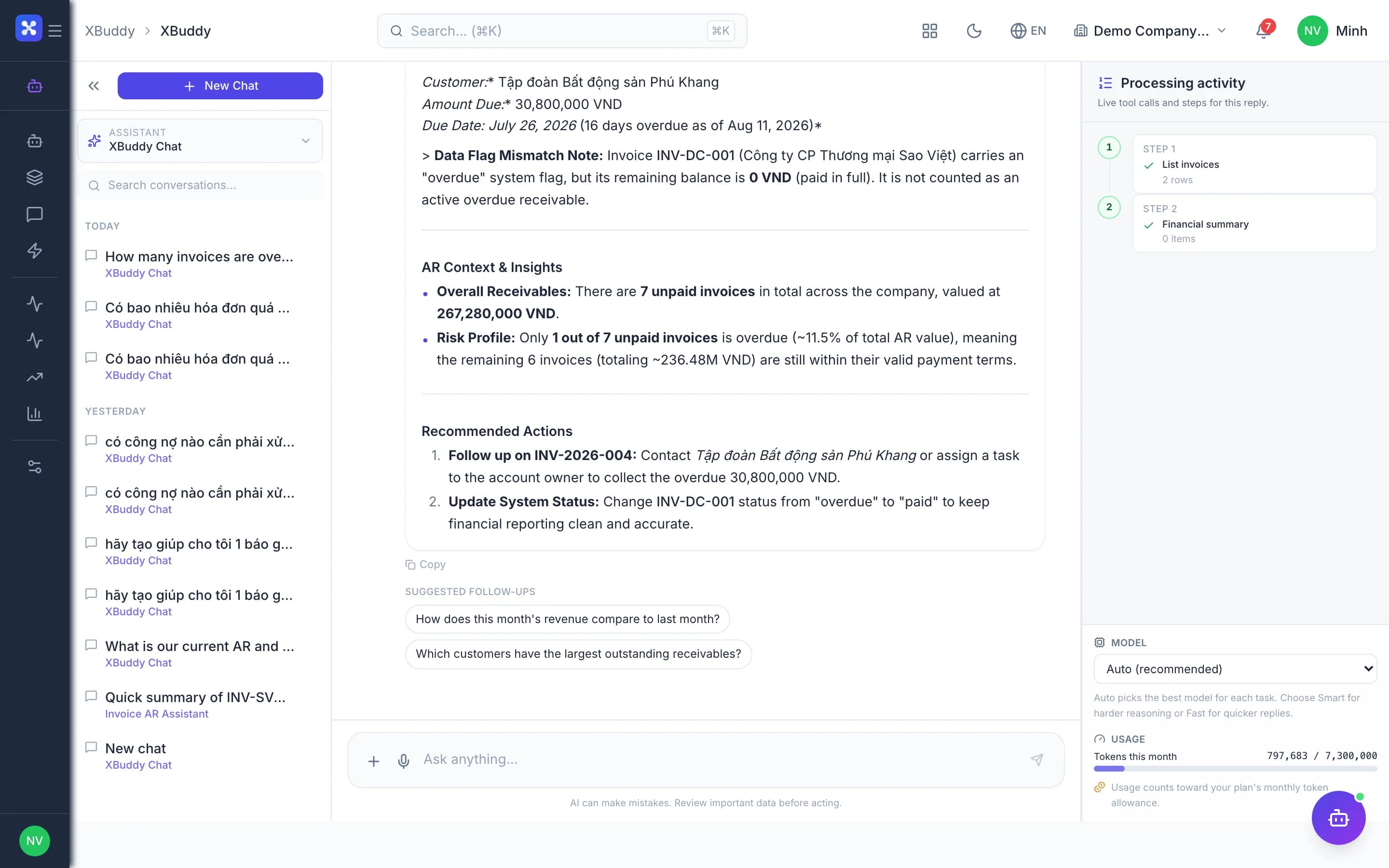
“How many invoices are more than 30 days overdue?” XBuddy Chat searches across apps and answers with a number and its sources.

02

Assistants do the repetitive work

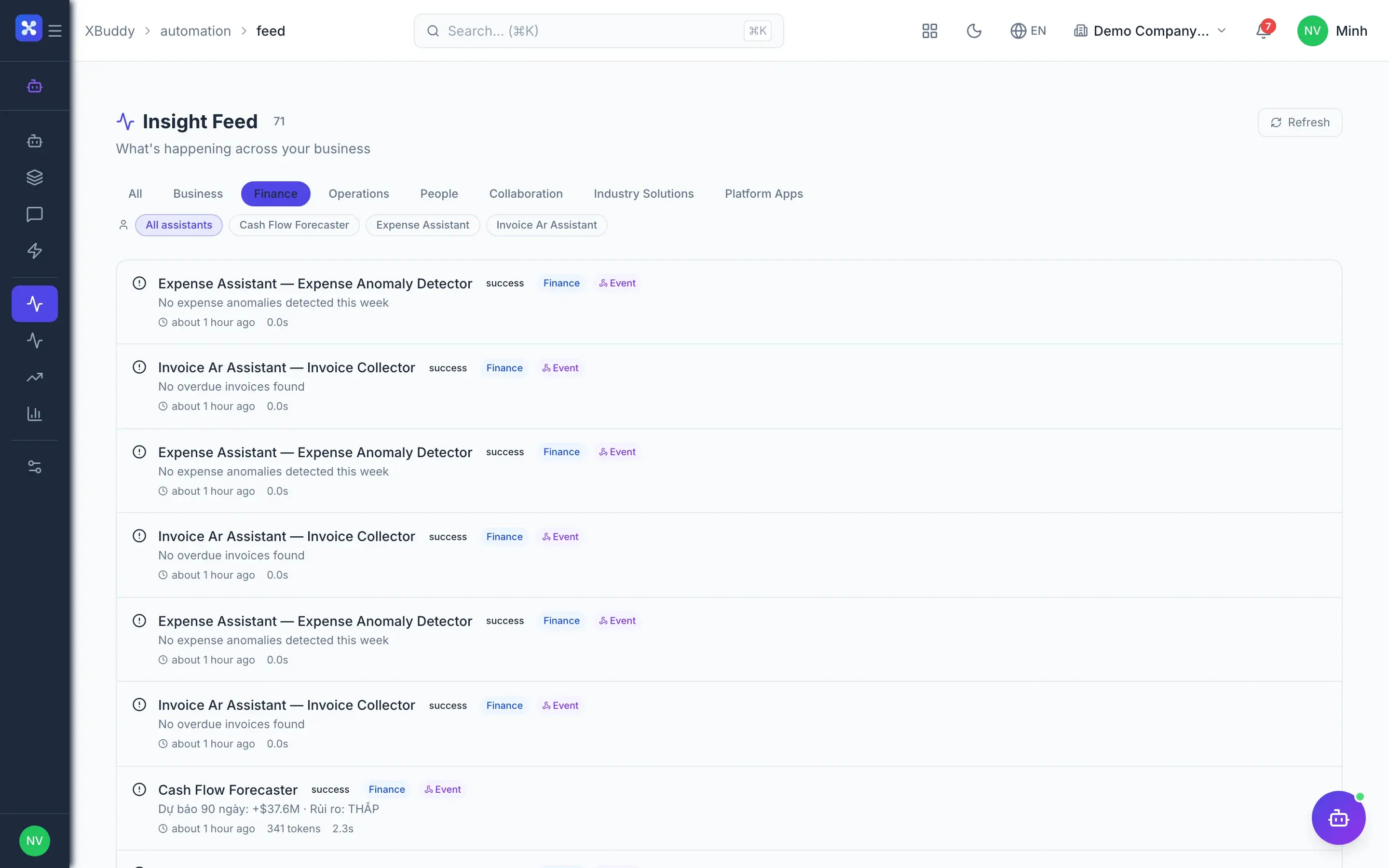
They run on a schedule or on demand: drafting dunning notices, three-way invoice matching, stock-out forecasting, CV screening.

03

You approve before anything is written

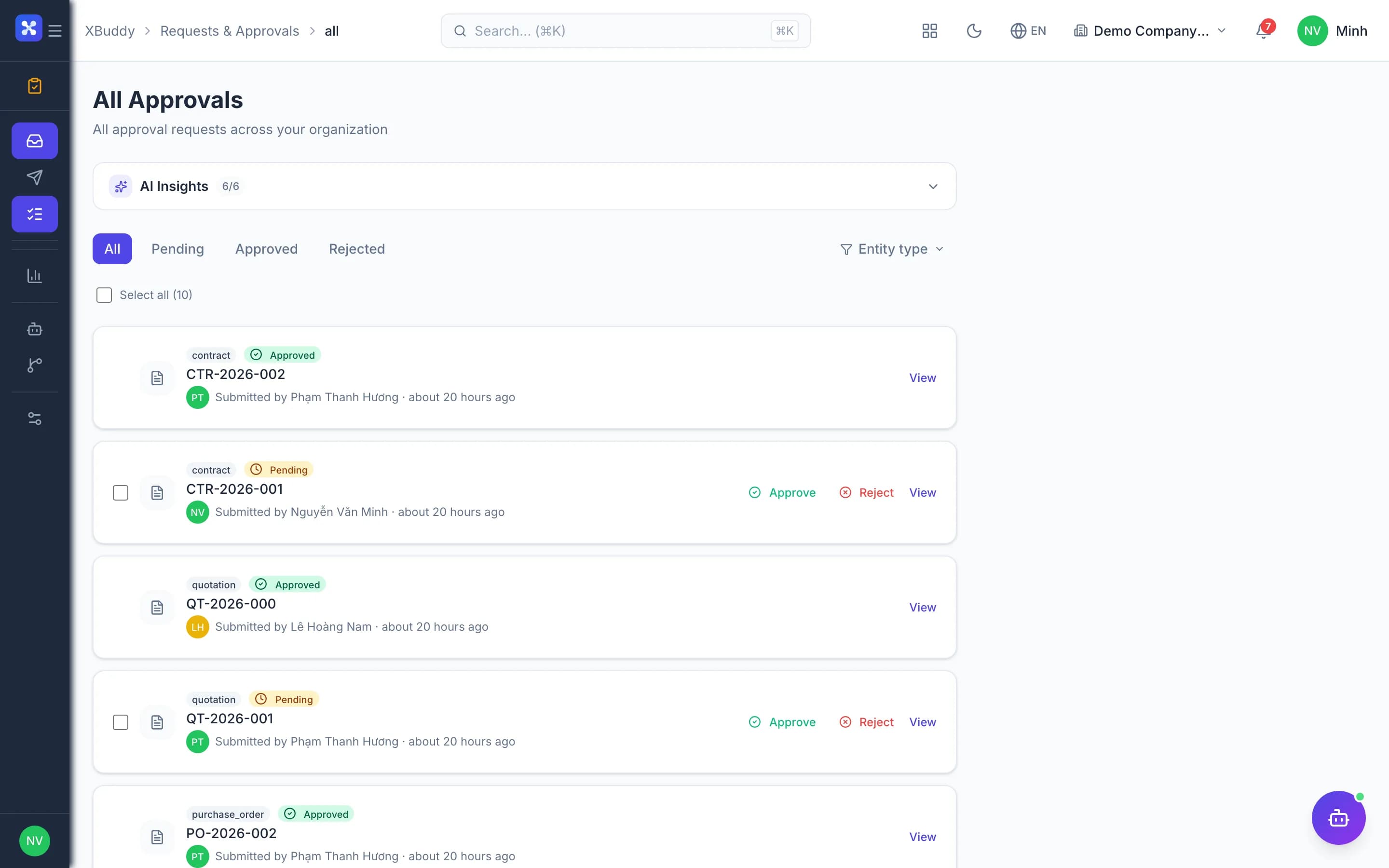
Every action runs through your approval policy, with a complete audit trail.

One platform, every department

38 apps, one account, one database

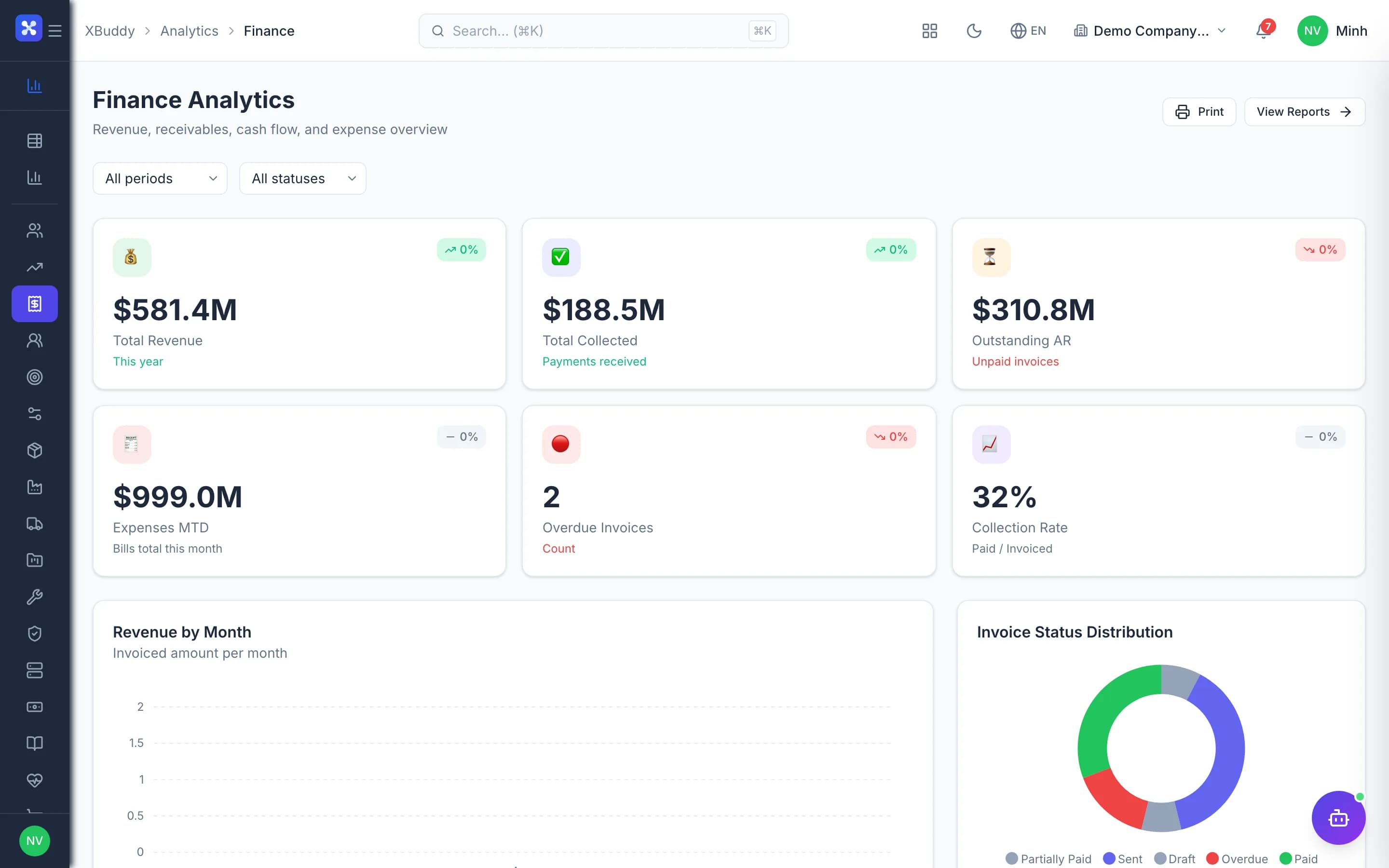
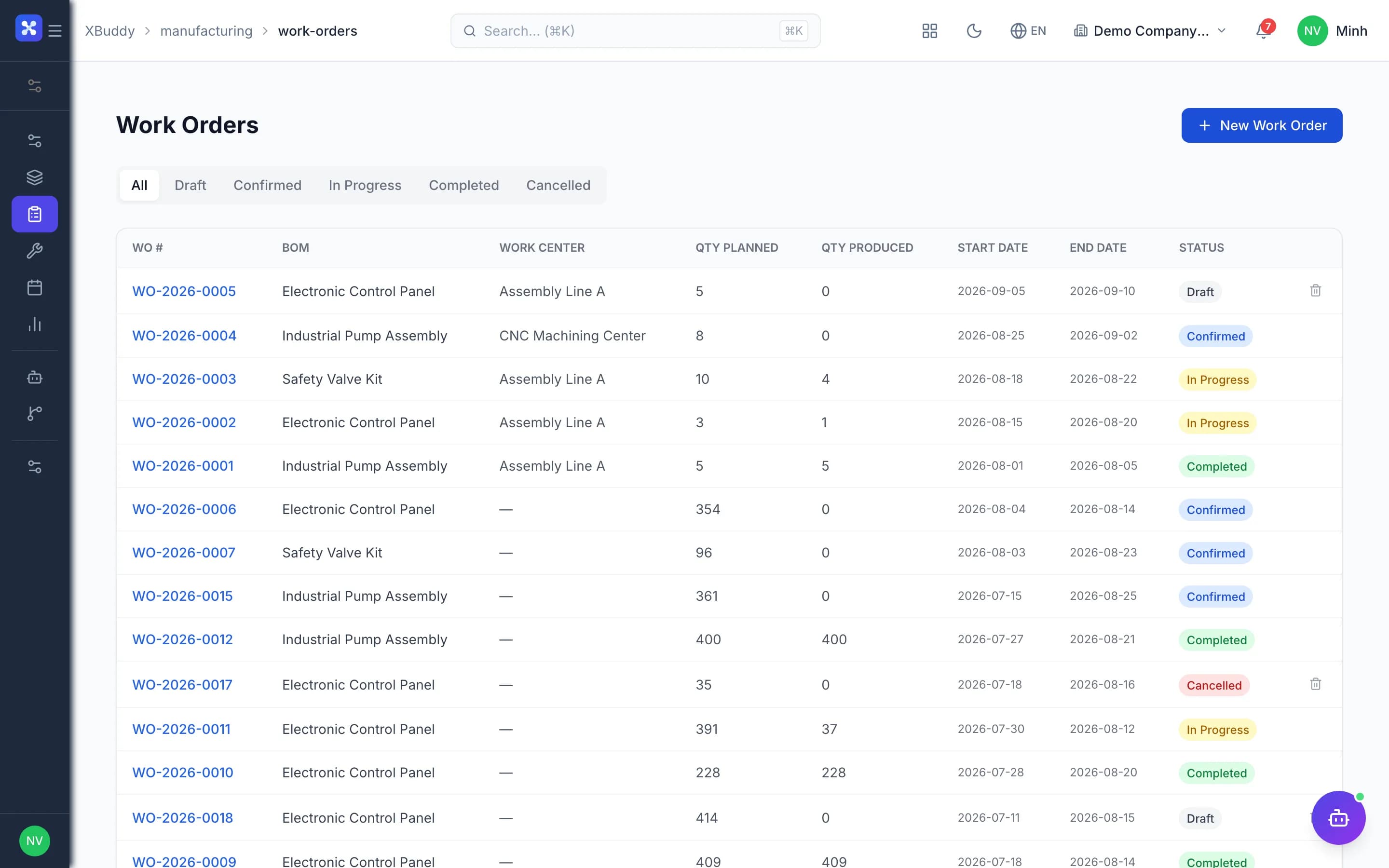
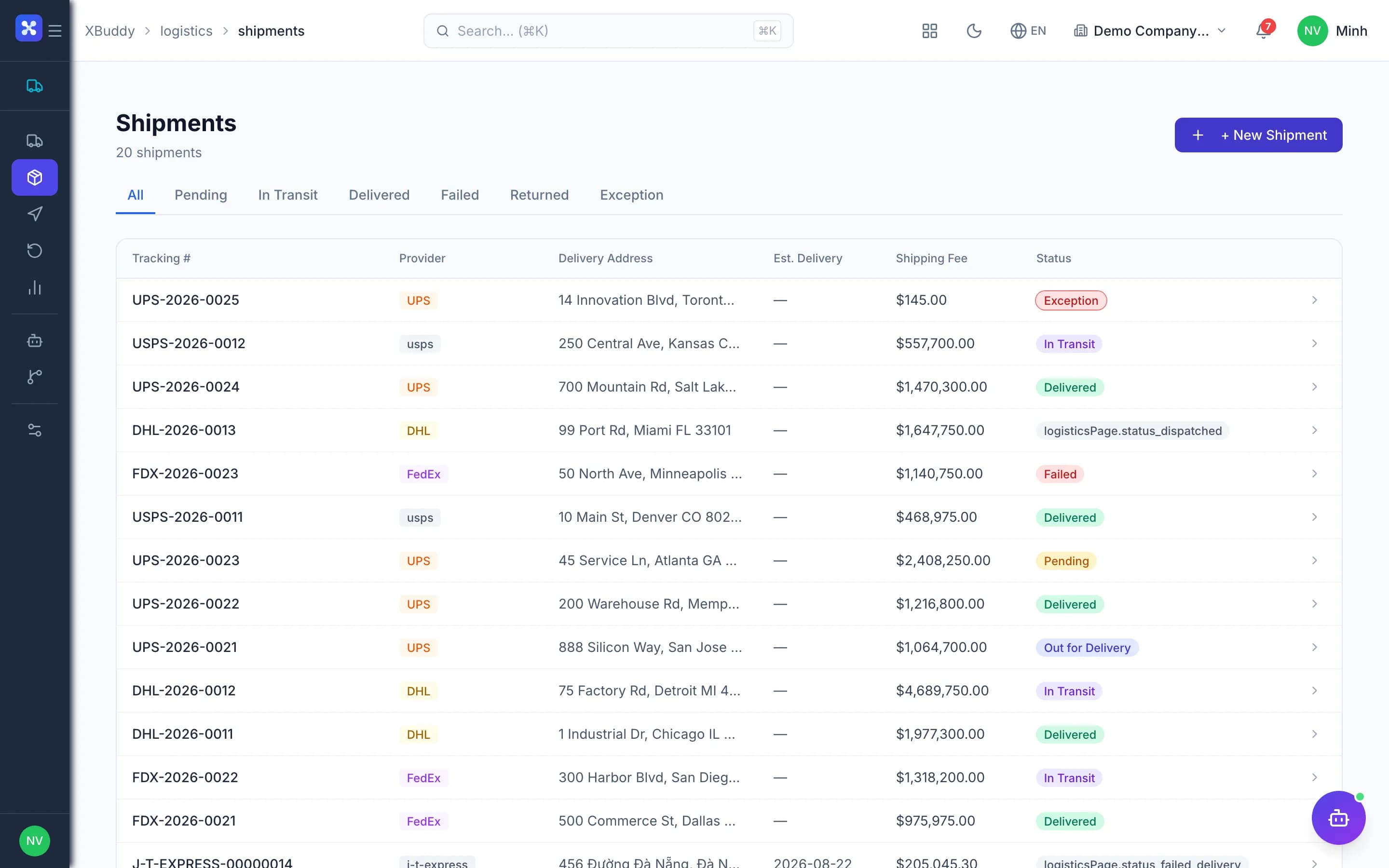
No spreadsheets shuttled between systems. Sales, accounting, HR and inventory sit on the same data layer — so cross-department reporting is the default, not a project.

Finance3
Operations4
People7
Collaboration5
Industry4

The shared platform

Nineteen platform capabilities beneath all 38 apps

Configure once at the platform layer and every app and every assistant inherits it: multiple legal entities, currencies and languages, plus workflows and reports your own team builds.

Multi-company

Many legal entities on one account, shared master data.

Multi-currency

Daily rates, period-end revaluation, dual-currency reporting.

Units of measure (UOM)

Base and alternative units across buying, selling and stock.

Financial consolidation

Intercompany elimination, translation, minority interest.

Multi-language

Vietnamese and English interface and documents, per user.

Workflow Builder

Conditional approvals, SLAs and escalation.

Report Builder

Self-service reports, pivots, scheduled delivery.

Business Flow

End-to-end ERP, CRM and HRM flows, fully linked.

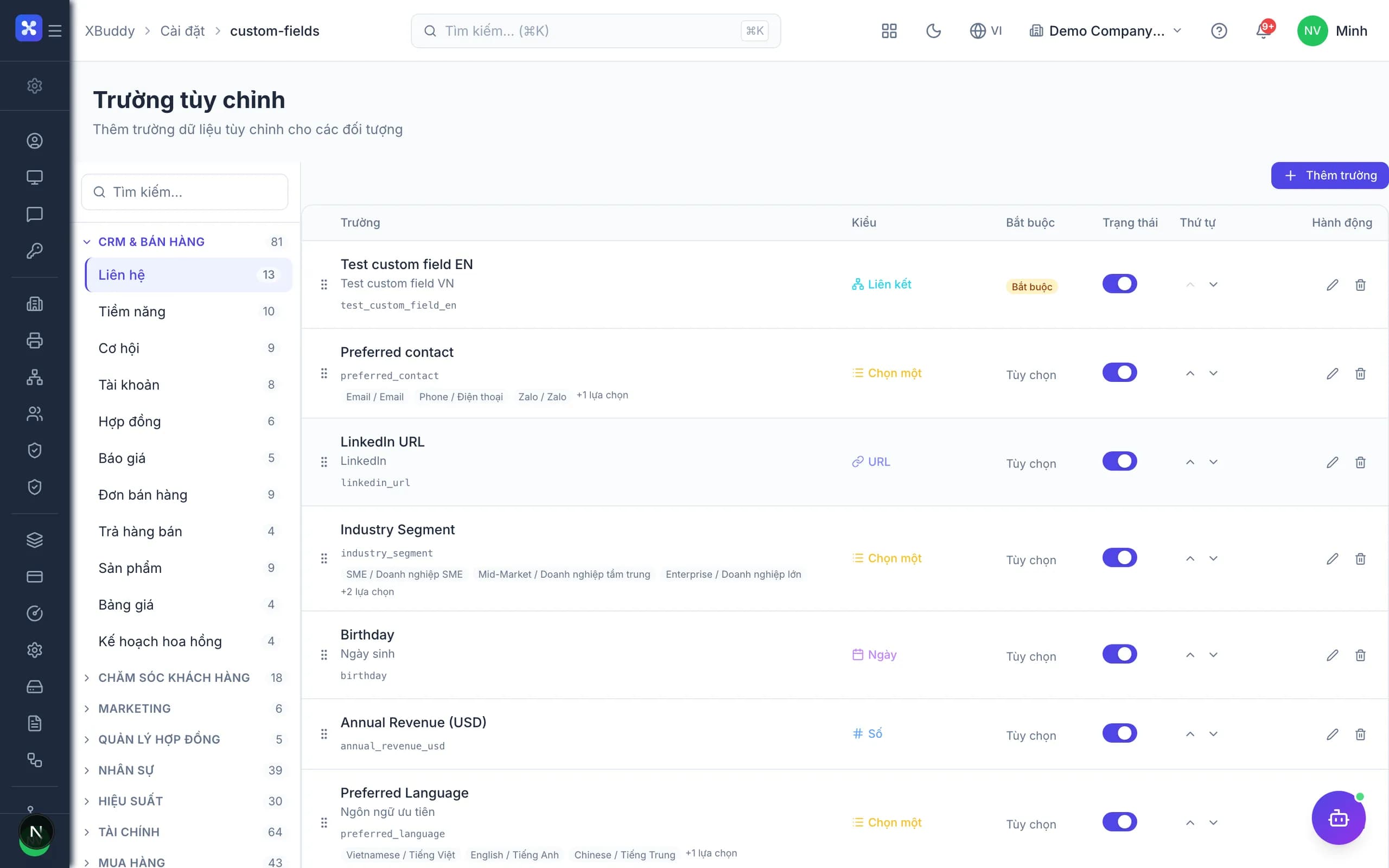
Custom Fields

Add your own fields, forms and views to any app.

Templates

Hundreds of ready templates to go live faster.

Toggle Features

Hundreds of switches to turn features on and off.

AI Pipeline Builder

Chain AI steps into an automated process.

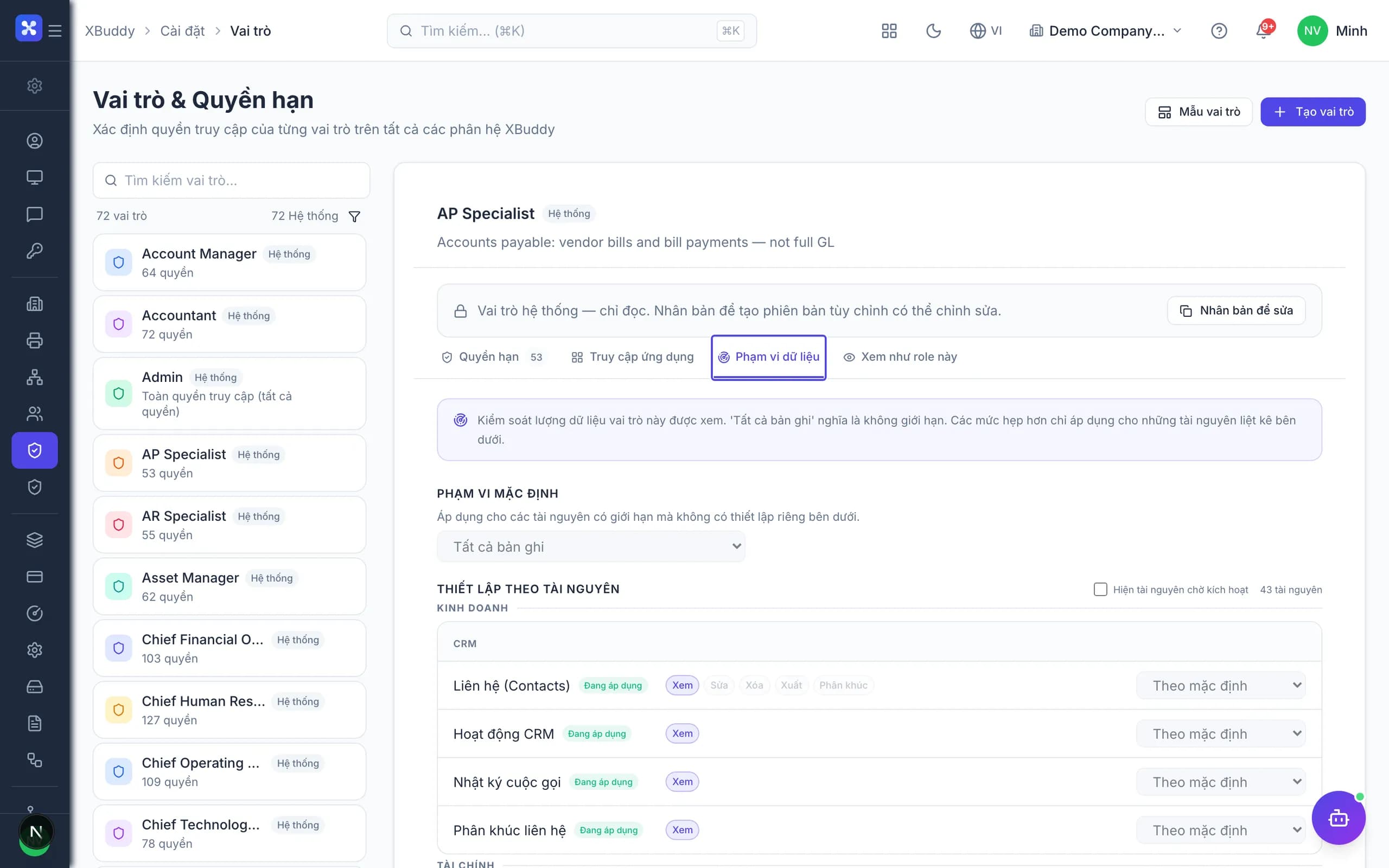
Permissions down to data scope

Role + scope + field-level rights.

Security & access control

SSO, 2FA, encryption, IP limits and session control.

Logs & audit trail

Who did what, when, to which data — kept permanently.

Data privacy

Anonymisation, erasure on request and retention limits.

API & webhooks

Every object has an API, every event can fire a webhook.

E-signature & third-party accounting

Digital signing, e-invoicing, banking and other accounting systems.

Mobile apps

Two iOS and Android apps: management and field work.

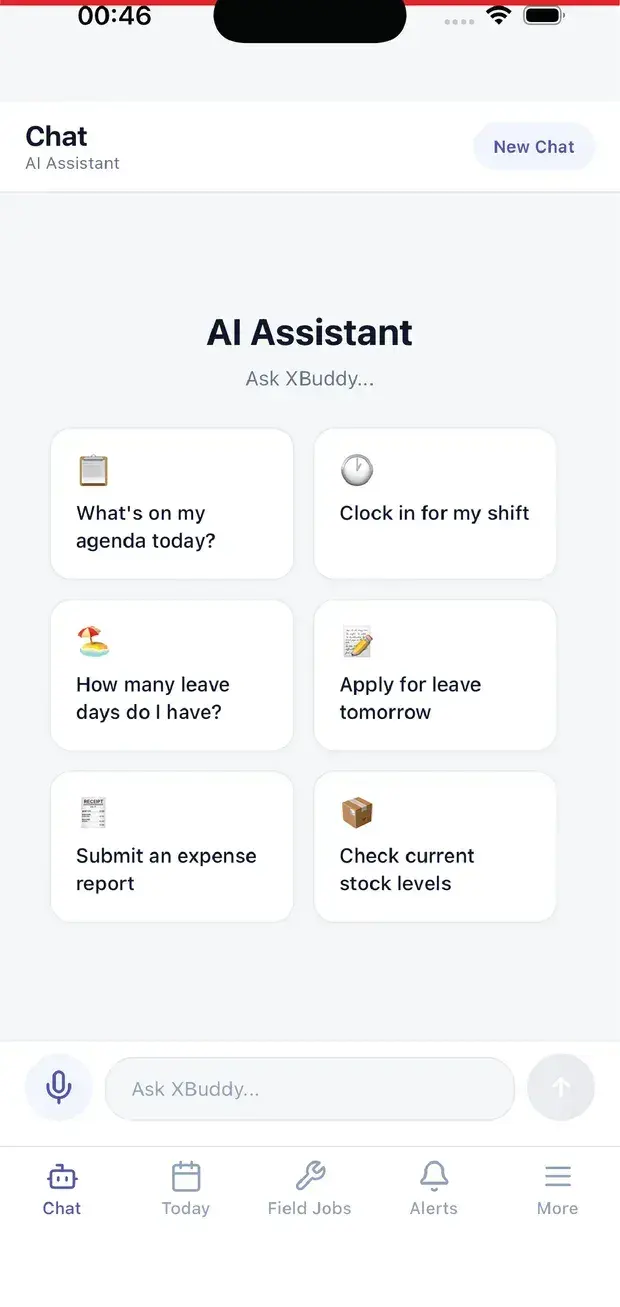
XBuddy Chat

A single access point to operating data

Instead of opening seven systems, your team asks in one place — and gets an answer, a report, or an action waiting for approval.

A single access point to operating data
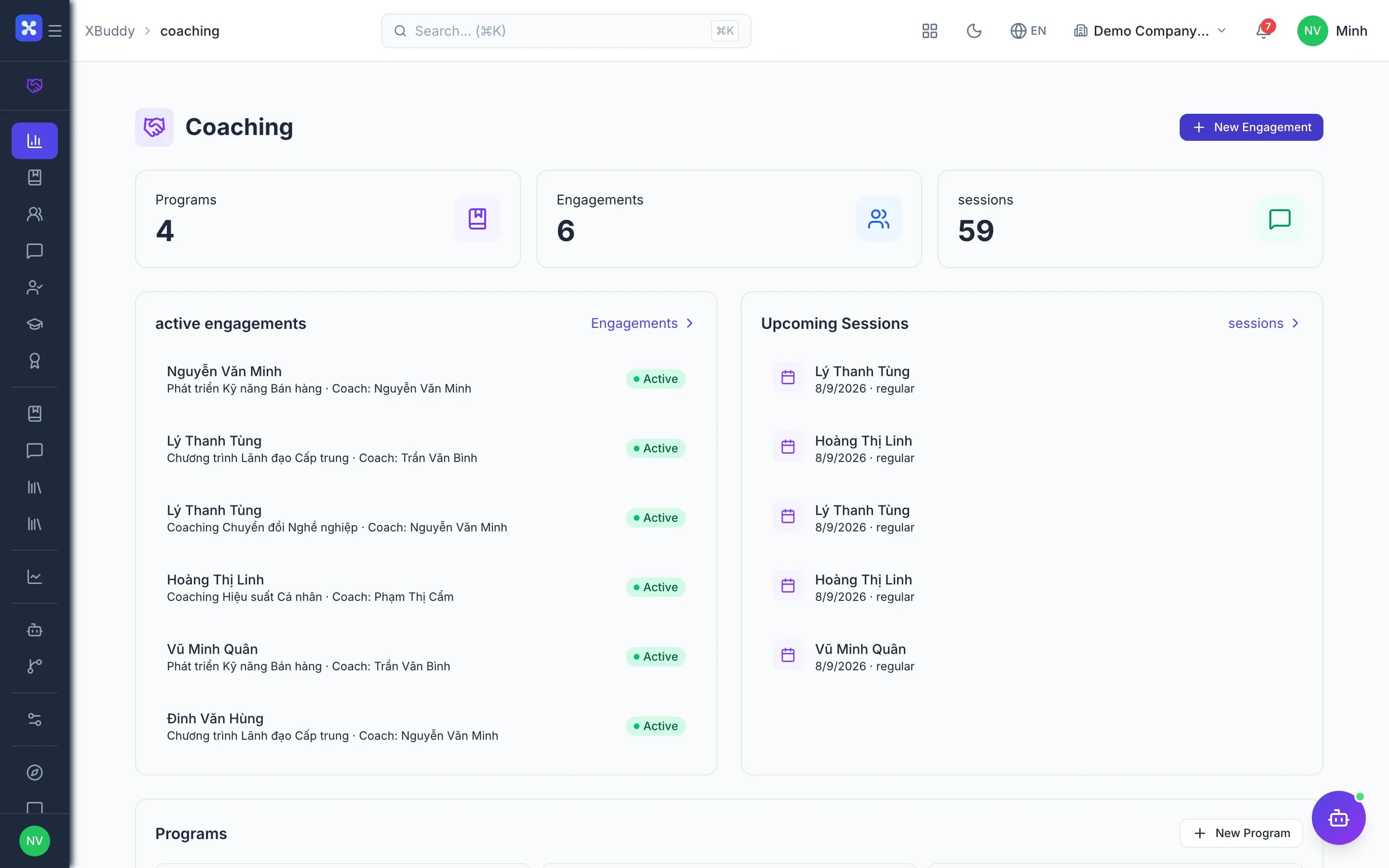
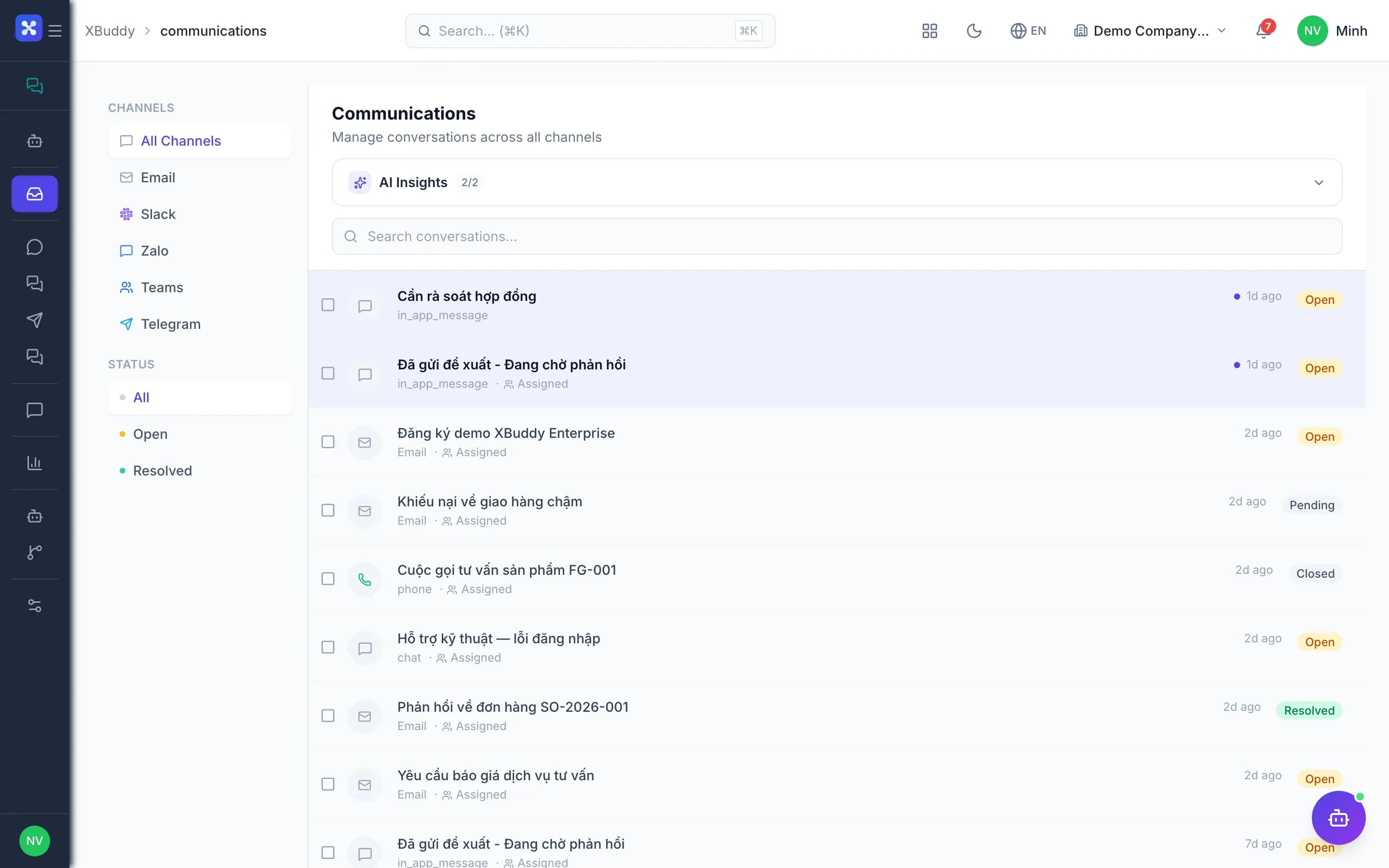
XBuddy Chat — real product screenshot
  • Query numbers across modules: finance, CRM, HR, inventory.
  • Describe the report you need; get a shareable file and a recurring schedule.
  • Delegate to the right assistant: “Have Collections chase customer X.”
  • Proactive alerts when numbers drift — actions still wait for you.

Try a question

Sample questions and answers

These four are the situations we meet most often during rollout. Click one to see which assistant picks it up, what data it reads, and what happens before anything is written.

Pick a sample question

Collections

142 invoices totalling 8.4bn VND. Of those, 31 are more than 90 days overdue and concentrated in six customers.

Data read
Finance · Accounting · CRM
Skills used
Debt risk ranking · Reminder drafting
Proposed
Send 31 reminders on the level-3 template

Reminders go out only after the chief accountant approves the list.

Inside one run

Six steps from question to recorded action

This is what customers ask about most when comparing XBuddy to “just a chatbot”. Every step is logged, and you can stop the chain anywhere.

01

Pick up the work

From a chat question, a schedule, or a business event — a new invoice, a contract nearing expiry.

02

Resolve permissions

The assistant runs inside the caller’s scope. Records outside it are not read, however relevant they look.

03

Fetch only what is needed

Queries are bounded by field and by row count. No raw data leaves the platform.

04

Call the model

The model is chosen per task — OpenAI, Anthropic or Gemini — and the credits consumed are recorded.

05

Propose an action

The result is a concrete proposal attached to the record, together with the data used to reach it.

06

Wait for approval, then write

The policy engine decides who approves. After approval the action runs and leaves a full audit trail.

Operating log

One operating day, hour by hour

Not a demo script. This is the closest picture of how 35 assistants change the rhythm of a 300-person company.

06:30

Inventory planning

Forecasts four SKUs running out within nine days; drafts purchase requests against the supplier with the best delivery record.

Purchase request awaits the supply manager

08:05

Accounting assistant

Reconciles 96 overnight bank entries, matches 91, leaves five for a person to look at.

Adjusting entries await the general accountant

10:15

Collections

Re-sequences reminders after two partial payments; proposes phone calls instead of letters for three large accounts.

Reminder list awaits the chief accountant

14:00

Contract risk analysis

Reads a new 42-page distribution contract, flags four clauses off playbook and quotes the exact passages.

Risk findings await legal

17:30

Financial analysis

Refreshes the 13-week cash forecast on the day’s numbers and queues the board summary for tomorrow morning.

Recurring delivery was approved once, up front

Always under your control

AI does not decide. The approver decides.

Approval before execution

Any assistant action can require an approver before it runs. Nothing bypasses company policy.

Data minimisation for AI calls

Each model call receives only the data it needs — no raw data exports, no unnecessary personal information.

Vietnamese accounting & admin standards

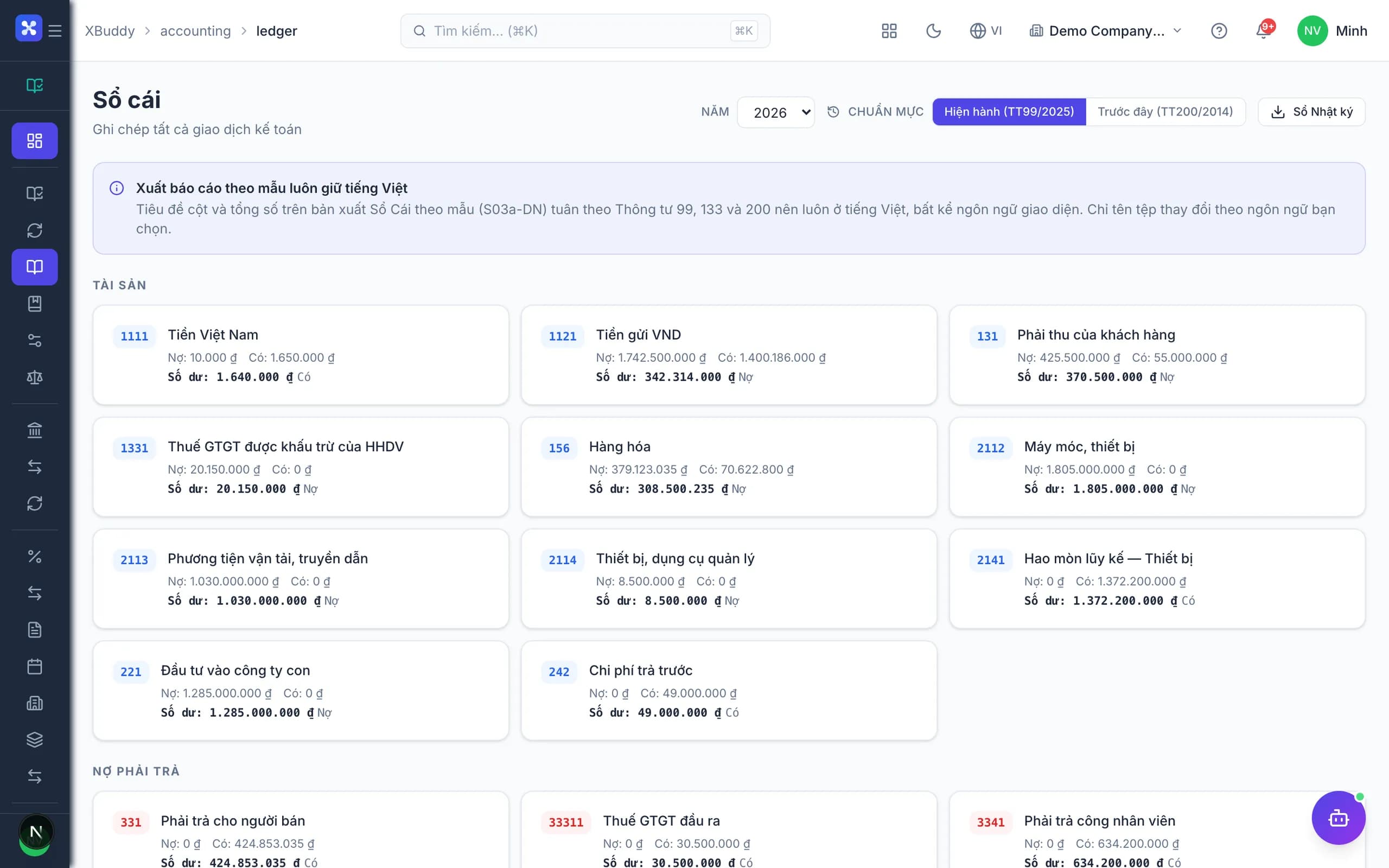
TT99 / TT200 / TT133 chart of accounts with conversion mapping, multi-standard consolidation, current personal income tax rules, and the two-tier province → ward structure.

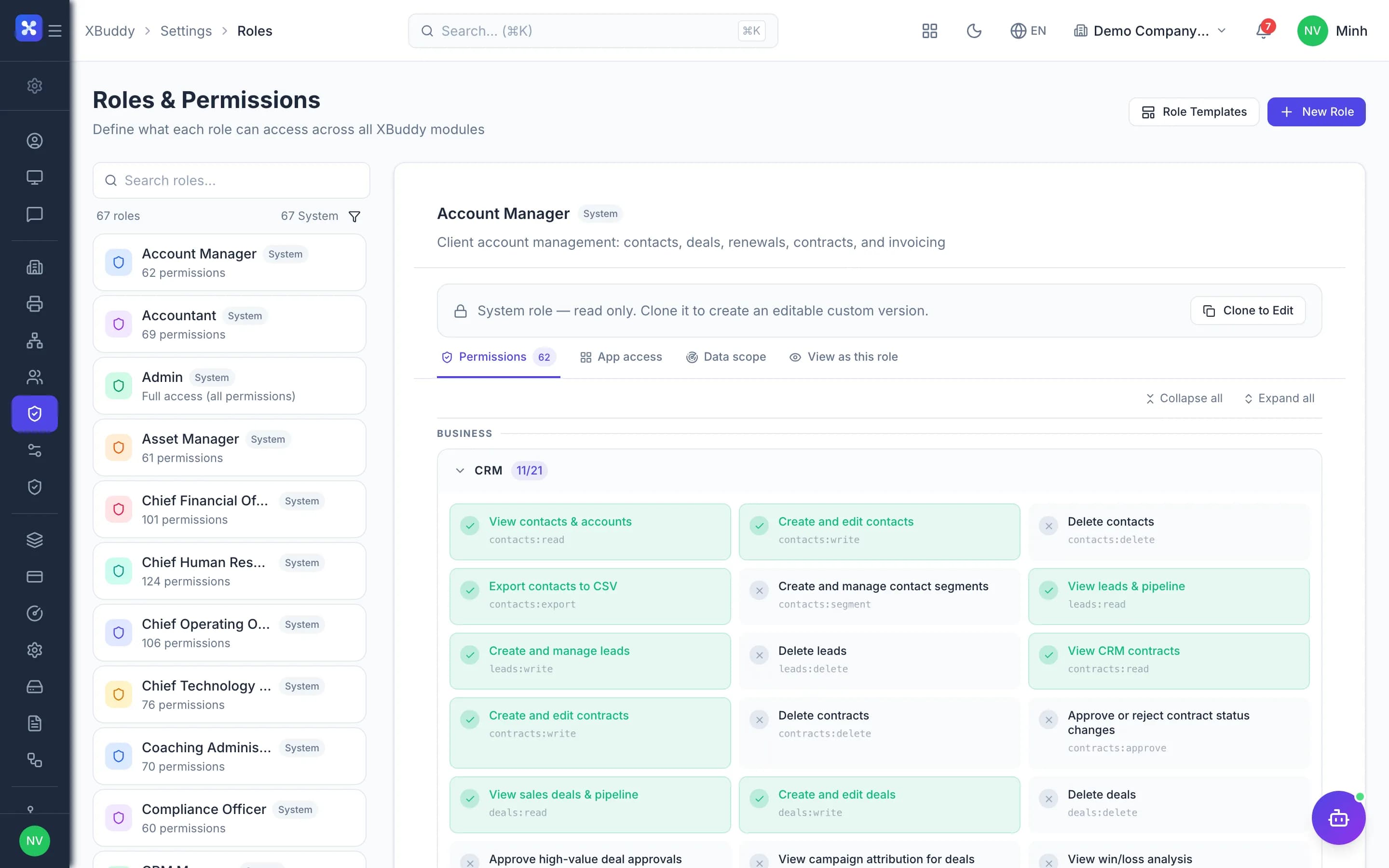
Record-level permissions

Each role gets its own data scope per record type: own records, their team’s, or company-wide.

AI does not decide. The approver decides.
Vietnamese accounting configuration in XBuddy

Architecture

Four layers, one database

An assistant can answer a question spanning four departments because those four departments never had four databases.

Layer 4

37 business apps

The same interface parts, the same permission model, the same exports — learn one app and you can work in all of them.

Layer 3

Policy engine & workflows

67 workflow templates, approval chains, delegation and escalation. A rule set once is enforced in every app.

Layer 2

Unified data layer

One database, record-level permissions, custom fields for your own processes, vector indexes over internal knowledge.

Layer 1

AI gateway

Routes to OpenAI, Anthropic and Gemini; bounds what data leaves; counts credits; logs every call.

Platform depth

What matters past the first year

Extensible without code, permissions down to the record, AI where the work happens, and reports you build yourself.

Custom Fields — extend your own data

A process the 38 apps do not cover? Define your own entity with fields, forms, permissions and approval flow — no code, no waiting for a release.

Approval workflows without programming

67 workflow templates for approvals, escalation and compliance. Set the rule once — “invoices above 1bn need three approvals” — and it is enforced everywhere.

Reports you build, delivered automatically

35+ ready reports across finance, sales, HR and operations, plus a drag-and-drop builder and daily, weekly or monthly email delivery.

Assistants that run on a single record

Open an invoice, a contract or a field job and run an assistant right there. Results attach to the record, read permissions are checked, writes wait for approval.

Comparison

Before and after consolidation

TaskThe common setup todayOn XBuddy
Consolidated reportingExport from three systems, join by hand, numbers disagreeOne report reading sales, accounting and HR data directly
ApprovalsApproved over chat and email, no trail when it mattersPolicy-driven chains, full logs, delegation while travelling
Non-standard processesWait for a vendor quote and a releaseAdd custom fields with forms and approvals, no code
AIA chatbot outside the data, answering in generalities35 assistants running inside the caller’s permissions, on real records
Vietnamese standardsCustomisation for TT99/TT200/TT133 and personal income taxBuilt in, with conversion mapping between standards
Staff outside the officePhotos sent back to the office, re-entered at day endTwo mobile apps working offline, syncing when connected

One module in depth

Contract management — the AI principle at its clearest

We show this module in detail because it demonstrates the general rule: AI reads and compares, people decide, and every number must be explainable.

Contract management — the AI principle at its clearest
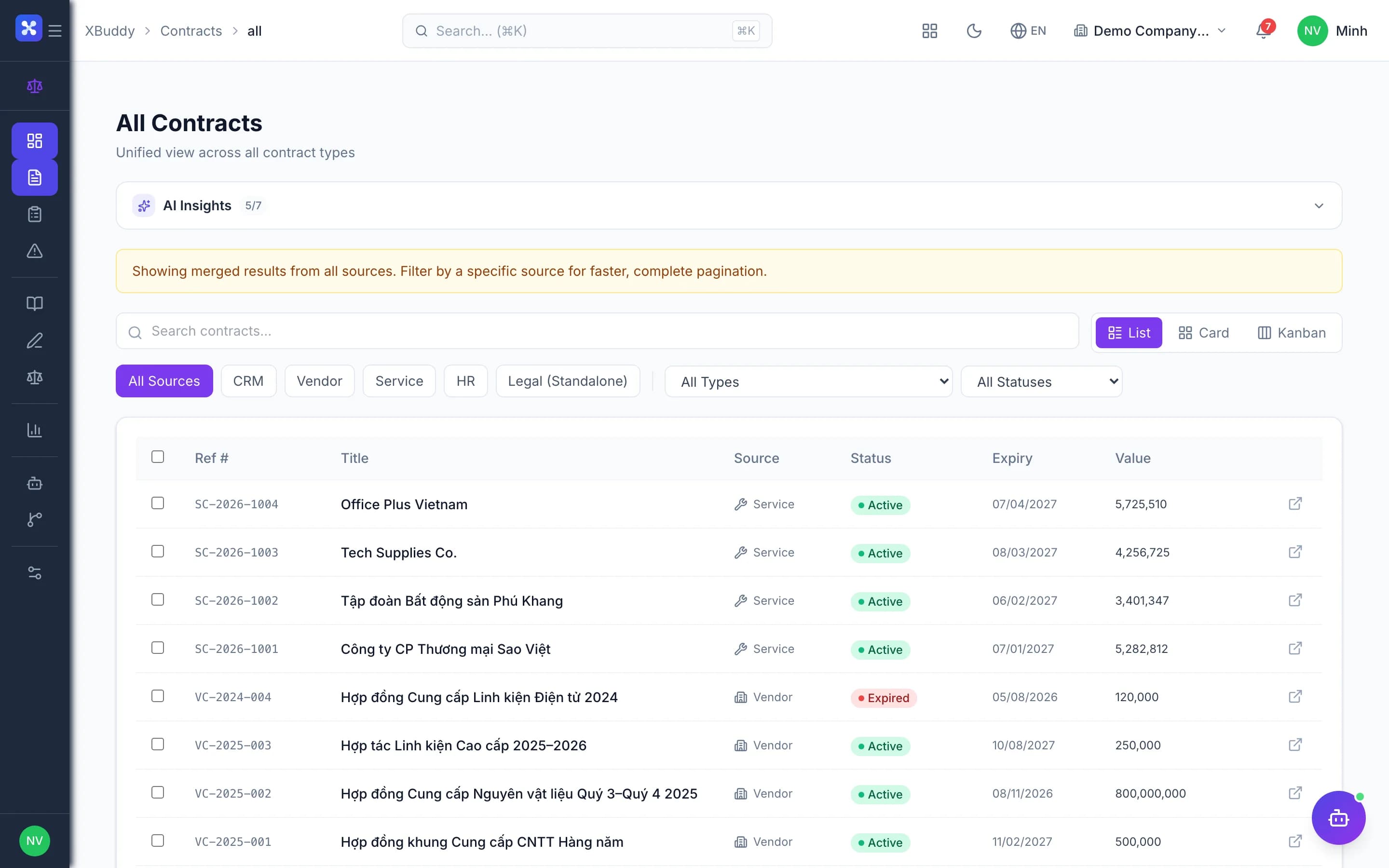
Clause comparison against a playbook — real product screenshot

The playbook is yours

You declare the standard, acceptable and red-line position for each clause type. The system compares against that, not against the model’s idea of market practice.

An explainable risk score

The score is arithmetic on weights you set, openable clause by clause. A contract whose text cannot be extracted is never scored as clean.

30/60/90-day alerts

Expiry and renewal tracking lands in the owner’s approval inbox, not in a spreadsheet someone forgot to open.

Separately signed addenda

Amend a signed contract with its own signed addendum rather than editing the original — the legal history stays intact.

Away from the desk

Two mobile apps for two roles

The same platform, but approvers and field teams need two different things.

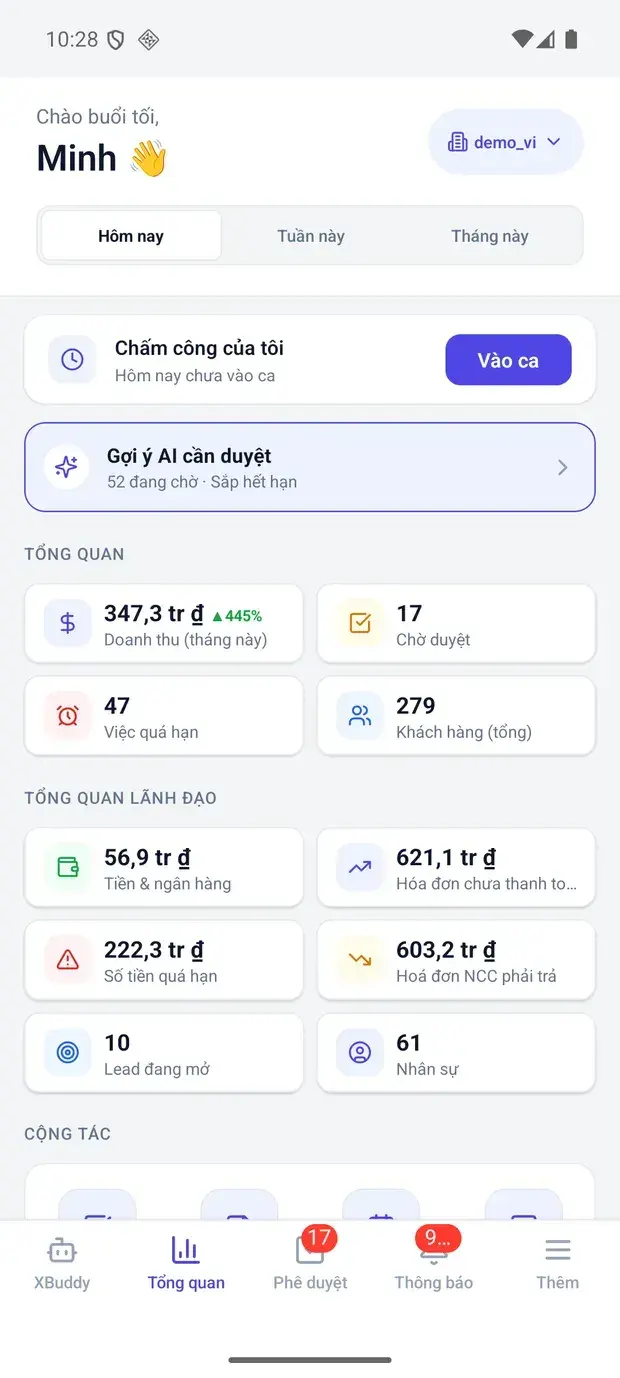
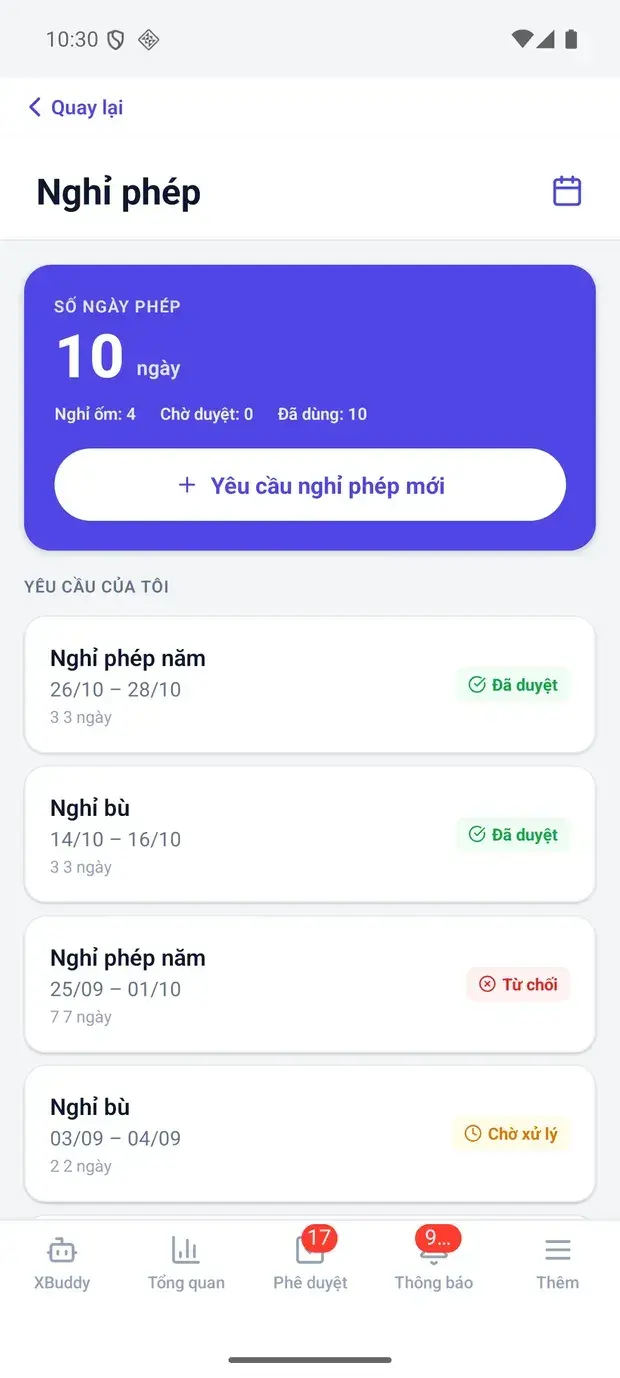
Mobile Manager

Approve and monitor operations anywhere.

  • Approve invoices, purchase orders, leave and expenses from one inbox
  • Live dashboards for sales, cash and operations
  • Assistant alerts and proposals pushed to the responsible manager

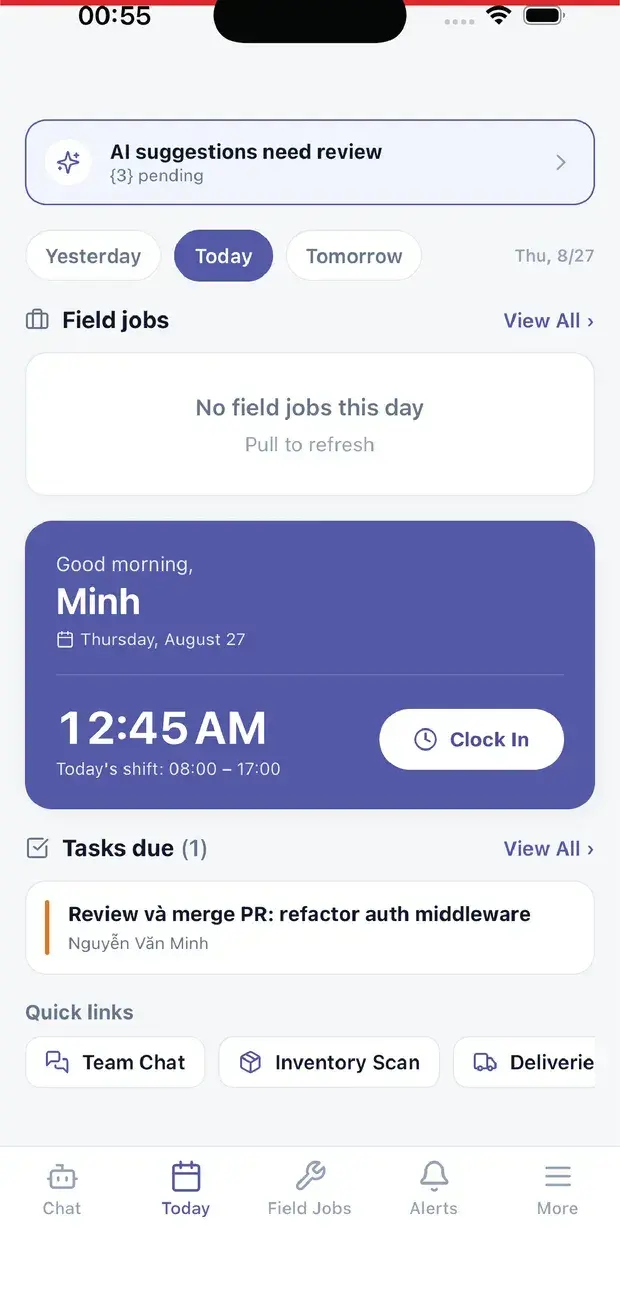
Mobile Workforce

A full toolkit for field and frontline teams.

  • Field service jobs with photos, signatures and offline sync
  • Stock counts, receiving, transfers and picking
  • Clock-in, timesheets and GPS check-in
A unified platform, not one more application

Most companies are not short of software. They have an accounting system, a sales spreadsheet, a time-clock app and three chat groups for approvals. Each one works. What breaks is the space between them: numbers disagree, approvals leave no trail, and nobody can answer a question spanning two departments without half a day of joining exports by hand.

That is also why most “add AI” efforts stall. A language model cannot answer a cash-flow question when receivables, payment schedules and payroll live in three places that do not speak to each other. The depth is not in the model; it is in the data layer underneath and in who is allowed to read what.

So XBuddy unifies first and puts assistants on top second. And because unification means one wrong action can travel far, every write stops at a person with the authority to allow it. That is the whole product philosophy in one line: the platform does the repetitive work, people keep the decisions.

The XBuddy product team · Digicore Software

Customers & proof

Customer evidence

This is what the current site is missing, and it is the most persuasive part of the page. Drop customer logos into the four slots, and send me three real quotes — I will set them into the three slots below.

“Customer quote one goes here.”

Title · Company · Industry

“Customer quote two goes here.”

Title · Company · Industry

“Customer quote three goes here.”

Title · Company · Industry

Pricing

Free platform — paid per pack in use

Nine platform apps — analytics, workflows, AI Hub, knowledge, calendar, employee services, tasks, custom fields — are open to every account.

A session on your own data

Book a 30-minute demo, or call the sales team directly.